Ensuring a Smooth Transition: Supporting Employees Back to Work ft. Mary Finn


Returning to work after burnout can feel overwhelming. Will you fit in? Has everything changed? Are you really ready?
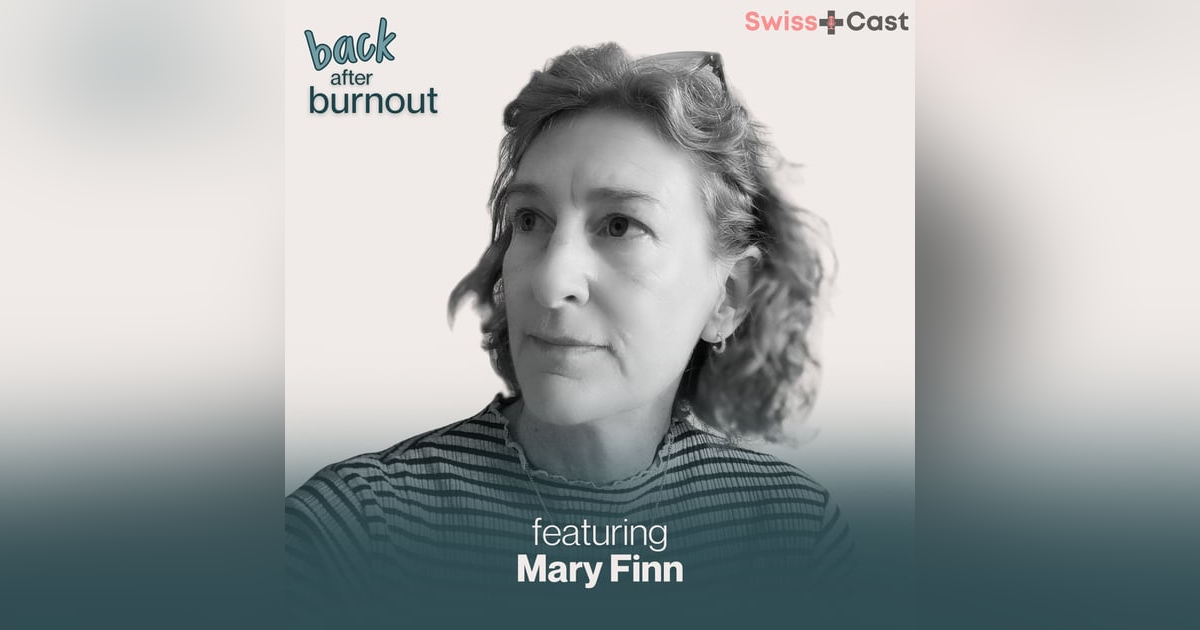
Mary Finn, founder of Connect4Work and certified disability management professional, joins Karina to pull back the curtain on what it really takes to return to work after extended absence. With experience supporting both employees and organizations across Ireland, Mary brings unique insight into both sides of the return to work journey.
This conversation explores the fears employees face, the mistakes managers make, and the communication gaps that keep people in limbo. Mary shares how return to work is a process, not a single day—and why sustaining your return matters more than getting back quickly.
If you've ever wondered how to ask for workplace accommodations, support someone returning from absence, or plan a sustainable transition back to work, this episode offers compassionate, practical guidance.
Takeaways:
- The process of returning to work requires careful planning to avoid disastrous outcomes on the first day back.
- Employee experiences during absence are unique, and understanding both sides is essential for effective support.
- Sustaining the return to work is more critical than merely facilitating the initial comeback.
- Communication between managers and returning employees is vital to ensure a smooth reintegration process.
- Employers should proactively engage with employees on leave to mitigate feelings of isolation and anxiety.
- The return to work plan should be flexible and adaptable, accommodating the unique needs of each individual.
Companies mentioned in this episode:
- Connect 4 Work
- International Disability Management Standards Council
- Galway Chamber Business Award
Back After Burnout is for education and inspiration only and does not constitute medical, mental-health, legal, or employment advice. Every burnout journey is unique—always consult qualified healthcare and workplace professionals before acting on anything you hear. Resources shared are tools Karina has personally found helpful; they may not suit every listener. Use what serves you and leave the rest.
Mentioned in this episode:
Back After Burnout is a proud member and a production of the SwissCast Network
Discover more great podcasts for English-speaking Switzerland
This podcast uses the following third-party services for analysis:
Podtrac - https://analytics.podtrac.com/privacy-policy-gdrp
00:00 - Introduction
03:12 - Not So Obvious About Returning to Work
06:51 - Mary's Journey and Connect for Work
11:29 - Returning to Work is the First Step of Many
21:44 - Readiness to Return to Work
26:05 - Work Environment
28:59 - Communicating and Managing Expectations
35:05 - Humanizing the Workplace
37:48 - Planned vs. Unplanned Absences
43:11 - Effective Communication During Absence
What's the point in getting back on day one and for it to be a disaster? Because that means then I haven't done my work properly because we haven't planned it properly. Sustaining the work is much more important.You never want to set somebody up for failure, for them to get back to work and then for them to come out again.
Karina SchneiderHello, everybody. Welcome back to the show. Today I will be joined by Mary Finn. She is the founder and managing director of Connect for Work.It's a consultancy based in Ireland that's dedicated to helping employers support their employees who are managing health conditions at risk of absence or are in the process of returning to work. I appreciate Mary very much because she takes the approach of being more proactive in managing absence.She focuses on remembering the humans behind returning to work and looking at ways that return to work can be a positive health outcome at the end of the day. Mary is also a certified Disability management professional.She's accredited through the International Disability Management Standards Council in the UK and Ireland, and she is also a recipient of the Galway Chamber Business Award in the Accessibility, Diversity and Inclusion category. And this award celebrates her leadership in fostering accessible and equitable work environments. I learned a lot from Mary and I hope you do too.Mary, thank you for joining me on the show today. It's good to have you.
Mary FinnThanks, Kreena. Delighted to be here and to chat to you with our. About whatever we're going to talk about. Exactly.
Karina SchneiderI know we have a wide range of common interests here, but I wanted to give our audience a bit of a background as to how we met. If I remember correctly, we met online over LinkedIn. I think it was November last year. It was around fall, I remember.And for me, I was a couple of years into my coaching practice on return to Work, and at that time I was facing quite a lot of doubts about whether this work really mattered.This whole topic of returning to work after, you know, being on, in my case, particularly mental health absence, I know you cover a wider range of types of absences and I was going through a lot of doubt about whether this work mattered, even if I've had clients who felt supported and who've helped and said like, this was really meaningful to them. And so I was looking for people who were doing similar work and trying to find my tribe. And that's how I found you.And so we had a really nice conversation.And so I just wanted to put that into context because I think you and I share a common appreciation and conviction about returning to work that we feel is Important to create awareness about, but we've also had our struggles around that. Right. So I just, I wanted to start off with that.And maybe my first question to you would be, what is it that we wish people understood about return to work that might not be so obvious?
Mary FinnOkay, that's a big question to start with. Yeah. So I think in any story, there's always two sides to the story.So there is the side of the person at the center of the story, the employee who is trying to return to work, and their perspective and what I often find, and most people would say to me, you know, that this is my first time being sick or this is my first time being absent from work. I don't know how to plan, I don't know what to think about work.I don't know if I can, when I can, how I can, and all of these questions and self doubt and, you know, I just would like people to know that that's okay. You know, because some people think that this is terrible, I don't know what I'm doing, but it's perfectly fine. It's the first experience of absence.And whatever is their experience is fine. It's their experience. And you know, you and I in our roles, supporting people back to people wherever they are, whatever's going on for them.The other side of the story is the employer side. So whether that is a HR professional, a team lead, or whoever's supporting the employer return to work, they have their perspective.And in my experience, a lot of the, I'll just call them employer just for the want of a general term. So the from the employer side, they often don't have an experience similar to their employees.And I say similar because it's never going to be the same. They are unsure how to support their employee back to work, so they don't know what to do. So in some cases they don't do anything.They just wait for the employee to come back and say, okay, I'm ready now, I'll see you Monday. And without very little planning, the employee just comes back. So in answer to your question, there are two sides.But I would love people to know whatever their story is, that's fine because it's their story.And it doesn't matter if they don't know how to support their employee or if the employee doesn't know how to come back, there is someone else who can help navigate that pathway. And I don't have all the answers either. You know, I'm not a professional in every single facet of life.I have my own experiences in life, but I'm here to facilitate the process. And if I don't know the answer to questions, I can often find out where to find that help or that extra resource or that extra information.But I do have a lot of experience supporting both sides navigate that.And that's an amazingly powerful journey to be part of that return pathway for a person who's coming from a real area of uncertainty and worry to being able to put a little bit of control back into that for them and the employer side of things as well, and to start putting piece by piece, a pathway back. And then when that person actually gets back and some people say to me, it wasn't that bad after all.And you think, well, that's fantastic that they can say it wasn't that bad. Because I know at the beginning of the story it was, oh my gosh, how is this going to happen? So hope that answers your question.
Karina SchneiderIt does, and that's why I was so excited to have you on the show because you do have this unique perspective of working both on supporting employees but also supporting organizations. So before I ask more questions to get your wisdom into the show, why don't you share with our audience what brought you to this type of work?
Mary FinnPurely by accident and very fortunate that I came upon it. So I had been working in the disability sector in a number of different areas for quite a few years and a program that was being piloted to support.So I'm based in Ireland, just I say this next piece, people need to understand. So recipients of illness benefit, which is a social welfare payment to people who are on sick leave.So this pilot was set up to sue support illness recipient benefits, back to work. The pilot finished and the program wasn't funded any further. And I really felt this is what I want to work at.Fast forward a few years, Connect for Work came into being. So the company is called Connect for Work, where it's the employer, the employee, a healthcare professional and myself.The four of us are connected together and work is the outcome. And that's. I could tell you an awful lot more, but, you know, we don't have time to get into all the nitty gritty of it.But that's really how Connect4 came to being, is that in that pilot program I came across people who were coming back to work or trying to after a cancer diagnosis, mental health difficulties. There was suicide, there was, you know, musculoskeletal.There was all sorts of different, you know, different things, you know, going on for different people. And the Majority of them just didn't know where to look, didn't know how to plan it. And I just loved that work and didn't want to walk away from it.So that's where. That's where I am now.
Karina SchneiderWhat about it do you love the most?
Mary FinnOh, gosh, I think what I love the most is that I think it probably is when people get back to work and I'm saying goodbye to them. And that can be, you know, really, you know, kind of difficult in a way, because I think I'm never going to speak to this person again.But I have been part of something really emotive for them, very challenging and to be part of that and for them to achieve their goal of return to work. Now, for some people, it's not their full job that they go back to its modified duties. On occasion, it's a different type of job. On occasion it is.Actually, you know what? I'm not going to go back to this job at all because it just isn't right for me. I'm going to move on somewhere else. And that's fantastic.And let me just share very, very quickly a very quick story. About a year after I had supported somebody back to work, obviously my dealings with them were finished.The person obviously kept my number because they sent me a message and said, I have been using the wisdom that you shared with me to help me get back to work in my new role. I have since moved on, but I'm sharing and remembering what you told me.And that was just amazing to hear that this person has moved on to a different organization, but they've taken into their role his experience of returning to work and the challenges he was facing. And that's amazing. That's just, you know, I even get goosebumps even thinking about it. But that's. That's what I love.It's just helping people to get back there because everybody needs work in their life. If you have been working and then you can't for some reason and you want to get back, that's it.
Karina SchneiderHaving goosebumps as well as I'm listening to you as you share that story. And in some ways I share the same feeling where you work with clients and then off they go, right?And we keep our fingers crossed and we're supporting them and we're cheering for them in the background.And it's always amazing to see how they come back months, sometimes even years after and share, hey, the work we did really helped them and really mattered to them. But there's something about that That I think is also important, which is the return to work.And you said this to me when we last spoke, isn't just about preparing for the first day back. That's half the story, if anything. Right. There's something else that we need to be paying attention to after day one.So can you say a little bit more about what is it that we forget about after day one and why that's so important to the support?
Mary FinnYeah, I always remind people when I start to work with them, you know, that this, all this effort and this planning to get to the point of returning to work, it's all a process. And the day of their return is only a step in the process.Yes, they've achieved their return to work, but sustaining their return to work is much more important. So, you know, anybody can get back to work in a day, on a given day, you know, hopefully they will.But in order for them to stay at work, whether that is, you know, over a couple of weeks, that they, they scale up and they return to, you know, their, their pre absence roles, duties, hours and everything, that's fantastic. But for some people, they don't, you know, that's not part of their pathway.So the sustaining part of the role is much more important because, you know, what's the point in getting back on day one and for it to be a disaster? Because that means that then I haven't done my work properly because we haven't planned properly. Sustaining the work is much more important.You never want to set somebody up for failure, for them to get back to work and then for them to come out again. Now sometimes people are away from work so long they are actually afraid and think, I'm not going to be able to keep pushing it out.And at some point, you know, they do need to try it. Now there is always a risk, you know, for those people that it just might not work out. But, but you know, we try as much as possible.So it's like any risk, planning for any risk. You try and minimize it as much as possible.But I think the sustaining a person's role is, you know, it's just so much more important because everybody wants to get back to work. You know, I spoke to somebody there recently and they had been expecting a person to return to work. They knew there were going to be some challenges.And I spoke to them a few days back and said, you know, how are things going? And they said, oh, actually, yeah, I haven't actually been in touch with them. They're back now a few weeks and I haven't been in touch with them.Now, knowing this person's coming back, knowing there was going to be challenges and they hadn't checked in with their colleague, you know, I just think that that could be done an awful lot better.
Karina SchneiderI can understand that. And I think it speaks again to.We maybe take for granted that if a person is coming back to work, they've been signed to be fit by their doctors, that we just assume everything is okay. And that's the, that's the milestone we've achieved is you're back at work. Right.But the understanding of there's still a lot that happens in the first weeks and the first months of a person coming back that needs special care and special attention to.And what I found in my experience is that the individuals I've worked with within the first week often come back and realize that there are certain things they're experiencing that they didn't expect. Not for lack of planning or anything, but because you've been away for quite a significant period of time, you can't predict every single thing.They sometimes get surprised by how uncomfortable they are with certain conversations with colleagues or asking questions about their absence, or they don't realize how insecure they might be feeling about their work, or they're surprised by how tired they easily feel even if they think they've rested enough and so on and so forth. Right.So I'm curious from your side, what are some of the things that makes it difficult to predict but is important to anticipate and just prepare for to help in that sustaining of the return?
Mary FinnYeah, I think, I think tiredness as we listen to you speak.I was going to say tiredness is the one, you know, particularly for people who have had, you know, maybe viral conditions such as long Covid people are coming back with, you know, with like multiple sclerosis, you know, people who have viral and neurological things going on for them. So fatigue for them is enormous. And I often say to people now you've.And it doesn't matter what the reason for the absence, but sometimes for the viral it is more prevalent. I often say people, you are going to be tired.You have to readjust physically to sitting at a computer or at a production line or you know, being outside, like wherever the environment is. So you've got the physical readjustment for that. That's tiring.Then you've got the whole mental side of things, of having to concentrate, having to focus.If you've been away for quite a while on the job, relearning re skilling Maybe upskilling, because if you work in a technical area, you've been out for a year, technology moves at such an enormous pace. If you're working in a very regulated industry, regulated such as legal or financial, there's updates.So to take into consideration, you know that and warn people and advise them, you know, they're going to be tired, but until they get back there and experience it and feel, as, you know, people don't fully understand, they certainly underestimate it. And the other thing that you mentioned then is, you know, colleagues.So I would often say to people who are coming back to work, let's have a conversation around how you might field questions from colleagues.And particularly for somebody who's been out, maybe there's been a bereavement, particularly if there's been a suicide in the family or even maybe suicide within the team. So I say to the employee with the best will in the world, people are going to ask, how are you?And there's going to be the head tilt, oh, how are you? And if you want to engage in the conversation and answer that question, then fine. What is it you want to say?You might have people in your team that you might like to share more information with. Are others less so?Have a couple of lines ready of saying, yeah, I'm back to work, I really want to focus on it, you know, I'll talk to you another time, or thank you for your question. It really means an awful lot to me, you know, or whatever it is.I had somebody go back after three years and I don't know whether the comment was because their colleague was embarrassed or didn't know what to say. But this person had been down for three years and they were told, oh, I thought you were on holidays. Yeah.So I don't know whether the colleague was embarrassed. They didn't know what to say because it was quite a complex return to her pathway for that individual. So you're going to get all sorts of things.You know, this person was left thinking, I worked with them, you know, for years and years and they thought I was. They missed me in holidays and I was gone for three years. So people say things through embarrassment that they might not normally have said.So I always try to get people to try, think and just be, you know, be ready for it. And that's a huge area. People often to come back and say, that was really helpful to have planned that.Or sometimes I say to people, if you don't want to talk to them, to anybody, talk to your manager and let your manager Say, this is what's going to happen. This is the kind of conversations that he or she will want to have when they come back or they don't want to have.This is how you can approach them or you're not to approach them. And let the team leader inform the team before the actual person comes back so then there's no awkwardness. And again, you can't cover.And it's basically everything. But it's all about risk management, isn't it? And you just try and help that person be as prepared as you possibly can.There's always something going to come up, though, for sure.
Karina SchneiderI think you can't cover all bases.But as I'm listening to you, I'm also realizing how much communicating with others and social gatherings played a really important aspect of the preparation. Even things like, you know, it's them attending their first team meeting or a larger event at work and they're curious.Then I all, you know, a part of the preparation is what's your exit plan, right?Like, if there's a point in that gathering where you start to feel tired or you're starting to feel uncomfortable, or something's just coming up for you that's making you feel like you don't want to be there, how do you gracefully either deal with it or leave the situation? And it's interesting that that comes up so much as a pattern for individuals.I think it's maybe telling also of them finding their footing again, finding and discovering whether they still belong.Because to your point, some of them are away for a pretty extended period of time and they're coming in not knowing where they fit in and just on that.
Mary FinnSo nothing to do with people coming back to work, but perhaps people who are in work who maybe had a recent diagnosis and have been informed that they have been confirmed to be on the autistic spectrum. So I think that's really important for people who have now got this diagnosis and understand behaviors.So for people who are on that spectrum, attending work events, online meetings, getting overwhelmed, I think that's also really important for managers and colleagues to be aware of people who are not absent, they're still in work and have recently got this diagnosis, you know, those triggers and those stimuli can be very difficult for people to manage.So it's, you know, I think a lot of things can be put in place to help a person back to work, but also a lot of things can be put in place to help a person stay in work and avoid the risk of absence, or at least.
Karina SchneiderMinimize it for Now, I want to take a couple of steps back and just get your insight as to the decision making to go back, because I know a big question on a lot of people's mind who are on their medical leave is at what point do they feel ready to return? And to your point earlier, some might try to prolong it for as long as they can if they're supported legally or by their insurance coverage.But there is a point, as you said, where we have to test it out. Have you noticed patterns that indicate more readiness than less? Right.Like, I know there's no Such thing as 100% or perfect readiness, but when can people start to consider that, yes, they might be ready to test things out again? And what might be some of those.
Mary FinnConditions, I think that varies so much for each person or the reason for their absence, the work that they do, the type of manager that they have, what kind of supports might they anticipate when they go back to work? But I think in order to get to that point of saying to a person, you know, what do you think? I think it's.And you'll have noticed this in the work that you've done as well in the past, supporting people back is. The relationship that I built with people that I'm working with is really the basis of it is to help them move towards work.And we talk about, like, all sorts of different things, you know, like all the different factors that influence their thinking about going back to work. So sometimes it's. They'll go back to work because financially, that they have to.Sometimes they won't go back because maybe family members are worried for them and think that they're not worked back to work. So it's very holistic in the conversations that I have. And I keep bringing it back to, you know, what do you want? What do you feel like?And if people are hesitant, you know, I try and talk around you, what are their. What are their fears?And try and share experiences, you know, that I've had with, with other people where, you know, they're not alone in their fears. You know, regardless of what the absence is, the longer it is, the harder it is for a person to come back.And, you know, I've seen some statistics ranging from at six months, 50% of people don't go back, and at 12 months, 80% don't go back.So the earlier the intervention or the earlier we start talking to people and keep them connected to the idea of work and helping them talk about work and, you know, what would be right? You know, I Say to people, like, if you had a magic wand, you know, what would you want? Most of them look at me blankly and say, well, I don't know.I've never been here before, so I don't know what I want. So I share as much as possible my experience and my encouragement. And, you know, I ask, like, what are your doctors saying?What are your healthcare professionals saying? What are they advising? If they say, well, they're not advising anything.So I say, well, okay, the next time you're back with them, have a conversation around work. You know, work is not their focus because they're looking at you from a medical point of view. But work is part of that. Work is good for us.Good work is good for us. Work can be part of our recovery. It is a part of our identity. It brings its own stresses, but being away from it has its own stresses too.So it's really balancing that.And really, I think it really comes down to the relationship we build with the people we're supporting to really be able to kind of dig a little bit deeper as to find out what are the barriers behind. Because some people say, I'm just not ready and think, oh, that's fine, she'll take it at that.But can we kind of dig a little bit deeper and try and figure that out?
Karina SchneiderAs I agree, I've seen the same research around, the longer it takes to go back, the harder it is. And in my experience, though, I think I have because many of the individuals I support were absent because of burnout.Part of their assumptions about their readiness or their fears or hesitations about readiness is their ability to trust their environment to be safe for them. If, particularly when work plays a significant role in their burnout. Right.And often what I find is they say, I've done my part to change through my recovery, I've done the work, and I go back to this environment and nothing has changed.And that makes it really difficult, I think, for them to figure out, is this still the right place for me, or can I stay safe and healthy in this environment, or is it time to move on?So there also is this decision making they're having to make about not only am I ready to return, but am I returning to the same job, am I returning to the same employer, or is it time to look elsewhere? Right.So I'm curious if you've also experienced that and how do you go about that discernment to figure out if the environment is still the right place for them?
Mary FinnYeah, unfortunately, I have had that, and I guess for A person is really looking at what was going on for them in work before they went out absent. Why do they get to the stage of burnout? And it's often, you know, on a few, quite a few cases I found that people have taken on extra work.There hasn't been maybe clarity around their role because maybe there's been changes to the organization. People have gone out maybe on different types of leave, mat leave, study leave, and the work is then redistributed over the rest of the team.And that place people at risk of burnout because they're overwhelmed. So it's really looking back at what's been going on for the person prior to their burnout.And sometimes it is just the organization is a very high pressured job and high pressured role. So it's really about trying to understand the clarity of that person's role.On a couple of occasions, you know, for people who have gone back to the manager and because they've taken on lots of different projects and we've looked at what are the ones that are priority to your role and what are the ones that are not. What can you step out of, what can you step back from, maybe still stay involved, but maybe not take the lead in it.Where are the areas that we can release a little bit of that pressure to allow that person to go back? And in a few occasions organizations have offered mentoring.So the people that I've supported have gone back and hooked up with that internal mentoring system. And that's been really valuable for a few people.So it's really, again, everyone's different, every organization is different, everybody is stressed in work, outside of work. There are enormous pressures coming from, from us, from all sorts of different angles.So it is just really about taking stock of where are these pressure points coming from and what can you do to manage them.Because you can't control them all, but you might be able to control your interactions with them and just to give you a bit of breathing space and try and go back in a phase basis. And always you mentioned the word communication earlier on. It's always down to communicating with your team lead.And what it is, you know, what is you're going back to have that pathway, that handover pathway for at least the first four weeks, you know, quite clear to manage the expectations of you, the employee going back, but also your colleagues, your team leads.So if anybody comes and throws work on you, because this is something that I find quite a lot, is that people go back to work and their colleagues say, oh, you're back, fantastic. Here, I've been saving this for you. And splat on their desk or a big email comes in, could you just have a look at this?And I say to my people, no, you can't just have a look at it. You might just have a look at it in a month's time when your handover is complete.So you push it back and you manage your expectations in aligned with what's agreed with you and your team leads and you have to manage expectations of others because you, just because you're back doesn't mean you're 100% back at the, the first minute you walk through the doors.
Karina SchneiderI think that's an important takeaway too, is to not assume that on day one you're 100% back, because that's not the case. I mean, one thing is the, the technicality of the actual percentage that you're back.So in many cases they don't come back full time if they were working full time.But also just in terms of the quality of the experiences that they're having and the workload and the, you know, the capacity to, to take over everything is not 100% on day one. And I sometimes think people forget that, both on the employee side and the organization side. You spoke about communication several times.And something that I'm coming to reflect on is it's not easy for us to go back to our workplaces and ask for things that we need to make it more easeful, to make it more manageable. I know I never learned how to do that until I actually really needed to for my health.What have you observed about the people you support and how they come to terms with saying, I can't do this right now, I'll get back to it in four weeks, or I need more flexible working hours or whatever it is that they're needing and actually communicating that with confidence. That's not easy. I think that makes people feel very vulnerable.They sometimes tell themselves the story that, oh, that means I'm not good enough or I'm no longer capable enough or I can't be trusted. And that storyline comes through. Anything you can say about that that could help our listeners.
Mary FinnI think people are afraid to ask and don't ask for lots of different reasons.So don't ask because never been in this situation before, so don't know what to ask for, are afraid to ask for accommodations because they think, well, if I ask that signs that shows that I have a weakness, I not capable, I will not be put up for promotion or, you know, my career is going to stall because of what's going on right now. You know, what I say to people is, this is just a blip that you have to manage right now. Who knows in the future where you're going to be?But for right now, let's focus on the right now.And if you need accommodations to help you move toward that point where you are back at 100%, 105%, 110%, whatever you're aiming for, but let's focus on the now. And when, you know, people don't really think about, I have to go back 100%, I have to go back on a Monday, and you don't.So I, you know, I try and coach people and thinking different ways to go back and to give you an example. So I worked with somebody there recently and they have been working three full days, had young children, childcare was a challenge for them.So I said, well, why can't you just change your days and work your hours across the five mornings rather than three days? And she goes, no, no, I can't do that because this is what I've done. It's what I've always done. And I put, but it's a challenge for you.It's been really difficult for you. And now going back, these are the challenges that you've spoken about.I said, let's just think about that for a while and the next time we spoke, that absolutely makes 100% sense. So that's all in process now at the moment. So people don't really think that they can change because this is the way it's always been done.And, you know, sometimes you just have to present alternatives or even fragments of an alternative and let a person explore that. And it's amazing what comes out of a throwaway idea. The magic wand. Here's the magic wand. What is it you want? What do you need?And people say, no, no, I'm fine, I'll just go back. And it's not, it's not fine. You just need to take it easy.
Karina SchneiderI think listening to you also reminds me that sometimes we just need a neutral third person to put options out there and to test what's possible.And one thing I've also learned is, again, going back to the communication with your manager or with your team is if you express that from a place of we have common goals we want to achieve, I just need to do it in a different way, but it's going to get to the outcome we both want, then it's less about, I'm requesting for Favors as opposed to just contracting on a different way of working or collaborating or relating that still meets everyone's goals at the end. And so that's also sometimes what I remind individuals is how do you position your communication in a way that you also want to do good work?You're in it as well to achieve the same objectives as your manager and your team. It's just looking at it from a, from a different perspective. And I find that that sometimes helps too.
Mary FinnYeah, look, at the end of the day, we're all human. We all want to come to work. We come to work for lots of different motivations.Whether it's money, it's to get, you know, do this job so I can get onto a different job or I can go to a different organization or we have lots of different motivations. But a job is intrinsic, you know, far for, for most people that it is part of their life.And all we want to do is be treated as humans in that we don't want to be treated with disrespect, we don't want to be treated differently just because we might have a short term need for accommodations or we have a long term need for accommodations, whatever it is.But nobody escapes life from having a point in their lives where they need some help, whether it's they themselves or they need a little bit of flexibility because they need to support somebody in their family. Look, you know, we are all going to fate. Well, I shouldn't say we're all.A large portion of the working population are now sandwiched between, you know, care for the elderly and maybe young children or you know, other family members. And that's a very challenging position to be in.You know, the individual might be fine, but they might have a lot of time pressures on themselves outside of work. So look, we're all human, you know, what? And why can't we be treated by humans as a human?Human beings doing just our work and just trying to survive.
Karina SchneiderI really also go back to something you said that I think is really powerful, which is work should be good for us. Right? Work is an important part of who we are. It gives us so much, you know, it gives us back what we offer it. Right? Purpose, fulfillment, community.But it has to be the right work and it has to be good work. And it, you know, it shouldn't, I sometimes say it shouldn't be the enemy of our mental health and well being. Right.It needs to be supportive and not counter to it. But based on what you said, I think it's a good way to maybe transition to putting ourselves or our listeners in the shoes of a manager.Because as much as it's really important for the employees to be thinking about this, I think an untapped opportunity is for managers to be thinking about this as well.At the point that they have an employee who either abruptly goes on absence or is planning to take an extended absence, what are the most important things that managers should be thinking about or what helps? Right. We know the manager plays an important role in all of this. What might be necessary on that other side of the equation?
Mary FinnOkay, so in the two types of absence you mentioned, so there's planned and unplanned. If it's planned, it is usually, you know, something like maybe it's a study leave, maybe it's a career break.It could be maternity or paternity leave. There might be other leaves as well. But if it's planned, there will probably be time for a handover to somebody else to take on the role.And there's usually a defined period of time because it's planned. And when they come back, it'll be, you know, you'll slot in, hopefully you'll slot in, your job will still be there, and you just slot in.When it's unplanned, that's generally the more tricky because it happens abruptly and it's usually due to illness or injury of the employee or maybe somebody in their family circle. So we'll just concentrate on the employee being the person that's sick. So that's the more difficult one.And you know, managers, you know, like I said there a few minutes ago, they just need to think that they are a human being. They are managing a team of human beings.Their human being, their employee is trying to come back to work and just wants a bit of support and just wants a little bit of flexibility for a short period of time. Some people say, oh, but I work in a production line. You know, there's no flexibility. Of course, there is flexibility in every role.If there is someone who is just willing just to sit and talk through from the minute that person comes into the minute that person leaves. What are all the different jobs that they do? How do they interact with different departments? Could they do something different? Can they take a break?And I have supported people back to work on production lines where they say, oh, no, I have to be 100% fit because this my role. This is all I do. I said, well, there are other roles that interact with this production line. So it's.It's just the managers, if they could just Be open to being flexible, listening to what is being said and not sometimes what's not being said as well.Because sometimes people are afraid to just share the whole story and just being prepared to chat through and when they get back, link in with them and say, how's it going? Is everything okay? Because like you said at the beginning of our conversation, things happen unexpectedly.But, and you know, the, the person after they get back might feel, do you know what this is? This is just a bit too much for me. And I always tell people, your return to work plan is a plan.It can be halted, it can be frozen, it can take step back, you can ramp it up depending on how it is, you know, and how it's going for you. But I think just managers just. And also the employee needs to remember the manager is a manager. They have a job to do too.So it's, it's like the two sides to, of the same story. But if everybody can just remember there's, you know, it's, it's a person at the end of this.And this is a process and a process, changes and process, you know, can be, you know, stepped up or whatever. But you know, at the end of the day it's we're people and, and we just need to listen and talk to each other.
Karina SchneiderSometimes it's fascinating how we have to just go back to the basics, right, of treat every person as a human being. And we're all going through stuff, hard stuff, many times.What I've observed though, is that managers, at least the ones that I've also supported through the process, surprisingly carry also a lot of fear. Like they're afraid of saying the wrong thing, they're afraid of doing the wrong thing.So they tend to defer to policies if they exist, or the absence of policies to reduce away their sense of responsibility in the process of supporting an employee's return to work. And it takes some conversations to get them to realize that they do have agency, they have ways.They have a lot of flexibility in the types of decisions that they can make.To your point about flexibility and the responsibilities and so on and so forth, what if there was a manager listening to this today, going through all of those hesitation because they, out of good intention, are just afraid of doing or saying the wrong thing.Especially in environments where there's like high legal exposure, what could be one or two things that you could tell them to alleviate some of that concern?
Mary FinnThat is such a valid point. Listening to two different people came to mind straight away, both trying to get back to work.One completely bombarded by the team needs and just didn't want it. And then the other person completely different organizations, no communication but wanted because they were thinking, am I forgotten about?Does nobody care anything about me?And you're right, team leads are, and managers are wary of communicating with the person when they're at sick because they're sick, they need time to recover and policies are there to help guide team leads. But very often policies aren't far reaching enough and it might not usually cover how communication would be managed when the person's out sick.So I think when a person, like if there are managers listening out here, when a person you know does got sick in the first instance, you know, maybe you can agree, look, you know, we want to support you, we would like to keep in touch if that's okay with you. Are you open to receiving communication? How is it going to be?So I would definitely say if it's through email, it is not your work email because you shouldn't be logging on to your work email while you're at sick because you'll see stuff and you'll either worry about it or you want to be involved or whatever. So not through your work email, private email if that's appropriate, telephone, text, WhatsApp, whatever.But just agree some kind of parameters around us. I often get called in because I am, like you said, an independent voice in the process and the manager will communicate to the employee.We'd like to help you. Would you be open to speaking with somebody outside the organization?Because then you hear things about don't tell my manager this but I'm really stressed at work by work because of xyz. So it's. Yeah, I think the. Not to be afraid to communicate with the person and just say hope you're doing well.Sorry to intrude, just want to check up. If you don't want to have any further communication, that's fine too.Do send the communication whatever way it is and just say if this is too much for you, then you know, that's fine, we can cut back or whatever.But I think leaving people in limbo where they have no idea, you know, on both sides, both the employer and the employee doesn't do anybody any good because then, then there's no communication.Then nobody knows what's happening and, and then people just drift and it just, you know, weeks turn to months to years and then that's it, you know, people just become too far removed and feel they can't go back then. Yeah.
Karina SchneiderAnd that limbo, I think sometimes Starts with making too many assumptions. So I also tend to say, let's avoid making too many assumptions and just ask.It doesn't hurt to politely ask with dignity and with grace, and then work from there. Right.But I think a lot of the silence comes from both parties making assumptions about the other and about the process and what can and can't be done.And that takes away from the opportunity to really collaborate, even through the absence, to get to a really, hopefully a client successful return outcome down the road.So I think that's really good advice to just find ways to communicate early and then, you know, we reduce the number of the amount of guesswork and limbo we find ourselves in.
Mary FinnExactly.
Karina SchneiderYeah.I know, Mary, that you and I can continue talking about this for several hours because we both care so much about this, but I'm respectful of your time and so much wisdom that you've already shared.So I guess my last question to you would really be if an organization really is thinking about this and they want to revisit their absence and return to work, policies or practices, any place, or any advice you have for them as to where to start or what might be the most important thing to be really thinking about as they approach supporting both the managers and the employees through this process.
Mary FinnWell, I think policies and procedures, they're only really guidelines to help, you know, direct people. Everybody's situation is unique to them and needs to be managed in a unique way to them.So I think if people are kind of setting out on the journey and thinking about how can we support their employees?I'm always open to talking to people, Kreena, you know, that I'll talk to anybody, but I think if they can, within their own organization, speak to people who have been out on absence and asked them, you know, what was their experience, not of the reason for their absence, but the how were they supported coming back in? Were they supported? Was there communication? Did they want communication? Did they not when they got back, you know, what happened on the first day?Because the first day is just so critical. It really sets the tone for, you know, the next few days for how a person feels about being back at work and what was that like for them?So I think, you know, start looking internally. Talk to people who have been back, you know, quite recently.Talk to people who have been coming back after maternity leave, after grief, you know, lots of different reasons, and try and build a sense as to within your own organization, how is it going for people, and. And then talk to other organizations and find out what is it that people want. How would they want to be supported?And I think to give training to managers to understand the challenge of absence. Again, it's so wide ranging, but just to be able to consider what might people need and maybe to take, you know, what are two different conditions.Like neurodiversity is a huge area where there are an awful lot more new diagnosis coming in. Cancer is a huge area.So in your own jurisdictions, wherever you're listening to what are the biggest reasons for absence in your own particular area and to try and support managers to understand the challenge of absence for those particular conditions. And that's a starting point. You know, everybody has to have a starting point and you just build from there.But I think that's probably the best advice I would give to someone. Just start, don't think, oh, I'll do it tomorrow or I'm not going to do that, or sure, we'll just keep on going the way we are.People always come back to work. Yeah, they do, but they could come back much better supported and make it a much better, easier and more sustainable journey for everybody concerned.
Karina SchneiderThank you, Mary. One of the reasons why I appreciate talking to you so much is you always just remind us about the human being in the center of all of this.The respect, the grace, the dignity that people deserve. Going through really difficult times and how work continues should be, should be positioned as good for them and important for them.And how do we make that transition back so that it's sustainable. And I just appreciate that so much about you. You gave me hope when I was losing hope at one point in time.So I just have a lot of appreciation for the work that you do.And I hope that, that if there are people listening to us who are located in Ireland or in the area who could benefit from your expertise, that they know that they have you that they can reach out to as well. So thank you for spending the time with us today.
Mary FinnThanks, Karina. I just think it's important to share what we've spoken about. What can people do that it's not impossible?There are supports that people can do and most people really just do want to come back and just want to return to their normality. But sometimes their normality needs to just kind of tweak a little bit to make it better.Their normality pre absence doesn't mean particularly in burnout and, you know, stress at work, that's not a good normality to go back to. And how can you change that? So I think it's a really important topic for people to. To listen into.So, yeah, thank you for the opportunity to share that and push. Put all that out there.
Karina SchneiderThank you, Mary. I appreciate you.

Founder and Managing Director
I want to transform how workplaces perceive the challenge of absenteeism and see it as an opportunity to focus on ability, enable attendance and promote retention! My work is grounded in the belief that employment can be a positive health outcome.
Mary Finn is the Founder and Managing Director of Connect4Work, a consultancy dedicated to helping employers support employees who are managing health conditions or are at risk of absence.
She collaborates with organisations across Ireland to rethink traditional absence management strategies, focusing instead on proactive engagement, reasonable accommodations, and bespoke planning that fosters inclusion and retention.
Her approach has helped employers navigate complex situations with empathy and effectiveness, ensuring that valued employees are supported throughout their journey back to work.
Mary has built a reputation for delivering person-centred, practical solutions that enable safe, timely, and sustainable stay-at-work and return-to-work outcomes through her work in the disability and vocational rehabilitation sectors.
A Certified Disability Management Professional (CDMP), Mary is accredited through the International Disability Management Standards Council (IDMSC UK & Ireland)
She is also a Trustee of the Vocational Rehabilitation Association, reflecting her commitment to advancing best practices in vocational rehabilitation.
She is a proud recipient of the Galway Chamber Business Award in the Accessibility, Diversity and Inclusion category, celebrating her leadershi…Read More


