Making Medicine More Human - HIMSS26 Europe Insights with Dr. Hannah Allen


 RSS Feed
 AI in Healthcare: How Heidi Is Giving Doctors More Time with Patients.
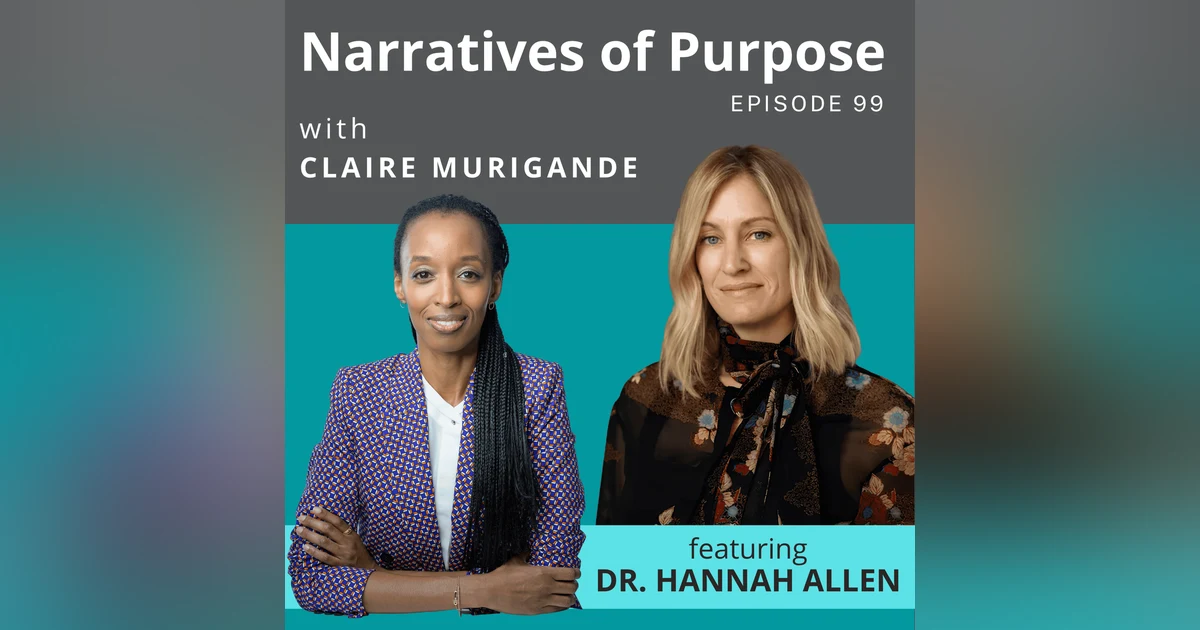
In this second episode of Narratives of Purpose's special series from the 2026 HIMSS European Health Conference, host Claire Murigande speaks with Dr. Hannah Allen, the Chief Medical Officer at Heidi.
Heidi is building an AI Care Partner to expand clinical capacity by supporting every stage of care delivery. In addition to its AI scribe, Heidi gives clinicians access to trusted medical research at the point of care, and Comms, enabling healthcare teams to coordinate patient communications.
In this interview, Dr. Hannah shares her journey into digital health. She talks about challenges in healthcare AI adoption, such as interoperability and managing regulatory differences across global markets. Dr Hannah sees the future of AI in healthcare as an enabler to making medicine more human, shifting from patient-centered to person-centered care.
Be sure to visit our podcast website for the full episode transcript.
LINKS:
- Connect with Dr. Hannah Allen on LINKEDIN
- Read the article on Dr. Hannah's journey: Blog post
- Learn more about Heidi at heidihealth.com
- Follow Heidi on their social media channels: LinkedIn | X | Facebook | Instagram | YouTube
- Follow our host Dr. Claire Murigande: WEBSITE | LINKEDIN
- Follow us: LinkedIn | Instagram
- Connect with us: narrativespodcast@gmail.com | subscribe to our news
- Tell us what you think: write a review
CHAPTERS:
00:19 - Introduction to HIMSS Europe 2026 Special Series
01:30 - Dr. Hannah Allen's journey through innovation
05:30 - What is Heidi and How does it work?
07:22 - Heidi's broader platform vision
09:31 - Challenges in healthcare AI adoption
16:52 - The future of AI in healthcare
Mentioned in this episode:
Narratives of Purpose is a proud member of the SwissCast Network
Discover more great podcasts for English-speaking Switzerland
00:00 - Untitled
00:01 - Untitled
00:20 - Introduction to HIMSS Europe 2026 Special Series
01:31 - Dr. Hannah Allen's journey through innovation
05:31 - What is Heidi and How does it work?
07:23 - Heidi's broader platform vision
09:32 - Challenges in healthcare AI adoption
16:53 - The future of AI in healthcare
Hello, dear listeners. Welcome back to Narratives of Purpose, the podcast amplifying social impact with me, Claire Murigande. I bring you conversations with the global change makers who are contributing to make a positive impact in society, with a special focus on healthcare innovation.
This is the second episode of our HIMSS Europe 2026 special series. After last year's success with our HIMSS series, I am back at the Healthcare Information and Management System Society, in short HIMSS, European Conference, this time in Copenhagen, gathering unique insights from some of the conference speakers.
My guest today is Dr. Hannah Allen the chief medical officer at Heidi, a company building an AI care partner to expand clinical capacity. Hannah talks about her journey into digital health. She also speaks about the challenges in healthcare AI adoption at the local and global level, and she shares how she sees the future of AI in healthcare as an enabler to making medicine more human.
Enjoy the conversation, share this episode with someone in your network, and remember that you can leave a comment on the Narratives of Purpose website using this short link, bit.ly/narrativesofpurpose, then select the review page.
Claire Murigande:Hannah, welcome to Narratives of Purpose. Nice to have you here with me today.
Dr. Hannah Allen:Thank you so much. Thanks for having me.
Claire Murigande:So, you are the Chief Medical Officer of Heidi. Tell me about your background and what brought you to the company, because you're not a co-founder, right?
Dr. Hannah Allen:No. no, not a co-founder. Yeah,
Claire Murigande:Tell me more about yourself.
Dr. Hannah Allen:How much time have we got ?
Claire Murigande:As much as you need? Tell me more about myself and how you joined Heidi.
Dr. Hannah Allen:So, yeah, so I'm a clinician, I'm a GP by background. So, I've been a GP for about 14 years. I sub-specialize in women's health. I got into the digital health space because, like you, we were chatting before we started filming, I'm a very curious person, and I like to challenge the status quo, and not to just accept things for the way they are.
So I saw an opportunity to improve the sort of health equity of women's health, taking in the pregnancy and postnatal space, and it sort of was like Pandora's box. It was like suddenly you're pulling threads and you're learning more about the space, and it feels like it's endless, and so I kind of dived into digital health head first, not really knowing what I was getting myself into. I actually joined Babylon Health, which is a telemedicine AI provider, about 10 years ago, quite early on to build out the women's health vertical, and I was also really interested because we were building products in Rwanda as well, where there were 12 million people and 800 doctors, so it's fascinating thinking how you can scale healthcare to that reach.
So, long story short, stayed there for about four years, and then founded my own startup in women's health, building out kind of longitudinal data pipelines to improve the well-being of pregnant postnatal women. So, learn the hard way again what being a kind of entrepreneur and like trying to found something from the ground up was like, and loads of learnings, loads of challenges, loads of failings along the way, but loved being in the kind of fast-paced startup scene, and I love becoming obsessed with problems and trying to solve really big, complex challenges.
So I was then consulting with a bunch of startups and scale-ups after this, predominantly in the women's health space, but outside of that as well, and I've always been really interested in how we can use data to improve population health and health equity as well.
And then I remember this moment that somebody said, "Just try Heidi, because I was back in kind of GP practice, not just being a GP, but I was practicing down in Devon in rural, you know, primary care, completely different to what I've been used to in London, and I sort of thought, "Here, nothing's gonna work. They're all drinking the Kool-Aid, and you know, telling themselves they're gonna take over the world.
And I tried it, and it was like seeing magic for the first time. My really chaotic conversation had been structured into this beautiful note that I would genuinely use, and so I was sold. It was a big problem giving time back to doctors. It was something I felt deeply passionate about the founders were amazing, and everything just felt right. So I kind of jumped on board as Chief Medical Officer, and that was about two years ago. So I was employee number two at the time. So we've grown to about 70 now in the UK, so been on a really steep again learning curve, which I love to learn, but actually it's been amazing, kind of getting the feedback from the clinicians and the patients on the ground using Heidi.
Long story, yeah.
Claire Murigande:Interesting story. I just want to, like, backtrack a little bit. You said that the first company you found was in women's health. What was it exactly?
Dr. Hannah Allen:So the idea came about because in primary care I felt like I couldn't do women the service properly, seeing them postnatal in kind of eight minutes, rushing them through, you know, talking about their pelvic floor, mental health, breastfeeding, newborn baby, changing identity, going back to work, all these different things that I just felt like they needed more space, and actually, a lot of the problems and challenges happen in the subclinical space before they even come into me, and I just get this sort of robotic version of something that they feel they have to say "no, I'm fine, no, I'm fine." And a lot of the problems and challenges that happen in pregnancy and postnatal can escalate very quickly and can actually really impact your bonding with the baby and have an impact on that child's life as well.
And I was really interested in how you can build out a longitudinal data pipeline to understand the kind of the risks that a woman will face later on in life, as well, because you can link that with how the body behaves during pregnancy, which I found fascinating. So that was what that was all about, but wrapped up into a kind of community building platform.
Claire Murigande:You mentioned that when you first heard of Heidi, yeah, it felt like magic.
Dr. Hannah Allen:Yeah,
Claire Murigande:What was that magic? Can you describe it a bit better?
Dr. Hannah Allen:Oh, it was unbelievable, because so picture what it's like in clinic, right, so I'll go in in the morning early, because I know I'll have things waiting for me on my desk. I'll maybe have prescriptions to sign, I'll have tasks sitting in my inbox. It will take me ages to load up my EHR. There may be reception and knocking on the door to ask me about a patient that I saw yesterday. So there's a lot of distraction and noise around me, and so when I turned Heidi on, my normal experience would be me typing away, sort of trying to talk to the patient and make them feel at ease, and "oh, did you say that, or oh, okay, you said that."
So I'm going to change what I'm writing into my note based on what you've said. I can't recall everything if it's a really long history. I may have some patients who want to sit there for sort of 50 minutes, and I'm thinking I've got patients waiting for me, and how am I going to type all of this up, and am I going to leave it till lunchtime, and then am I going to remember everything.
So, there's so much going on in a clinic that you don't see that bubbles below the surface, and for me using Heidi was just slick, seamless, and quiet. It got rid of all that distraction, so I could just turn it on, focus on the patient in front of me, look you in the eye, put my hand on your shoulder when we're talking about something terrible. We're in a really privileged position as doctors, and I think we need to be able to focus on the patients in front of us rather than being distracted by other things. And then when I press stop, when you leave, it generates my note for me. I don't have to type anything, I don't have to touch the keyboard, so I can just focus on the human side of medicine, which I'm really passionate about.
Claire Murigande:So, Heidi is a platform, or how would you describe that? So, you just gave this example of, you know, you're in the interaction with your patient, and it's basically recording, and after their interaction is ended, it's transcribing everything, so you can go back and read your notes, right? What else does Heidi do exactly?
Dr. Hannah Allen:Yeah. So that's where we started two years ago, and we've amassed many clinicians using Heidi now. So we're processing about 2 million consults per month in the UK alone, 12 million consults globally. So really, really quick sort of trajectory of uptake and adoption around the world, which is amazing, but really documentation is just scratching the surface. There's so much more that goes into being a clinician and a nurse and an allied healthcare professional. So, before the patient comes into the room, how do we pull out those salient bits of the consultation that they want to come and speak to me about?
How do we understand and synthesize that really complex long 10 year history into something that makes sense to that new doctor who you're seeing for the first time, how do we also present all of the evidence and information that I need at my fingertips? So I run a women's health and menopause clinic, and to find how to switch you from a patch to a gel is incredibly difficult for me, and I maybe spend up to five minutes sort of looking around on the internet to find that answer in the British Menopause Society guidelines, but actually we can surface that much quicker.
Computers are so much better at surfacing the right data to us in the right moment, so we also do that, and then we're able to generate those downstream documents, rather than me having to type up letters, documents, et cetera, after the patient has left, and follow up with the patient as well. So we have a communications intelligence tool that can check on you two days later, after I've prescribed an antibiotic. Say, "Hey, there, Claire, how you doing? You know, Hannah wants to check in on you and report back. So, there are so many different interactions that ease the admin node for clinicians, but also make the patient experience better, combined together into what we call an AI Care Partner.
Claire Murigande:And what would you say are the main challenges, or were the challenges? Maybe you've solved some of them, maybe you haven't solved any of them, and maybe you foresee others coming ahead.
Because often the concern that you hear from patients, or from people outside of the hospital, in the clinic, is, you know, how is my data going to be used, how is it safe, and so on. I think that's just one, and probably also just scratching the surface, but from the inside, what do you see are the main issues, and perhaps if you could expand on how has that impacted your relationship with the patients?
Dr. Hannah Allen:Great questions. So, I think one of the big topics that we talk about, which is a huge challenge, is interoperability, and when you talk to somebody who's been working in the NHS for any length of time, they'll say we've been talking about that for 20 years, right. It's how do you get one system to talk to another? And when we're introducing new tools, sure, you know doctors are speaking with their feet and voting to use tools like Heidi, but actually they still need to use the archaic legacy tools as well, like the electronic healthcare records and the very kind. Funky rigid workflows to try and order a chest x ray, and some of the large electronic healthcare records can take 10 clicks sometimes, so you're kind of losing faith by the time you even end up at the form of what to write on there.
So there's interoperability challenges absolutely across the board, and we're working with NHS England and other providers to try and overcome those challenges, but we need those kind of large providers to also work with us on that.
And then I think there's also, you know, with this movement into like neighborhood models to bring care to into the communities, right? There's this big push to treat patients and support patients where they are, rather than making everybody go to the hospital. So, in the UK, now we've got 7.4 million people on waiting lists,
Claire Murigande:how much?
Dr. Hannah Allen:7.4 million people on waiting lists. So you know the waiting lists are huge for secondary care treatment, and actually a big proportion of them may not even need that, but we don't know, they've just been on the wait list for so long.
So trying to understand at a population level where we're at, who needs the most attention, and who needs what service is incredibly difficult, so I think that's also on the macro level a really big problem as well. And I think that using tools like this can really help, because you can start to build up a much better structured database of data, so that you can then start to look at things on a population level.
So 70% of the NHS budget goes in chronic disease management. We don't really know how to optimize chronic diseases, but using tools like Heidi can help to streamline those workflows for the right kind of patient cohorts. So that's what we're starting to see pathway improvement.
And to your point about patient trust and how it changes the interaction with the patient. So when I started using Heidi, I realized how much I need something to do with my hands, right? When I'm speaking to patients, and I started really over gesticulating, and so that was something just quite funny that I noticed. I think on the positive side, it's amazing to take the patient on that journey, so because I'm speaking out loud, I'm saying, oh, your blood pressure is really good at 110 over 70, and now I'm going to fill your tummy, and I'm feeling over here. Does it ever? I press in, or when I let go, you know? And the patient's going, "Oh, why are you asking that? Oh, well, when I press in, it's for this, and when I let go, it's for this. So they actually is a much nicer kind of shared consultation, which is really lovely.
I think, obviously, patients want to know what's happening to their data, where is it going, who's using it, what is it being used for, etc. And so I think as a vendor we have a responsibility to be really transparent about where do we host in what region and how do we handle data, and we are really upfront about all of that. We comply with all of NHS England standards, we have all of our kind of ISO security standards as well. We have some of the highest standards in the industry around the world as well, not just in the UK, as we take it all very, very seriously. And I think by being super transparent about all of that, it helps to build that patient trust as well.
And we work with different kind of patient voice groups to make sure that their voice is also heard. The data that we've got from a patient perspective is that the majority really enjoy having AI in the room because they feel more listened to by the doctor, they feel like the doctor is more present with them, and they feel like it's more of a shared experience.
Claire Murigande:Do they have access to, for example, the notes or something? Because I was always thinking, whenever you go to the doctors and you have interaction, of course, you remember what you said. But I'm the kind of person, maybe because I also have a chronic condition, I'm like, okay, I need the copies of that, I need the copies of the lab results and everything, so I kind of have like my personal clinical file with me somehow, but is that something that's also useful for the patients, for them to have also their own clinical history.
Dr. Hannah Allen:Yeah, really good question. So, the way that Heidi works is that it's not an electronic healthcare record, so it gets deleted from Heidi once it's pushed into your electronic healthcare record.
What we tend to find from a patient perspective, because you can create a sort of plain English patient explainer summary, removing all of the medical jargon, patients go, well, this is great. I can actually understand it, rather than as a GP, I would get patients coming in to see me going, "Well, I saw the consultant, but I don't know what this means, and I don't know what that means. Can you explain this to me? So it's a much nicer, more seamless way to interact with the patients as well.
So it doesn't live on Heidi, and when we partner with organizations, they set up auto deletion periods, so it's all deleted after a certain period.
Claire Murigande:You were saying that you operate in the UK and globally as well.
Dr. Hannah Allen:Yeah,
Claire Murigande:You have specific regions you are already in. And what's your outlook? Where do you want to? Obviously, I guess everywhere in the world. Yeah, but where are you right now?
Dr. Hannah Allen:So our three main markets that we launched in, which we did all at the same time, which might have been slightly bonkers. Australia, the UK, and the US, and we've seen huge traction. We're kind of market leaders in all of those regions now. We're also in Canada and in France and Germany, also in Singapore and Hong Kong, and there's lots of other really interesting regions that we're looking at across Africa, for example. Because I love this mission, but it is audacious around doubling the world's healthcare capacity, but without dehumanizing it. I think that's really important, is kind of maintaining that human side of healthcare.
Obviously, to achieve that mission we need to be everywhere, but we also have to do it in a focused and careful way, I guess.
Claire Murigande:And going back to regulations, you said that you're also transparent, for example, where your data is hosted and everything, but we know that regulations in different regions are different here in Europe, and it's probably the most strict regulation, you know, the EU AI Act, so many things happening, the EHDS as well, but you said you also operate in the US, and that is like less regulated.
Dr. Hannah Allen:Yeah,
Claire Murigande:So how... Are you harmonizing everything for Heidi, or you're also adapting to where you are?
Dr. Hannah Allen:We have to adapt to where we are. It would be a lot easier to just kind of have one generic way to do things. So we keep our governance, compliance, and legal teams very busy. I think it's fair to say they're here today, but no, we absolutely localize everything to that region. So, whether it's, you know, in the UAE or whether it's in France or whether it's in London, it's different data centers, and we operate in a very different way according to the local kind of legislation.
Claire Murigande:So, that would mean, for example, if I'm a patient in France and then I moved to Singapore,
Dr. Hannah Allen:yeah,
Claire Murigande:And my healthcare provider happens to always use Heidi, yeah, but my data is not managed the same way, so to speak.
Dr. Hannah Allen:Yeah, absolutely, and we have some complexities and challenges like this, we partner with some companies that are global companies, and so we have to think really carefully and be really intentional about who owns what data and where, and what happens when it moves, or when the patient moves. What do we do with the data then? So, there are real kind of complexities to all of this that we think very carefully and very intentionally about.
Claire Murigande:I was speaking to Hal Wolf yesterday, so the president and CEO of HIMSS, and I asked him one question that I also like to ask you. So, I asked him, what was his take? So, in this case, what's your take on how we as individuals are transforming our relationship to digital tools, or how is our relationship to digitization evolving with the growing advancement of AI, and it's basically everywhere in our lives.
From your perspective, especially healthcare, and you're really in a company who is providing services based on that on an individual level, but also on a collective level, and are they things we're not talking about very much out there, but we still have a responsibility for, because obviously it is solving issues and it's helping, but do we have to keep other things in mind and make sure we have these conversations as well? And what would that be from your perspective?
Dr. Hannah Allen:Great question. I'd love to know what he answered.
I look at this from multiple lenses, right? I look at this as a clinician, as a patient, as a person, as a mother, and obviously I work for Heidi, so I'm fascinated by this space, and I think it's going to continue to kind of rapidly evolve. I think you know the challenges that we have are, is it pulling us away from that human interaction? I look at my kids wanting to be on computers or whatever, you know, they're 10 and eight, and they already know how to use things like Chat GPT and Claude, and things like that. They're talking about it at school, right.
However, from firsthand experience, and kind of witnessing how clinicians use Heidi day to day, I can definitely say that it makes medicine more human, which is what I really hoping. That's the reason I'm in this industry, to make it feel more human, not detracting from that. And my kind of vision for this, in the next like maybe five years, will be that we don't even interact with electronic healthcare records, you know, to a lot of doctors now, they don't really know what the cloud is, right? It will be like that, will be this invisible thing for the internet to my kids, right? Like, you know, it's invisible thing that you pull information from and you push information to in an ambient way, so that we can interact and focus on being humans more and interacting as people, right?
I think that's the exciting bit, and I also hope we can move from this patient-centered to person-centered, because when we start to think of people as people, we can practice in a much more preventative way, right? Like, when do you suddenly move from being a person to a patient, you know? And that's what I think is really exciting. Let's treat people as people. Not sure I answered your question.
Claire Murigande:You gave me your version of it , so that's good. One final question. Heidi. I'm based in Switzerland. Heidi is a known character. What's behind Heidi, the name of the company?
Dr. Hannah Allen:That is a great question. So, I hope I get this right. If Tom ever listens to this, he'll probably say I've told the wrong version. My version of this is that originally, before Heidi was the AI care partner, it was a kind of education tool for medical students, and Tom Kelly, the founder, is a doctor as well, also a kind of maths whiz, and knows how to code, he's sits on both sides of that kind of engineering face, but also the medicine face, so he's thinking about how to support medical students in taking a history and managing patients, and they were talking about going from history H to diagnosis. Obviously, you've got management and etc, which doesn't really fall into that. So, H to D, Heidi.
Claire Murigande:Okay, okay, nothing to do with the story of Heidi. And the Alps , and everything.
Dr. Hannah Allen:I could have really gone to town on that, couldn't I? Next time.
Claire Murigande:Thank you so much for joining me.
Dr. Hannah Allen:Thank you.
Claire Murigande:Learn more about Dr. Hannah Adams' journey on one of Heidi's blog posts, titled From Bletchley Park to AI Driven Healthcare: A Personal Journey to through innovation. The link is in the show notes, and find all the information about H eidi at heidihealth.com Thanks a lot for tuning in today. Join me again next week for a new episode featuring Marianne Self, founder and author of The Billion dollar blind spot. Until then, take care of yourselves. Stay well, and stay inspired.