Feeling Disconnected After Burnout? Understanding Affect featuring Dr. Veronique Elefant-Yanni
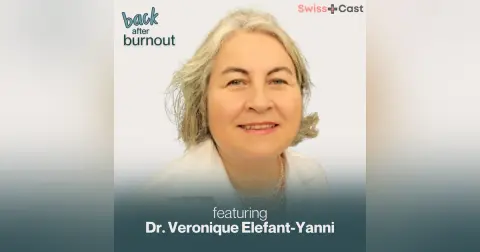


If you’re getting through each day but feel disconnected from yourself, simply pushing harder may not be the answer. You might recognize the experience of running on autopilot, saying yes when you need to say no, or knowing that something needs to change without knowing where to begin. In this conversation, Karina speaks with clinical psychologist Dr. Veronique Elefant-Yanni about understanding what you feel, not just what you think, and making room for a different relationship with yourself.
Drawing on her 3D Human Therapy® framework, Veronique introduces affect and her distinction between “thinking space” and “feeling space.” She shares four everyday wellbeing practices: breathing, walking in nature, appreciating small pleasures, and meditation. Together, they explore people-pleasing, self-trust, and why returning to work after burnout can bring bigger questions about your values and choices. It’s an invitation to approach recovery with curiosity and self-compassion rather than treating yourself as something that needs fixing.
In this episode, you will:
- Understand how Veronique uses affect, body tension, valence, and activation to describe your inner experience.
- Recognize the disconnection Karina describes as living on autopilot.
- Try four everyday practices Veronique recommends for reconnecting with how you feel.
- Explore how people-pleasing and seeking approval can make boundaries harder to maintain.
- Reflect on your values and choices when preparing to return to work after burnout.
- Recognize that seeking professional support is not a personal failure.
Conversation highlights
00:00 Introduction
02:12 What is Affect?
13:22 How does our affect effect our daily lives?
21:26 Environment vs. Internalization
24:25 Four tools to keep the connection between thinking and feeling strong?
28:51 Why we struggle to slow down and appreciate the present
36:59 I don't have a choice, I have to go back to work
47:02 Wrap-up and Connect with Dr. Elefant-Yanni
Resources mentioned
- Free 3D Human Therapy® guide: Feel Better, Think Clearer— the guide discussed in the episode, with an introduction to the framework and four wellbeing tools.
About Dr. Veronique Elefant-Yanni
Dr. Veronique Elefant-Yanni is a clinical psychologist with a PhD in Affective Sciences and over 25 years of clinical practice. She created 3D Human Therapy®, a non-pathologizing framework focused on helping people understand their affective experience and reconnect thinking and feeling.
Connect with Dr. Veronique Elefant-Yanni
Listener reflection
Where in your day do you notice yourself running on autopilot, and what small moment of presence could you make room for today?
Search questions & answers
Question: What is affect in 3D Human Therapy®?
Answer: Affect is your immediate feeling response to what is happening inside you and around you, before you put that experience into words. In 3D Human Therapy®, it is described through three dimensions: tension (how tense or relaxed you feel), activation (how alert or sleepy you feel), and valence (how pleasant or unpleasant you feel). Noticing these sensations is a way to check in with yourself rather than focusing only on your thoughts.
Question: What everyday practices can help me reconnect with myself during burnout recovery?
Answer: Four everyday practices to try are taking three slow belly breaths, walking in nature without your phone for 30 minutes at least twice a week, fully appreciating a small daily pleasure, and meditating for 20 minutes a day. A small pleasure could be savoring a cup of coffee, reading a few pages, or talking with a friend. For meditation, focus on your breathing or surrounding sounds, gently returning your attention when it wanders. These practices create opportunities to notice how you feel; they are not a substitute for professional support.
Question: How can people-pleasing make it harder to set boundaries at work?
Answer: People-pleasing can make saying no feel difficult because being helpful becomes tied to receiving approval or feeling good enough. At work, this can mean agreeing to extra tasks, feeling responsible for everything, and overlooking your own limits. A useful starting point is to ask whether you genuinely want to help or feel you must say yes to earn acceptance. Recognizing that difference can help you make room for your own needs when setting boundaries.
Question: Why can returning to work after burnout feel difficult even when I’m ready?
Answer: Feeling ready to work again does not necessarily mean feeling ready to return to the same working conditions. Burnout recovery can lead you to reconsider your values, priorities, and what you want from work, making a return to your previous routine feel uncomfortable or at odds with your needs. Financial and family responsibilities may limit immediate changes. Identifying what you want to be different and planning toward it, even over a longer period, can help restore a sense of choice.
Back After Burnout is produced by the SwissCast Network, the only podcast network with podcasts produced in, for, or about English-speaking Switzerland.
Back After Burnout is for education and inspiration only and does not constitute medical, mental-health, legal, or employment advice. Every burnout journey is unique—always consult qualified healthcare and workplace professionals before acting on anything you hear. Resources shared are tools Karina has personally found helpful; they may not suit every listener. Use what serves you and leave the rest.
Mentioned in this episode:
Rate & Review
Back After Burnout is a proud member and a production of the SwissCast Network
Discover more great podcasts for English-speaking Switzerland
00:00 - Untitled
00:11 - Introduction
02:23 - What is Affect?
13:33 - How does our affect effect our daily lives?
22:07 - Environment vs. Internalization
25:31 - Four tools to keep the connection between thinking and feeling strong?
29:57 - Why we struggle to slow down and appreciate the present
38:05 - I don't have a choice, I have to go back to work
48:08 - Wrap-up and Connect with Dr. Elefant-Yanni
# Dr Elefant-Yanni
[00:00:00]
## [00:00:00] Introduction
[00:00:00] **Karina:** Hello, everybody, and welcome back to the show. Today, we will be joined by Dr. Veronique Elefant-Yanni, who is a clinical psychologist and who is on a mission to redefine how we approach mental health. Dr. Veronique has a PhD in Affective Sciences and with over 25 years of clinical practice, has created 3D Human Therapy.
It's a powerful non-pathologizing framework that helps patients identify and regulate their affective state without being reduced to diagnostic labels. Whether working with individuals or couples in crisis, she focuses on what matters most, how you function now, and what you can do to move forward with clarity, confidence, and vitality.
I'm really excited to understand from Dr. Veronique what she means by affect, why it's important for us to understand what this is, and how her 3D Human Therapy framework helps us understand how we function and how [00:01:00] we approach our daily life situations. And as I was going through Dr. Veronique's user guide, I came across a couple of sentences that really spoke to me, and I felt compelled to quote it here as a, as part of the introduction to her episode.
So here we go. I quote, "A note on self-compassion. You are not broken. You don't need fixing. You need space, presence, and support to come back to yourself, your true self, the one that never left but may have been buried under years of survival and self-protection. These tools are not homework. They are gifts you give to yourself, and every time you use them, you are choosing healing."
End quote. That spoke so much to me and, for those of you who are listening out there who might feel broken, who might feel insufficient or not good enough, I really hope you will walk away from [00:02:00] today's episode with a little bit more self-compassion and a little bit more understanding for yourself and how you are currently feeling.
let's not wait any longer. Here is our episode with Dr. Veronique
## [00:02:12] What is Affect?
[00:02:12] **Karina:** Veronique thank you for joining me today Welcome to Back After Burnout
[00:02:17] **Dr. Elefant-Yanni:** Thank you very much, Karina. It's nice to be with you again today
[00:02:21] **Karina:** Same I know we had a really good conversation some weeks ago so I'm really excited to continue it today and with the benefit that our listeners can hear us this time
[00:02:32] **Dr. Elefant-Yanni:** yeah. I hope some of your listeners can, find something interesting for themselves in here
[00:02:37] **Karina:** I'm quite sure they will I know I have I've looked at the work that you've been doing and I found it really useful perhaps let's begin with you just introducing yourself in particular how you got into the work of mental health and wellbeing What brought you here
[00:02:53] **Dr. Elefant-Yanni:** I think to be honest, okay, every psychotherapist should say, "Okay, I had some question [00:03:00] about myself." when I was younger, I had, anger problem. So I was interesting to understand myself better. I lost my mother when I was 17, and it affect me a lot. And,at one point I decide, okay, I need to understand myself, so I go to psychology for one year okay, just one year just to test, okay?
And, 17 years later, I was still at the University of Geneva teaching. one year become seventeen years and,at this moment I was, res- researching, affective science. So I, my main, research was on affect, which most of the people don't know about, but it's really the star of your life if you don't know about it.
Okay? I try to define it. It's like what we call a good feeling, So in fact, you have an affect, you have an affect, you have an affect. Every two [00:04:00] hundred and fifty millisecond you have an affect, and this affect summarize all the stimuli coming to you from external or internal origins.
That mean it's a very big number of information,
[00:04:18] **Karina:** Right working on a quantum mechanism, uh, uh, here, okay? Because it's no time and treat so much information. This affect, when it reach you, it blossom in your body on the three dimension of the tension, if you are tense or relaxed, on activation, if you are sleepy or well awake, and on proto-representation, which is, belly wellbeing or belly malaise.
[00:04:52] **Dr. Elefant-Yanni:** Okay? And I say proto-representation because with each concept you have the connotation [00:05:00] or, of good or bad.
[00:05:02] **Karina:** Okay? That's why it's a proto-representation,
Presentation, if you want. We have to remember representation mean presentate again, okay?
So it's secondary to something else, representation. And the presentation is the feeling.
[00:05:23] **Dr. Elefant-Yanni:** Okay? But we forgot about... we forget about it and the fact is most of the people ignore how they function. So when you are stuck in your life, you don't know and don't understand how you function, it's really difficult to change.
[00:05:43] **Karina:** Yeah
[00:05:44] **Dr. Elefant-Yanni:** But if you understand how you function, you can find tools that can help you, to be on the move again.
And on the move again here mean on your development path.
[00:05:59] **Karina:** So you have to [00:06:00] be very careful when people say, uh,you need help or,or you are broken or something like this, because the fact is you just stuck on your development path.
That's a
[00:06:11] **Dr. Elefant-Yanni:** Okay?
[00:06:12] **Karina:** perspective I wanna go back to where we started with affect because this I know plays an integral role in the work that you do and you're absolutely right in that don't hear people talk about affect in the way that you just described it probably many of our listeners also will not have heard about it in common daytoday conversations And I remember only hearing affect to describe someone's emotional state like when somebody says their affect is flat there's not a lot of So I think that maybe it's just a partial understanding of what you said are very different to how you explained affect and my takeaway from what you're saying is is such an important guiding mechanism for us to understand [00:07:00] how we respond to situations Is that a fair summary of what affect
[00:07:03] **Dr. Elefant-Yanni:** Absolutely. In fact, we live in two spaces. We live in feeling space, affect, and we live in thinking space, representation. Okay?
[00:07:16] **Karina:** Okay
[00:07:17] **Dr. Elefant-Yanni:** we are most of the time lost in our thinking space, But thinking space is past and future.
[00:07:26] **Karina:** Mmhmm Feeling space is present. Okay?
Okay
[00:07:30] **Dr. Elefant-Yanni:** this is really important, uh, how you,understand how you function.
The feeling space is something of your good brain,
[00:07:40] **Karina:** Yeah
[00:07:41] **Dr. Elefant-Yanni:** And the thinking space is something of your head brain. And you have to know really that you have to brain.
[00:07:49] **Karina:** You know, most of the people, they always speak brain, brain, brain, regarding your head. But your primitive and, and most important brain is in your [00:08:00] organs.
Most of the communication is initiated by the good brain to the head brain. So you see ninety percent of the communication mean the master, he needs your belly, not in your head. Okay? But We give so much importance to the head brain that we forget the fundamental of our functioning.
Yeah
[00:08:24] **Dr. Elefant-Yanni:** I said before, affect is really the fundamental block of your life because the only thing you have is your affect. Everything you know is about your affect. Even the concept that we, construct later, they are built on affect. As I say, the first concept of good and bad is connotation for all the other concept
[00:08:50] **Karina:** And this is something f- when you have a depression or burnout, which mean a depletion of energy, okay?
[00:08:58] **Dr. Elefant-Yanni:** That mean you [00:09:00] have to go back in your feeling space because it's also the place of your true self and your, uh, vital energy. And if for a reason or another, let's say because of anger, you don't want to feel the anger, a lot of us grow up with a monster anger, okay?
[00:09:20] **Karina:** Hmm
[00:09:21] **Dr. Elefant-Yanni:** don't want to feel the anger and the fear of the anger, so you cut the bridge between your feeling space and your thinking space.
That mean you lost the synergy between your two brains, okay? And what happen, you have a depletion of energy.
[00:09:38] **Karina:** Oh
[00:09:39] **Dr. Elefant-Yanni:** mean
[00:09:39] **Karina:** didn't
[00:09:39] **Dr. Elefant-Yanni:** you,
[00:09:40] **Karina:** that Yeah
[00:09:40] **Dr. Elefant-Yanni:** you have no motivation, okay? And, uh, very difficult even to get up in the morning, okay? So w- y- we also have to make a difference between motivation, vital energy coming from the good brain, okay, and will, Will is [00:10:00] something that you work with your head, okay? So you can work on your will for a very long time, you know, push yourself, push yourself, but at one point, no more energy,
[00:10:12] **Karina:** And when you are empty, it's called a burnout
Right there's so there's so much interesting things that you said and I think I wanna underline a few things for our listeners One is the awareness that we actually have two brains our thinking brain and our feeling brain Our thinking brain meaning kind of using your head but your feeling brain is what we often sometimes refer to the gut brain our instincts our emotional responses which is often the first thing that happens right When we
[00:10:42] **Dr. Elefant-Yanni:** Absolutely
[00:10:43] **Karina:** it's usually first and foremost an emotional response before it's a rational um
[00:10:50] **Dr. Elefant-Yanni:** yeah. The, the best example to understand that is you go to cross the street between two cars and you, you jump back, but you [00:11:00] don't know why. And at the same time, a, a, a motorcycle is passing by. So something in you saw the moto- motorcycle before you are aware of the motorcycle, and this is the feeling space.
There is a ongoing monitoring process that at all time tell you my situation is good or bad, okay? it's really a archaic survival mechanism,
[00:11:29] **Karina:** Yeah
[00:11:30] **Dr. Elefant-Yanni:** So-
[00:11:30] **Karina:** don't probably value so much these days it seems right there's so much
[00:11:35] **Dr. Elefant-Yanni:** B- yeah, exactly because we always
[00:11:37] **Karina:** yeah
[00:11:38] **Dr. Elefant-Yanni:** the little story with words in your- in our head. So we don't listen to the gut brain because it has no words, just feelings. And if you are not aware of how you function, you are more fascinated and interested by the little story [00:12:00] always coming up,
and you lose, you lose yourself here.
[00:12:04] **Karina:** Hmm
[00:12:05] **Dr. Elefant-Yanni:** alienation, Alienation is to be a stranger to yourself.
[00:12:10] **Karina:** Yeah
[00:12:11] **Dr. Elefant-Yanni:** are lost in your head, you are alienated from yourself,
[00:12:17] **Karina:** Yeah
[00:12:18] **Dr. Elefant-Yanni:** and this is really something important. How not to become a stranger to yourself
[00:12:25] **Karina:** Yeah that's really true right Like when people sometimes say I feel like I don't know who I am anymore or I feel like I don't know When they sometimes people start to struggle with their identity or their purpose or how they show up every day it feels there's an internal tension or disconnection as
[00:12:41] **Dr. Elefant-Yanni:** But this internal conflict, okay, is because there is no unified path. One is going one direction, the other one... There is no synergy with your two brains. So this continual internal conflict puts you in indecision,
[00:12:59] **Karina:** [00:13:00] Right
[00:13:00] **Dr. Elefant-Yanni:** this is the point when you say, "Okay, I need an external validation
[00:13:04] **Karina:** Yeah
[00:13:05] **Dr. Elefant-Yanni:** my point of view seems to be not worthy.
So yeah, I need an external validation." Okay? But at one point, okay, you have to say, "Okay, something have to change here."
## [00:13:22] AD - How does our affect effect our daily lives?
[00:13:22] **Karina:** You mentioned earlier and I know you described this also in your work that our affect is like our radar system our compass to the
[00:13:31] **Dr. Elefant-Yanni:** Absolutely
[00:13:32] **Karina:** sounds very But can you describe in more daytoday terms why this is so important that we are connected to our affects How does this play out in daily situations of stress or being at work or doing a job you don't love or conflict in relationships for example
[00:13:53] **Dr. Elefant-Yanni:** The fact is you need energy and motivation to do things.
[00:13:57] **Karina:** Yeah
[00:13:58] **Dr. Elefant-Yanni:** If you [00:14:00] become alienated, mean a stranger to yourself, you lose the origin of your vital energy, your feeling space.
[00:14:10] **Karina:** Mmhmm
[00:14:10] **Dr. Elefant-Yanni:** Okay? So you become to be a zombie in a tunnel. you can push yourself, okay, have bills to pay,But at one point, okay, you can just not move anymore.
No, because your body say, "No, it's enough now.
[00:14:26] **Karina:** Yeah
[00:14:27] **Dr. Elefant-Yanni:** can't."
[00:14:28] **Karina:** Yeah
[00:14:29] **Dr. Elefant-Yanni:** and this is the point where you don't want to be.
[00:14:32] **Karina:** No
[00:14:33] **Dr. Elefant-Yanni:** Okay? So-
[00:14:35] **Karina:** place to be for the people who've struggled in their lives They know that that's not a place you want to get to
Yes, because at least you know you need one year to get from there. Okay? Because, when we say like this, "Oh, you need at least one year to get out of your depression, your burnout and everything," people say, "Oh, it's really long." but maybe you had, 30 years to arrive to this point, [00:15:00] so not so long, Yeah because by the time we realize that we're unwell it's years and years of experiences or built up stress in the case of burnout that you're right people are often surprised that a twoweek time off doesn't solve the challenge
so Véronique I wanna go back to something you said earlier which I think is quite important which is in the ideal world our thinking and feeling brains are aligned and connected and communicating with each other but there are times when they don't or there are triggers that cause them to disconnect what are the different reasons that our thinking and feeling brains get disconnected
[00:15:39] **Dr. Elefant-Yanni:** Mostly is because we have a feeling that we don't want to feel.
[00:15:44] **Karina:** Hmm
[00:15:45] **Dr. Elefant-Yanni:** I do believe that for a very lot of us, it's begin very early in the first connection with our caregiver. It's not because of the baby, it's not because of the [00:16:00] caregiver, uh, mostly the mother, But the circumstances could, uh, put the mother in situation.
Maybe she has some financial worry, maybe she has some, affective worry. So she's not mentally available for the baby, and the infant resents this and feel abandoned. And as he di- didn't receive amount of unconditional love he needs, so what happen? He feel very angry. at the same time, he's all power.
So if he make a big tantrum, he will destroy the world, kill the caregiver. So he try to control the anger, this is the begin of the monster anger we spoke so much, okay? But there is not only the m- the monster anger, there is also the fear of the monster anger, [00:17:00] okay?
[00:17:00] **Karina:** Hmm
[00:17:01] **Dr. Elefant-Yanni:** that our anger, overw- overwhelm us
[00:17:05] **Karina:** Yep
[00:17:05] **Dr. Elefant-Yanni:** we lose control.
So this is the begin of we stay in the control. We stay in control. We stay in control, okay? this
[00:17:14] **Karina:** Okay
[00:17:15] **Dr. Elefant-Yanni:** we cut the bridge between our feeling space and our thinking space,
[00:17:21] **Karina:** I understand Okay
[00:17:23] **Dr. Elefant-Yanni:** we could say part of the development because I think it, it should touch something like, let's say, uh, between seventy and ninety percent of the population.
So it's the majority of
[00:17:35] **Karina:** part yeah exactly yeah
[00:17:37] **Dr. Elefant-Yanni:** okay?
[00:17:37] **Karina:** probably regulating your emotions and learning how to be aware
[00:17:41] **Dr. Elefant-Yanni:** but
[00:17:42] **Karina:** regulate them Yeah
[00:17:43] **Dr. Elefant-Yanni:** uh, you know, it's part of, dealing with frustration because frustration and anger, they have the same nature.
[00:17:51] **Karina:** Yeah
[00:17:51] **Dr. Elefant-Yanni:** Okay? But the fact is that if we learn it when we were younger, so we could [00:18:00] understand how we function, and we could, rebuild the bridge earlier.
[00:18:05] **Karina:** Yeah
And which we don't learn These are the things we don't learn about early enough right
[00:18:10] **Dr. Elefant-Yanni:** Exactly. I will say it's not all lost, okay? Because if you are in control, that mean you are a good student,
[00:18:20] **Karina:** Yeah
[00:18:21] **Dr. Elefant-Yanni:** because to study is difficult. I keep,
[00:18:24] **Karina:** reading and I, I keep studying, So control a- allow you something, okay? But at the same time, you lose a lot i- in the way that you become more and more rigid, And you cannot enjoy life as much
Yeah
[00:18:43] **Dr. Elefant-Yanni:** So I do believe that even if it's part of our development, we need to go beyond,
[00:18:52] **Karina:** Yeah
[00:18:53] **Dr. Elefant-Yanni:** to, build a bridge again and thrive in life, not be in, in a [00:19:00] survival mode to the end of our life,
[00:19:02] **Karina:** Right
[00:19:04] **Dr. Elefant-Yanni:** that's, that's a reason, but it's also because on the path, you have depression, you have burnout, but you also have a lot of people in a zombie mode,
[00:19:16] **Karina:** Yeah meaning going through life just doing but not really feeling and experiencing the fullness of it
[00:19:24] **Dr. Elefant-Yanni:** Exactly. Exactly.
[00:19:26] **Karina:** How does Yeah
[00:19:28] **Dr. Elefant-Yanni:** understand the system is made to steal your life. If you think it's normal, a natural thing to go to the office or to go to work for eight hours every day almost of your life,
[00:19:43] **Karina:** Yeah
[00:19:44] **Dr. Elefant-Yanni:** I don't think so. Okay?
[00:19:46] **Karina:** interesting right Like that our lives have evolved or our environments and our work environments have evolved to a place that's I've heard people say is counter to basic hu the way the basic human being needs to function and the [00:20:00] constant isolation and is against our nature as social creatures right
[00:20:06] **Dr. Elefant-Yanni:** Absolutely. But you have to understand one thing. Some people can enjoy a better life, or let's say let's hope for them because they create, create a lot of misery for most of us, okay? So y-you know, it's like, uh, everyone has one, okay, but one take, the rest of, uh, the marbles, let's say. So one has ten and the, yeah, and the other one has none,
[00:20:35] **Karina:** Yeah
[00:20:36] **Dr. Elefant-Yanni:** you have to understand here that Something happened with time, okay? Not, uh, I mean, when the... When I say with time, it's centuries, okay? To the point that people believe it's normal to
[00:20:50] **Karina:** Yeah
[00:20:51] **Dr. Elefant-Yanni:** this, okay?
and this is also part, one of the question you had for me was, why is it so difficult for people, when they are [00:21:00] technically ready to go back to work, to go
[00:21:03] **Karina:** Yeah
[00:21:03] **Dr. Elefant-Yanni:** Because when you go to the point of burnout, you question yourself a lot,
[00:21:11] **Karina:** True
[00:21:12] **Dr. Elefant-Yanni:** And one of the answer is, " I have to change my life. My life is not good as it is."
[00:21:19] **Karina:** Right
[00:21:19] **Dr. Elefant-Yanni:** you question also how you live and the system in, in which you live
[00:21:25] **Karina:** That's true
## [00:21:26] Environment vs. Internalization
[00:21:27] **Karina:** Can I ask you this question while we're on burnout Because in the current literature burnout is described as a state of chronic stress that has not been managed and most of the time the reasons for that chronic stress is externalized like high workload or low autonomy in your work or feeling unfairly treated And there's so much about it that has to do with the environment and there's always this debate [00:22:00] of whose fault is burnout Is it the person's fault or is it the environment's fault How do you reconcile that Because I know it's not eitheror it's always and But how do you reconcile that from your perspective Yeah
[00:22:15] **Dr. Elefant-Yanni:** is, first, the egg or the hen? Okay? But I do believe the circumstances, as I said before, already between a mother and an infant, okay, give the reason of, But the same stress for two different people will be received differently.
[00:22:36] **Karina:** True Yeah
[00:22:37] **Dr. Elefant-Yanni:** one manage, to have a hobby like running, like meditation and everything, and the other one, no.
[00:22:44] **Karina:** Hmm
[00:22:45] **Dr. Elefant-Yanni:** it's not because you take off the stress and take off all the problem of the circumstances that suddenly you will be fine.
[00:22:54] **Karina:** You have to go back to your own vital energy.
[00:23:00] Yeah
[00:23:00] **Dr. Elefant-Yanni:** to r-r- be in touch with it.
[00:23:04] **Karina:** Yeah
[00:23:04] **Dr. Elefant-Yanni:** So i-it's not because the circumstances only... of course, it's...
I said before, we don't know which one is w-which, okay? But fact that if you know how you function and
[00:23:18] **Karina:** Yeah
[00:23:19] **Dr. Elefant-Yanni:** a good care of yourself, even under pressure, I'm fine,
[00:23:24] **Karina:** Yeah
[00:23:25] **Dr. Elefant-Yanni:** and I will say also something. you know how you function, okay, at one point you say, "No, I will say no. That's it."
[00:23:33] **Karina:** Yeah
[00:23:34] **Dr. Elefant-Yanni:** Okay? Because you are able to say no.
[00:23:37] **Karina:** Yeah
[00:23:37] **Dr. Elefant-Yanni:** most of the people, they are not able to say no because they are not, psychologically independent.
[00:23:46] **Karina:** Hmm
[00:23:46] **Dr. Elefant-Yanni:** speak of financially independent here. I speak of psychologically independent. mean my opinion is v- valid,
[00:23:56] **Karina:** Yeah
[00:23:57] **Dr. Elefant-Yanni:** I'm worthy, and my opinion [00:24:00] in first.
Of course, I take information from outside, but when I made my opinion, I stick to my opinion, I stand my ground, okay?
[00:24:08] **Karina:** Hmm
[00:24:09] **Dr. Elefant-Yanni:** able to say no. But people who are not connected to themselves, they cannot do it because they didn't go to the point of psychological maturity, Psychological independence
## [00:24:25] AD - Four tools to keep the connection between thinking and feeling strong?
[00:24:25] **Karina:** let's let's take a few steps back So let's assume someone is not in the state of burnout
[00:24:30] **Dr. Elefant-Yanni:** Mm-hmm
[00:24:31] **Karina:** yet You're functioning in your world but you know you're struggling you're starting to feel something's not right or stressed out What are some things that we can already do to help create that connection more strongly or to help maintain that connection to our thinking and feeling spaces
[00:24:49] **Dr. Elefant-Yanni:** So I developed what I call the wellbeing program with four tools. Okay? first tool, less than one minute, the three breathing. So you [00:25:00] breathe through your nose with your belly, deeply in And stay like this, with your belly full, uh, a few millisecond. Exhale through the nose, flat your belly, flat your belly, stay a and three time like this. This
[00:25:17] **Karina:** Mmhmm
[00:25:18] **Dr. Elefant-Yanni:** is mechanical, okay? Because when you are stressed, all your organ are constricted, including your brain. when you are relaxed, all your organ expand. So when you fill your belly, you expand your organ and you s- you trick your brain to believe you are relaxed.
So instant relaxation. The second tools is green walk. At least twice a week, thirty minute, walk in nature, And your phone, please, And you
[00:25:54] **Karina:** Good reminder
[00:25:55] **Dr. Elefant-Yanni:** and rediscover how nature is beautiful because nature is [00:26:00] beautiful, okay?
[00:26:01] **Karina:** Yeah
[00:26:01] **Dr. Elefant-Yanni:** Always, anywhere, And the third tools is small pleasure every day. That mean, let's say for example, you like coffee, you take a cup of coffee, but you don't drink your coffee. You appreciate your coffee, okay?
[00:26:17] **Karina:** love the distinction Yeah
[00:26:19] **Dr. Elefant-Yanni:** you are present and you feel the coffee in your mouth. You appreciate the taste, okay? You are present,
[00:26:27] **Karina:** Yeah
[00:26:28] **Dr. Elefant-Yanni:** And, it could be something else. Could be a ice cream, could be a few pages on a book, could be a call with a friend or anything.
But you are present and you appreciate, and you are really present in your own life, in your own
[00:26:42] **Karina:** Yeah
[00:26:43] **Dr. Elefant-Yanni:** And the last tool, which is for too many people frightening, but it should not, is meditation, which mean twenty minutes meditation every day. So meditation means what? You sit on [00:27:00] a cushion. If you cannot, you sit in a chair, okay?
You close your eyes, You do the three breathing first to relax, and you stay without moving, relax, and you breathe normally.
[00:27:15] **Karina:** Yeah
[00:27:16] **Dr. Elefant-Yanni:** like this trying to put your attention on sounds or breathing, okay? Put your attention, otherwise the stories, the never-ending story will, come and you think about what you'll do next or what you have done before or anything, okay? So is meditation, okay? Meditation is never perfect, okay? It's always a training. and please, no visualization, okay? No,
[00:27:42] **Karina:** Hmm
[00:27:43] **Dr. Elefant-Yanni:** the best place in your life Because if you think of a representation, you're still in your thinking space and not in your feeling space.
[00:27:52] **Karina:** Ah that's interesting because many times people with you know would guide you through like a meditation that includes some [00:28:00] visualization and
[00:28:00] **Dr. Elefant-Yanni:** Yeah, but
[00:28:01] **Karina:** I personally struggle with meditation so that makes it even harder for me
[00:28:05] **Dr. Elefant-Yanni:** Yeah, yeah. So you
[00:28:06] **Karina:** yeah
[00:28:07] **Dr. Elefant-Yanni:** i- in the feeling space, there is no words, no representation. It's a kind of peaceful,
[00:28:14] **Karina:** Hmm
[00:28:15] **Dr. Elefant-Yanni:** Okay? But you have pictures, if you have words, you're still in the thinking space. Okay?
[00:28:22] **Karina:** I see
[00:28:23] **Dr. Elefant-Yanni:** course, at the beginning, you can use some guided meditation. Okay? It can
[00:28:28] **Karina:** Right
[00:28:28] **Dr. Elefant-Yanni:** I understand. It's true. But after that, try to use nature sound, or silence.
[00:28:36] **Karina:** okay
[00:28:36] **Dr. Elefant-Yanni:** And please, 20 minutes for an adult, not more, because if you try to be the best, uh, student in the class, okay, let's say 30 minutes, after a few days, you have no time to do it anymore.
## [00:28:51] Why we struggle to slow down and appreciate the present
[00:28:51] **Karina:** So I appreciate the four tools and I remember when I lo when I read it the first time I was like reminded that [00:29:00] these are not complicated things to do They're not by nature difficult They're very simple and accessible and yet many people I know who are high performers who are very driven who give very give a lot of themselves to others really struggle with the slowing down and the appreciation and the presence What's your experience as to why that might be
[00:29:36] **Dr. Elefant-Yanni:** You know, helping other people, okay, is also a way to avoid,avoid yourself,
[00:29:43] **Karina:** Mm Pull the attention on others instead of yourself
[00:29:46] **Dr. Elefant-Yanni:** Yeah, you know when you don't want to face yourself, okay? So you go help other people or do something else. You know, people can do a lot of things just to avoid themself
[00:29:58] **Karina:** Yeah
[00:29:59] **Dr. Elefant-Yanni:** [00:30:00] but I want to say, That li-like for example, when you are on a plane, okay?
Put your mask first and help other people, your children after. Here, it's the same. Okay? you can fake compassion, okay? And go and help the planet, okay? But you have to know that you're doing it for yourself
[00:30:12] **Karina:** Yeah
[00:30:21] **Karina:** I don't think true compassion, is like this. I
Yeah
[00:30:26] **Dr. Elefant-Yanni:** is, we are all the same, So I understand you,
[00:30:31] **Karina:** Yeah
[00:30:32] **Dr. Elefant-Yanni:** through this I can help you.
[00:30:35] **Karina:** Yeah
[00:30:35] **Dr. Elefant-Yanni:** But even I will say I can help you to help yourself.
[00:30:39] **Karina:** Right
Yeah
[00:30:40] **Dr. Elefant-Yanni:** But,you really have to understand how you function, To be real touch with other people,
[00:30:48] **Karina:** When I love someone, it's not the same thing than I create dependency.
Yeah
Love someone, I don't expect anything in return.
Yeah
[00:30:59] **Dr. Elefant-Yanni:** do [00:31:00] it because I feel like I want to do it. Okay? is, okay, I do this, but I expect something back.
[00:31:08] **Karina:** Right There's still a very selforiented purpose or outcome that you're looking for
[00:31:15] **Dr. Elefant-Yanni:** because, the thing I expect back at least
[00:31:18] **Karina:** yeah
[00:31:18] **Dr. Elefant-Yanni:** recognition like, uh, "Oh, you are truly a good person," okay? Or
[00:31:24] **Karina:** Yeah
[00:31:25] **Dr. Elefant-Yanni:** uh,
[00:31:25] **Karina:** And I think that's Yeah I it's interesting because when I think about my past as a heavy people pleaser and I think it's a lifelong journey of mine to deal with this But when I did the work a lot of the people pleasing the story I told myself is I'm trying to be kind and helpful and nice and considerate of others But yes deep down when I did the work it was still selfish right I was trying to fill a gap or a void that I had within myself and then I filled it by doing things for others which also came at a cost [00:32:00] down the road because that fed into boundaries at work and feeling like I had to do it all and saying yes to everything and saying yes to everyone right So I think it is a good reminder for us to sometimes reflect on our behaviors and just understand more about how we function and why what's driving the behavior and to distinguish how much of this is true and authentic versus it's actually still coming from a very selforiented
[00:32:29] **Dr. Elefant-Yanni:** Yeah,
[00:32:30] **Karina:** place
[00:32:31] **Dr. Elefant-Yanni:** And so when you understand that we all have the same functioning,
[00:32:36] **Karina:** Yeah
[00:32:36] **Dr. Elefant-Yanni:** understand yourself through your own functioning, is true compassion.
[00:32:42] **Karina:** Yeah
[00:32:43] **Dr. Elefant-Yanni:** it's not like I'm alone. We are all together on the same system.
[00:32:48] **Karina:** And when I say system, I don't speak o- of the, human, political, historical system in which we are now.
[00:32:56] **Dr. Elefant-Yanni:** Okay?
[00:32:57] **Karina:** Yeah
[00:32:58] **Dr. Elefant-Yanni:** the fact that the [00:33:00] universe system.
[00:33:01] **Karina:** Yeah Yeah
[00:33:02] **Dr. Elefant-Yanni:** I, for example, I speak of affect. Affect is a summation of all the information, external and internal. I don't know where it stop, the whole
[00:33:12] **Karina:** True
[00:33:13] **Dr. Elefant-Yanni:** and this the first window on spirituality because I don't know where stop the whole information.
[00:33:22] **Karina:** Yeah
[00:33:23] **Dr. Elefant-Yanni:** So this is really how you can be in, in the same boat with other people
[00:33:30] **Karina:** because we have the same source of information for a lot of things. Of course, our background are our story are different, but we still have the same functioning. And a big part of it is we are a window for the universe.
[00:33:48] **Dr. Elefant-Yanni:** We have different windows, but we are still the same functioning behind
[00:33:54] **Karina:** Yeah
What does this mean for the workplace So I'm trying to [00:34:00] find a connection to the workplace where a lot of people end up spending many many hours of their lives right And where a lot of concerns around burnout and stress are coming from or at least triggered by what's the learning here for managers or employers or if there are people in HR or leaders listening to this what can they take from this
[00:34:25] **Dr. Elefant-Yanni:** their own school, okay? One of the school is trying to keep the, the staff motivated, okay?
[00:34:32] **Karina:** Right
they have a new way, to please the staff s- giving some nice compliment. Okay, well done, and everything, so you keep motivated, okay? But the end goal is the same. Yeah
[00:34:46] **Dr. Elefant-Yanni:** take eight hours of your life and give you some, bills, so you can pay your, your bills, okay?
[00:34:52] **Karina:** Yeah
[00:34:53] **Dr. Elefant-Yanni:** the thing here is We cannot escape, right away the system in which we are, but we [00:35:00] can think about what do we want in life, okay? If it's only to have more money, to have more things, okay? Things doesn't, make anything for us, okay? We can
[00:35:14] **Karina:** Yeah
[00:35:14] **Dr. Elefant-Yanni:** collection of things, and we're still alone, okay?
So it's not this, important. so w-what do we want? most of the time, we find in these cir-circumstances because younger we believe that if we are an engineer or if we are this or this, we will have a nice life, and we arrive this, and do we want to do this for forty years?
[00:35:42] **Karina:** Yeah
It goes back to what you said earlier right Like when people really go through a difficult time whether it's burnout or something else the recovery often includes a questioning of values and what they want their lives to be and knowing that it they don't want to go back [00:36:00] to the same environment that they left
[00:36:03] **Dr. Elefant-Yanni:** Yes, because suddenly they have question about their life.
[00:36:07] **Karina:** yeah
think, about the fact that, okay, you work for forty years, you have a misery retirement, fund, okay?
Yeah
[00:36:17] **Dr. Elefant-Yanni:** uh, you are supposed to enjoy life. Maybe you can enjoy life before,
[00:36:21] **Karina:** Right
[00:36:22] **Dr. Elefant-Yanni:** this is the point. W-why, why do we work?
[00:36:27] **Karina:** Yeah
[00:36:28] **Dr. Elefant-Yanni:** W-what do we want about this work?
we, marry our pro-professional position, okay, at retirement, the only thing we can do is die because we are so bored.
[00:36:41] **Karina:** Yeah
[00:36:42] **Dr. Elefant-Yanni:** You know? Not to have the support of, our position in the company give us any identity.
[00:36:51] **Karina:** Yeah
[00:36:52] **Dr. Elefant-Yanni:** So this is really important. You know, we can be lost in our head, we can be lost in the system also.
## [00:36:59] I don't have a choice, I have to go back to work
[00:37:00]
[00:37:00] **Karina:** what can you say to people who might be listening to this and say to themselves I don't really have a choice or I'm financially going through a difficult time I have to go back to my work my workplace or I have I'm a single parent and I need to put in the extra hours to care for my family we all have constraints in our lives right Perceived or or true
[00:37:29] **Dr. Elefant-Yanni:** absolutely. And my answer here is look at yourself, take the decision, and prepare. Because if you go on running on the circus, nothing will happen. But if you take the decision, even if it's a few year in advance,
[00:37:48] **Karina:** Yeah
[00:37:49] **Dr. Elefant-Yanni:** That already it will be you work for yourself, no more for your boss,
[00:37:54] **Karina:** You're still in control because you've taken you've made a decision in advance and you can create the [00:38:00] intention behind it I understand Yeah
[00:38:02] **Dr. Elefant-Yanni:** is really important.
[00:38:04] **Karina:** for some people will be, "Okay, I'm fine. I'm sitting here. I'm enjoying my life doing this, so let's go."
Yeah
[00:38:11] **Dr. Elefant-Yanni:** I just want to say, some years ago, let's say 50 years ago, people didn't think they work all their life in the same company.
Today, if you don't change job every few years, you lose on status and you lose on salary.
[00:38:27] **Karina:** True
[00:38:28] **Dr. Elefant-Yanni:** So you play the game every, three or five years you change job, But are you doing something for yourself or are you still working for the company? Yeah, don't mix both.
[00:38:42] **Karina:** Yeah
[00:38:43] **Dr. Elefant-Yanni:** treat yourself as your own small enterprise, And you work your own career and your own life as your own enterprise.
[00:38:51] **Karina:** Yeah
[00:38:52] **Dr. Elefant-Yanni:** Some some years in the same company, they decide, "Okay, I do the same thing, but I'm independent."
[00:38:59] **Karina:** [00:39:00] Yeah
[00:39:00] **Dr. Elefant-Yanni:** So I have more time to enjoy life, and I can work for anywhere. I have a lot of expat people, working with me and some people who travel the world.
Okay? So decide, okay, at
[00:39:13] **Karina:** Yeah
[00:39:14] **Dr. Elefant-Yanni:** whatever they're doing, they can do it on the computer. Okay, I can work from anywhere
[00:39:18] **Karina:** Yeah And it goes back to staying connected to our choices to our sense of agency that despite the circumstances that might that we might be facing we still We're not the victim of our own lives We shape it in the way that makes sense for us Yeah
[00:39:36] **Dr. Elefant-Yanni:** let's say for example, some, some of your listeners can say, "Okay, I don't work on the computer. I'm working as a," how you say, a server in
[00:39:45] **Karina:** Yep
[00:39:46] **Dr. Elefant-Yanni:** a coffee or restaurant. So, you know, a server in a, in restaurant or coffee, can find it anywhere in the world. So maybe you decide, okay, next year I work in [00:40:00] Spain, or I work in, uh, you know.
[00:40:02] **Karina:** Yeah
[00:40:03] **Dr. Elefant-Yanni:** you
[00:40:03] **Karina:** Yeah
[00:40:04] **Dr. Elefant-Yanni:** you can decide to change your life, first you have to decide
[00:40:09] **Karina:** Yeah And that's sometimes very difficult for people right Because making a decision to change can feel very scary and very threatening because we don't like change unless we know for a fact that it's good for us Yeah Change is difficult
[00:40:22] **Dr. Elefant-Yanni:** anywhere. But I have to say, at one point, is change or die.
[00:40:27] **Karina:** Yeah
[00:40:28] **Dr. Elefant-Yanni:** You can die and still seems to be alive, okay? You can go to the office every day. You died inside, but you are still moving.
[00:40:39] **Karina:** What a horrible place to be right
[00:40:41] **Dr. Elefant-Yanni:** Okay?
[00:40:41] **Karina:** To feel yeah
[00:40:43] **Dr. Elefant-Yanni:** So what do you think happened before a depression or a burnout? You died inside.
[00:40:50] **Karina:** Yeah I mean that's at at least that's how I felt right Like at that point where I just felt so disconnected It's what you said [00:41:00] earlier I feel like I was operating every day not knowing what I was doing or being pulled in so many different directions
[00:41:07] **Dr. Elefant-Yanni:** I really lost integration at that time
yeah. It's what I call a zombie in a tunnel.
[00:41:14] **Karina:** Yeah
[00:41:14] **Dr. Elefant-Yanni:** inside but still functioning. Zombie. And you feel nothing
[00:41:20] **Karina:** No
[00:41:21] **Dr. Elefant-Yanni:** feel anything. You cut the bridge, so otherwise, you, i-it's not... You know, it's only, uh, working with your
[00:41:29] **Karina:** Yeah
[00:41:30] **Dr. Elefant-Yanni:** uh, system. Your head
[00:41:32] **Karina:** Yeah you're on autopilot that's how I felt like I was just on autopilot and really in survival mode
that's really what it felt like to me back then
[00:41:42] **Dr. Elefant-Yanni:** Yeah, but wh- when I'm speaking now, what I, I hope I transmit to your listeners is the fact that we have to free ourself, Psychologically, okay? That mean you are independent. You can think by
[00:41:59] **Karina:** [00:42:00] Yeah
[00:42:00] **Dr. Elefant-Yanni:** You love yourself. You trust yourself. You go to this place where you don't need external validation.
[00:42:07] **Karina:** Yeah
[00:42:08] **Dr. Elefant-Yanni:** the end path of the growth of y- of a human being. You get to maturity,
[00:42:14] **Karina:** Yeah
[00:42:15] **Dr. Elefant-Yanni:** Psychological independence. And from there, with your critical mind, you can think again what you want to do with your life, okay? it's also valid a, in a political and historical system in which we found ourself today,
[00:42:36] **Karina:** Yeah
[00:42:36] **Dr. Elefant-Yanni:** some- sometime we say democracy is a demanding system
[00:42:41] **Karina:** Yeah
have to understand, what it's, in question, what it's at play, to be able to decide, But for this, you don't need to be brainwashed and somebody decide for yourself which, which build,law or which bill is [00:43:00] being passed
[00:43:00] **Dr. Elefant-Yanni:** okay. So
[00:43:01] **Karina:** yeah
[00:43:02] **Dr. Elefant-Yanni:** you have to be able to think by yourself,
[00:43:04] **Karina:** first, begin with your own life,
[00:43:07] **Dr. Elefant-Yanni:** go on back on your path to grow as a human being. Finish it, which mean go to psychology, call independence and maturity, and think your life again. What happen when you have a depression or a burnout? It's you don't have a choice anymore. You have to rethink it,
[00:43:29] **Karina:** Yeah
[00:43:30] **Dr. Elefant-Yanni:** most of the time you don't have the tools because you don't know how you function. You know, it's fall on you like, "What happened to me?"
Yeah It's so interesting I had a conversation with a with a friend recently and I'm several years ahead of her in terms of work experience and she observed my change in the way I perceive work which of course is now different because I've been through burnout and I've done the work and I revisited what I want out of my life And so [00:44:00] she asked me How did you get to that point And I said burnout but I don't recommend this Yeah,
[00:44:04] **Karina:** exactly.
if you can avoid that path and do get there in a different way I would prefer that solution right But
[00:44:10] **Dr. Elefant-Yanni:** Yeah,
[00:44:10] **Karina:** really true it's Yeah
[00:44:12] **Dr. Elefant-Yanni:** that suffering make, us grow.
[00:44:16] **Karina:** Yeah
[00:44:16] **Dr. Elefant-Yanni:** it was true for me, as I told you before, when I lost my mother. But, it's true in general. When you suffer, you have to grow up faster, But not always well.
[00:44:29] **Karina:** Yeah it doesn't always you know it I I know where some people really s they do the best that they can but they don't end up better on the other side of it it's just constant and it's really difficult And I think that might be the place where as much as we wanna try to take care of ourselves there are moments where it's worthwhile considering getting professional help and expert help to get us through the struggles that we have
[00:44:55] **Dr. Elefant-Yanni:** If you try by yourself, And let's say after three [00:45:00] months you stop and think about what happens. Is it, worth, worth the effort or do you have any benefit and you see none, okay? Go and find some help.
[00:45:13] **Karina:** Yeah
[00:45:14] **Dr. Elefant-Yanni:** the wellbeing tools I spoke before, okay, are something free and easy to put in practice, so you can use them and help yourself.
As I say with the tools, take the ten days challenge. Use them fully and for ten days.
[00:45:33] **Karina:** Yeah
[00:45:34] **Dr. Elefant-Yanni:** ten days, you feel the benefit, so you are motivated to go on.
If after three months using the tools, you still feel that something is missing, go and find some help.
Yeah that's really good advice Then don't wait too long right Absolutely, because you wait, okay, it just mean you are stuck for longer.
[00:45:59] **Karina:** [00:46:00] Yeah
[00:46:00] **Dr. Elefant-Yanni:** and why suffer for one year when you can do it in s- in two months? some people, can enjoy pain. Okay. This is
[00:46:10] **Karina:** The tolerance is maybe higher but yeah that's that's true Well well because we also don't want to sometimes admit that we're suffering right Because that takes vulnerability and a willingness to say Okay I can't do it myself and now I need to seek help And I sometimes feel like we create these standards of ourselves that admitting we need help doesn't feel safe or fine or accepting
[00:46:34] **Dr. Elefant-Yanni:** this is idealization, okay? The
[00:46:37] **Karina:** Yeah
[00:46:38] **Dr. Elefant-Yanni:** big, uh, image that we have of ourself, but with the big image, okay, there is also the image of, oh, I'm the last of the last. I'm not
[00:46:50] **Karina:** Yeah
[00:46:51] **Dr. Elefant-Yanni:** I don't deserve, something good in my life. So you do some auto-sabotage at the same time.
[00:46:58] **Karina:** Yeah
And continue to [00:47:00] get alienated within ourselves right
## [00:47:02] Wrap-up and Connect with Dr. Elefant-Yanni
[00:47:03] **Karina:** Veronique how do people learn more about all these amazing things you shared with us today Where can they go to learn more about the tools that you shared and the concept of affect that is now very important in my mind
[00:47:17] **Dr. Elefant-Yanni:** I told you about the four tools, and I wrote a small book, practical book, thirty pages. Okay? So not, something uh, much time to read.
[00:47:29] **Karina:** And i-it's called the 3D Human Therapy: A User Guide to Who You Are. And you can download it for free. Okay? I insist everything is free here. go to www.psychologyexperts.online/3d and
Perfect
[00:47:52] **Dr. Elefant-Yanni:** can download it for free, read it, use it, okay?
And you have to understand there is the four [00:48:00] tools, okay? And the first tool that nobody acknowledge, but it's still very important, is the model of functioning.
[00:48:07] **Karina:** Yeah
[00:48:08] **Dr. Elefant-Yanni:** you understand how you function, you get motivated to use the tools because you understand how they work,
[00:48:16] **Karina:** What the effect on yourself.
[00:48:19] **Dr. Elefant-Yanni:** And
[00:48:19] **Karina:** Yeah
[00:48:19] **Dr. Elefant-Yanni:** important too
[00:48:21] **Karina:** I've downloaded the user guide so just for our listeners it's 30 pages is not a lot I think it's w it's very practically written It's very easy to understand Um and so I I definitely recommend this and we'll make sure that the link is available in our show notes so um our listeners can access it very easily Veronique thank you for spending the time I learned so much from our conversation today I am reminded that it's so important to pay attention to our feelings to our gut to s keep those two brains connected I am reminded that it's so important to take the time to breathe well to spend time in nature to [00:49:00] appreciate the little joys in life because they do matter and just the courage to sit with ourselves in silence is something that I'm also
[00:49:09] **Dr. Elefant-Yanni:** But,
[00:49:10] **Karina:** reminded by
[00:49:11] **Dr. Elefant-Yanni:** you you, say courage, okay? But in fact, after some time when you do meditation, you need to sit on your cushion. Okay? If you don't do it, It's like I, I need it. I want to. Okay? I miss it.
[00:49:28] **Karina:** Yeah
[00:49:29] **Dr. Elefant-Yanni:** So you get a lot of pleasure sitting in your, on your cushion.
[00:49:33] **Karina:** I think that's the goal right And I know for myself I purposely used courage because I know why I avoid it right Because I do not want to for very specific reasons So I ne I need to have that that courage to sit in And so I'm really I'm reminded by all of this through our conversation today and I just wanna express my appreciation for your generosity to spend the time with us
[00:49:55] **Dr. Elefant-Yanni:** Thank you.
[00:49:55] **Karina:** and for sharing all of this with us I'm sure there are many things our listeners will take away from this[00:50:00]
[00:50:00] **Dr. Elefant-Yanni:** Thank you
I hope so. And
[00:50:02] **Karina:** Yeah
[00:50:03] **Dr. Elefant-Yanni:** I, will, I will be very happy some people can free themselves using the tools, okay?
[00:50:10] **Karina:** Yeah
[00:50:11] **Dr. Elefant-Yanni:** I do believe this is the end goal, free ourself. This is really important
[00:50:17] **Karina:** Yeah. that's a very inspiring place to end. So thank you again, Veronique.
[00:50:21] **Dr. Elefant-Yanni:** Thank you, Karina. It
[00:50:23] **Karina:** All right.
[00:50:24] **Dr. Elefant-Yanni:** be with you today again


