TCM & Hormones: Coming Home to Your Body ft. Alex Bechinger


What Ancient Chinese Medicine Knows About Your Hormones (That Your Doctor Doesn't)
Danna's been seeing Alex for years—and now we finally got him on the show. Alex Bechinger is a fully licensed TCM practitioner with 30 years of experience, a nursing background, training in craniosacral therapy and functional medicine, and a family legacy of healers. Today we're digging into what Traditional Chinese Medicine actually is (spoiler: it's way more than needles and cupping), why Western medicine keeps missing the mark on women's health, and what ancient China understood about your cycle that modern doctors still haven't figured out.
This conversation went places we didn't expect. We talked about why healing only happens in the present moment, why your symptoms might be a sign you're "homesick" from your own body, and how something as simple as keeping your feet warm can impact your hormones. Alex explains how pulse diagnosis works—connecting not just to your organs, but to your spirit—and why the extra two minutes a doctor won't give you might be exactly what's keeping you sick. If you've ever felt dismissed, over-medicated, or like nobody's actually listening, this one's for you.
What You'll Learn:
- What TCM actually is—and why it's more than acupuncture and cupping
- How meridians and chi work (explained for skeptics)
- Why stress is the root cause of most symptoms—and how emotions live in the body
- What Alex sees when women come in struggling with fertility, painful periods, or perimenopause
- How pulse diagnosis connects to your spirit, not just your organs
- Why cold salads and cold feet could be messing with your hormones
- The lifestyle shifts TCM has known about for thousands of years that modern medicine is just catching up to
Real Talk Moments:
Danna shares how many times she's gone to the doctor for one thing and been handed medication for something else entirely—without anyone even asking about her life. Alex admits that even he struggles with impatience. And we all agree: the expectation of a magic pill is keeping people stuck.
Alex's Parting Wisdom:
"What women in ancient China understood is that everything has an impact. Keep yourself warm. Eat well. Stop eating cold salads. Keep your feet warm—that's where the kidney meridian starts. Hot foot baths. Stable glucose means stable hormones. And self-love? That's medicine. Eating well is an act of self-love. Love heals."
Get to know Alex:
Get in touch!
Check out the So Frickin' Healthy Website
Join the So Frickin' Healthy Community
K, love you, byeeeee
Chapters:
00:00 Introduction and Guest Background
02:22 What is TCM?
07:21 TCM and Women's Health
10:34 Holistic Approach to Health
16:56 Combining Western and Eastern Medicine
32:33 Conclusion and Final Thoughts
Mentioned in this episode:
Big ideas start with small conversations
Grab a slot, let's talk, no pressure — just good vibes.
Organilicious - Danna, Functional Medicine Health Coach
Come See Our Faces - Live Every Wednesday
That's right! Danna and Megan are LIVE and unfiltered every Wednesday morning, 10:00 CET. Come join us on YouTube or Substack - we want to connect with you, beautiful listener! Can't watch us live - the videos will be available about an hour after the live ends. Drop us a comment, leave your thoughts, tell us who you want us to interview next.
So Frickin' Healthy is a proud member of and produced by the SwissCast Network
Discover more great podcasts for English-speaking Switzerland
00:00 - Untitled
00:01 - Intro
03:23 - What is TCM?
08:22 - TCM and Women's Health
11:34 - Holistic Approach to Health
18:36 - Combining Western and Eastern Medicine
31:06 - Practical Tips for Women's Health
35:22 - Conclusion and Final Thoughts
Alex Bechinger
Self love, how is that done? We don't really appreciate ourselves. We conditioned by, you have to work, you have to achieve a lot of expectations.There's a lot of internal pressure we put on ourselves. If you just look after yourself, if, let's say you eat well, that's an act of self love.Yeah, that is self care, basically where you care for yourself. It can be with a massage your lower abdomen when it's painful, just with loving intention.Sometimes when things don't get better, we have to help the person establish another relationship with themselves to establish a more loving relationship. Because that, that is medicine. Love heals. Hi, I'm Alex Bechinger. I'm today's guest on the so freaking healthy podcast.30 years ago I did a 4 year degree in nursing and then went into craniosacral therapy and TCM and several other courses like functional medicine. I'm a full licensed practitioner in TCM and today we will talk about TCM and women's health.
Megan J. McCrory
Hey Donna, how are you doing today?
Danna Levy Hoffmann
Hey, Megan. I'm well, thank you. How are you?
Megan J. McCrory
Excellent. We have a friend of yours on the show today, don't we?
Danna Levy Hoffmann
Yes, a very dear friend. Yes. I'm super excited to have him on board. Alex has been a friend and my TCM practitioner for a few years now and love him to pieces.And I think he's just a fountain of wisdom and I'm excited to pick his brain about TCM and women's hormones.
Megan J. McCrory
Yeah, I think you've done more than I have. I actually have a TCM practitioner next door. I can see into their office, wave and say hello. And I got interested because a couple years ago.Oh, no, it's not a couple years ago. It's like more like 10 or 15 years ago, somebody was like, if you have problems, problems with allergies, this might help or something.Anyway, there was, I. There was something, I don't even remember what it was. And I was just like, okay, I'm going to try tcm.And I had some cupping done and then some needles. And I think I only went twice because it was as an ADHD person, I can only do something once or twice before.I'm like, okay, let's try the next thing. Which I think is not the nature of TCM at all. I. As far as everything that I've read, you really need to keep going and it's gradual, kind of like.Also I go to the chiropractor and it's the same kind of thing. You just need to keep your body into that. But anyway, had nothing to do with women's health.So I'm actually more excited to learn today about how TCM affects women's health. So welcome Alex, our TCM guru.
Alex Bechinger
Thanks for that. I'm not a guru, but I'm here to provide some valuable informations maybe to the ones that are interested in.
Megan J. McCrory
Yeah, I'm sure you. Yeah, I was always told that the expert or the guru is the person in the room that knows more than everybody else.So technically, in this sense, you are our guru.
Alex Bechinger
Okay. All right.
Danna Levy Hoffmann
So, Alex, I want to start with the bare basics because I think that a lot of people don't necessarily know. They, they've heard of the term tcm, but they don't necessarily know what that means.And TCM has actually, in fact been around for thousands and thousands of years. Is there more to TCM than acupuncture and cupping? Like, how would you explain a 10 year old what TCM actually is?
Alex Bechinger
Well, that's a really good question. Indeed. TCM is more than just cupping and needles.Very, very long ago, people, through cultivation and being way more in touch with nature, started to realize that they can apply pressure to certain points and that has a certain effect on the body, or that the way they eat has an impact on how they feel and how physiology functions. And so there's way more to TCM than just needles.You know, TCM works with meridians, so called channels, which transport qi and affect the flow of qi and blood. And we use the channels to rebalance energies.Basically, it comes from a place where everything is energy and therefore within us everything is energy as well. And we have visible vessels like arteries and veins.And there's other channels for more subtle energies which nourish the physical body and vice versa. We can apply pressure to certain points, we can apply warmth to certain points, we can apply stones to certain points.We advise people on how to nourish themselves. And yeah, so it's, it's really a very holistic approach.
Megan J. McCrory
So when you say energy, and I'm coming from a very scientific background, and you mentioned arteries and veins as one of these ways to energy flow. And I feel like sometimes the term energy comes up when in healing, some people go, oh, it's a little woo woo, and I can't quantify this.Is there a way that you could explain the energy flow is a little bit more tangible. That was a horrible question.
Alex Bechinger
Actually. It wasn't. No, it's, I got it, actually. It's, it's a very interesting question. Or you can't really see Qi. What is Qi anywhere?If it's Qi, everything is seen as yin and yang. So it's like this polarity. You know, there's like a materialistic aspect and an invisible one. There's a hot, cold, up and down, day and night.We live in a world of duality, of polarities. So there's a tangible aspect and an intangible one. And this is the Chinese understanding of Chinese metaphysics, basically.And so there has been many attempts to try to prove what Qi is or what acupuncture does. And if I stimulate this point, it has an effect on the brain. But scientists really do study these things, and they don't really quite understand.They think maybe it's neurological or maybe it's connected to some points are near areas. Most of the points are really close to areas which are really rich in blood or along really important points of fascia.Science has found its way to explain things, and they just knew things through cultivation, through meditation. They realize there's certain energetical areas in the body which have an impact.But I think it's a very interesting question, and there's way more research to be done.
Danna Levy Hoffmann
Thinking about our research and how much we know about our body now, which is honestly not much. Just look at the brain. How much do we understand about our brain? How much do we understand about many parts of our body?And then basically looking at energy means we're having. We have to look at the entire body holistically, which is probably even harder to figure out.Which button turns on which light, which is what we expect as humans, I think, is like this very clear and. Clear and obvious action equals result. But at the end of the day, I think the proof is in the pudding.I mean, people have been using TCM for years and continue to go to people like Alex because they see that there are results and that they're happy with them. But, yeah, I get your question as well. I think it's just how much anything.
Alex Bechinger
Yeah, it's a really good question. There have been experiments where they did points on the foot, for example, for the eyes, for Western mind. That already is absurd.Why do you needle points down there to affect my seeing. But then on MRI scans, they see that the area in the brain responsible for seeing already all of a sudden has, like, more blood supply.So, yeah, there's more research to be done. And I think it's a really good question, a very interesting question.
Megan J. McCrory
Okay, so our next interesting question, because we really want to dig into women's health, specifically because we Find that a lot of our listeners are women their 30s, 40s, 50s, and are struggling or looking for answers. And a lot of times they're just doing what an influencer is telling them to do.There's all these things out there and maybe I'm being targeted because I'm in this age group.So maybe you don't see the same things, Alex, on social media, but when it comes to a woman, and she's either still in her, let's say, fertile years where she could still get pregnant, so she's still having a lot of symptoms of pms, maybe irregular cycles, and then also then bridging into that perimenopause and menopause.What do you see when women are coming in to your office with specific symptoms or ailments that is that are affecting their life and how they want you to help them with that?
Alex Bechinger
Again, young people, elderly people, and they all have their symptoms, they come with or women which can't get pregnant, for example, like the desire, you know, they had their career and then they in their 30s maybe, and they want to be pregnant. So I have those women, I have teenagers with really severe menstrual pain, for example.And then I have the ones like in that transition, which normally are maybe quite irritable, can't sleep. That's a big one. They have hot flushes, irritable, they stressed and they can't sleep, which then makes everything worse. So those.When I deal with women, it's probably mostly that what I get, if you go to a Western doctor and you can't sleep, you might get a pill. And this is like our mentality is we think that pills can resolve everything. And Chinese medicine sees it slightly different.Some clients I have, they expect me to make them better so they can go back to the behavior or the lifestyle which has caused the symptoms in the first place.So it's really, I think this is quite a big difference between the Western approach, which tries to just give you a pill and to solve the problem with chemicals, and the Chinese approach, which tries to see the person in a more holistic kind of way. You know, we.We first have to understand looking at the tongue and the pulse, which are our diagnostic instruments where the imbalances are in the body and then how what the person is struggling with. Is she in a very stressful phase of her life? Has she got a career? Is she divorced? Is she a single mother with a lot of stress at.And maybe she has teenagers and so there's a lot of stress there which deplete her resources. So in Chinese medicine, it's always about the balance.It's good to work, but there need to be elements of relaxation, of meditation, where you can recharge your energies. So it's really about understanding where the person is.So if the shoulders are causing her a lot of pain and she can't sleep because of that, we work on the mind to relax the mind, and we work on the shoulder. We address what she came for, but we address other aspects as well. It's important that patients or clients feel seen and heard.It's really about seeing and hearing the person, understanding where she's at, what she's struggling with, and. But also to treat what she came for.
Danna Levy Hoffmann
Yeah, that's very much the same way that we're thinking with functional medicine. Obviously, functional medicine is the new science where TCM is like the ancient one.Feels like we're going back to the basics where a person needs to be hurt, they need to be looked at in a holistic way, and they need to be. If I can count how many times I went to the doctor for a something and they decided without much talk that it's a whole different problem altogether.Did not approach. Let's say it's the shoulder, right? They did not approach the shoulder. They did not talk about the shoulder.They decided to give me medication for something else that I didn't even come in for. And every other aspect in my life has been completely ignored.And I have to say, for the listener, one of my favorite moments in going to see Alex, I haven't had a TCM guy other than Alex is the talk before the treatment. So we do talk about what is going on, and then that moment where it's fascinating and I don't know.I don't know that we're going to get into it today. But when Alex says we check the pulse. And Alex just correct me if I'm wrong.There's three spots in each arm, right, that connect with different organs of the body. And you actually pick up on how much feedback you get from these spots. Is that. Am I.
Alex Bechinger
Yes, absolutely. So pulse diagnosis is absolutely fascinating.And I personally had quite some struggle with pulse diagnosing until I found really good teachers because it's not really taught well. And one of my teachers said taking the pulse is connecting to spirit.You don't only just try to check out the organs, but you actually connect to the person's spirit and try to perceive her as a whole.It's a very materialistic approach Western doctors sometimes have and sometimes as you said, Dana, they give you maybe an antidepressants because they can't really, they don't really want to deal with insomnia and stress and stuff. They don't even ask, how is your situation, how is it looking at home? Or what is causing the stress?Take like another two minutes and they would have so much more information and the person would actually feel hurt, which. That's where the healing starts.
Megan J. McCrory
In your opinion, is stress the most underlying root cause to a lot of ailments that people don't address? Then is stress causing a lot of the symptoms and ailments that people have when they come to, to see you?
Alex Bechinger
Oh, that's a really good question as well. Well, stress is a big one, isn't it?In Chinese medicine, we have the understanding that there's external factors, much cold or too much wind, too much heat, too much dampness, which have an impact on the body. And then we have the internal causes, which for the Chinese are mostly emotional.So, like the way we live emotions has an impact on how we feel, what we think about ourselves, has an impact on how I feel, the beliefs I carry about myself, and how I react towards myself and towards others. That will create my reality. People are quite stressed in these days. You know, we all overstimulated through social media, constantly on.Life has changed a lot. You know, we don't give ourselves time to eat, we don't sit down for food. We maybe have some fast food while we watch a Netflix thing.You know, life has changed a lot. You know, we human beings used to be way more in touch with natural rhythms, you know, and now night time has become the day and vice versa.So life has changed fundamentally. And what functional medicine practitioner does is actually most of them have studied Ayurvedic medicine or Chinese medicine.It's, it's a holistic kind of Western approach. That's why I like functional medicine. They started to realize that it's. It's not about a pill, it's.It's actually about food, movement, life, stress management. So it's, it's way broader. And so when I treat a person, first of all, it's understanding where she's at, and then bit of an educational stuff.I don't want to be moralistic about things. Things, you know, don't do this, don't do that, don't do that.So I try to explain things from a Chinese point of view that is a bit more inviting, you know, and if you want to change things, it's about eating different foods and maybe what can you do to, to reduce your stress? You know, is there anything. And that's very individual, you know, there's no recipe for you. It's maybe walking in the park with a dog.For me it's maybe being creative and for another person it's maybe singing or playing the guitar. So what makes you happy and where are you able to integrate these elements into your daily routine?So it's really like being on a journey and it's a collaboration. You know, I can't really help you if you're not ready to change certain ways of how you deal with things.So if you want to have a long lasting effect on your well being, then obviously you have to adopt new ways of, of living, of, of eating, establishing a loving relationship with yourself. You know, that's a big one. You know, that's what people struggle with. So it's. Yeah, multifacetets. Yeah.
Danna Levy Hoffmann
And it sounds like the polar opposite of conventional medicine. So my question to you is, can they work alongside one another because.
Alex Bechinger
Or yeah, yeah.
Danna Levy Hoffmann
I mean, does it get messy to combine them or. You know, I'm asking this question almost knowing the answer because I've been through all of it and in combination.But I'm curious what you think about that.
Alex Bechinger
Well, with a functional practitioner it's no problem. It's.It's a collaboration which could flow easily sometimes with conventional western medicine where they prescribe heavy drugs, you know, they interfere with my approach. I remember this elderly lady, she suffering from chronic Covid like fatigue syndrome.And I send like blood samples to a special lab in Germany, you know, and they found that sometimes this is a bit of a side discussion, but it, that's where I really found that western medicine interfered negatively with my approach because I sent this blood samples in and they found that Borrelia was activated. This, this lab. Well, the understanding is that through, through the vaccine or through the COVID illness, some viruses can be activated.You know, some doctors think that it's hoax, others go, maybe there's something to it. So we were treating her like food and supplements and herbs to like really detox. And we did like the whole thing.And she was getting really much better, you know, but some kind of radiating pains in her legs didn't quite improve dramatically. But pains like she had in her liver area or in the back, they completely disappeared. And she had them for 20 years. So I saw a big improvement there.And then she went to see a neurologist and this one just prescribed like heavy drugs, you know, just to numb the whole symptoms. So she. She got really tired from the side effect. Collaboration is really beautiful and, and possible. And sometimes it is really difficult.And don't get me wrong, you know, I come from western medicine, and I think drugs, they have their purpose, you know, thanks God we have painkillers or morphine or cortisone or antibiotics. Thanks God, you know, because they save lives. But sometimes it really interferes with what I'm doing.
Danna Levy Hoffmann
Yeah.
Megan J. McCrory
When you were talking before about like giving that extra two minutes to someone to really understand them and listen to them.Donna has talked about this before ad nauseam about not being listened to with the doctors, for fortunately, I am not somebody who has so many ailments, so I don't really have that many interactions with doctors in general.We find that Donna does health coaching, and one of the things we find is that allowing people or helping them allow themselves to have an hour a week, an hour every other week, to focus on themselves, which it sounds like, in addition to the fact that they're getting treatment from you, they get to just think about themselves for 20 minutes. Is that kind of, let's say, vision into themselves that they need, that they don't allow themselves on a daily basis.Whether it's because they don't want to, because they. They're. They're scared at what they might find if they are alone with their thoughts, or maybe they get sad at whatever the situation is.So they don't allow themselves to feel those feelings and go there.And by having an appointment like yours, or a health coach or a therapist, or even just a good coffee dish session with a friend, allowing them to just talk about their issues, I think that's kind of like an umbrella thing of like everybody would just be healthier if they were. Gave themselves the liberty to talk about their feelings and to feel the feelings.
Danna Levy Hoffmann
Yeah. But I feel like also the. The conversations.I mean, again, some questions that people like Alex would provoke in you is not necessarily anything that you would either think about.It's not even trying to not feel the feels, but rather like, what are these even questions that bring up the thought about what is happening, which I think is core, where maybe a friend won't have the expertise to know what to ask. Do you know what I mean?
Megan J. McCrory
Yeah.
Danna Levy Hoffmann
So I think, like, when it comes
Megan J. McCrory
to not really, oh, my friend's gonna solve all my problems. But people who don't talk at all to anybody about anything, I feel like they're even in the most. The worst situation.
Danna Levy Hoffmann
Yeah, for sure.
Megan J. McCrory
We talked a little bit about the intersection of western medicine and eastern medicine. You talked specifically about that one case where somebody went to a neurologist.Has there been cases or when is there a situation with a woman where you would say, hey, you need to go see your gynecologist or an endocrinologist first before we start working? Or in specifically around their hormone health? Is there a time when you would
Alex Bechinger
recommend that here as well? It really depends.Either you start treating the person and you see that you're not going anywhere, or you just see maybe that she's got a lump on the thyroid. That's when you go, okay, let's get a check first. Or I take the pulse and the liver pulse, which represents the state of blood.Is there enough blood in the system? It's really thin and tense. So I would say maybe check your iron first. So we have a base. We know where. Where we start from. And I just.I just want to quickly go back to what you said, Dana, before. In. In functional medicine, they have understood that it is really powerful to listen to the person.You listen to their lives, make maybe some notes, and then you repeat their story back to them. So that is a really powerful part of the treatment. And people get emotional, and it's really. Their story is given back to them in your own words.That's a very powerful thing. And it brought me in thoughts back to what my teachers used to say. Where does healing actually happen? That's a really fundamental question.Where does it happen? So healing, and this is really crucial to understand, doesn't happen tomorrow and doesn't happen yesterday. It only can happen in the present moment.So what we want to provide is a space where the person can be present with whatever comes up. So when you tell me your story, I sometimes go, can I just quickly interrupt you when you're listening to your body?What happens now when you tell me these things? Does it get tied somewhere? How. Tell me how it feels. Because I want clients being present in their body.So these areas start resonating, they start vibrating. You know, that's where the work starts. That's where the healing starts. So that is a part of, like, lifestyle modifications, nutrition supplements.That is crucial. You can't go around feelings. You know, how does that feeling feel in your body? Tell me. And what happens now? And so it's. It's confrontational.And yeah, it. Obviously, you work with what you get, and you. You take it gradually and you go step by step. You don't want to overwhelm people.I mean, this is a beginner's mistake. I. I've been there. You know, you just, you have all these ideas and you just bombard the person and she never comes back, you know?
Danna Levy Hoffmann
Yeah.
Alex Bechinger
And one of my teachers said, if a woman is blood deficient, which means she's highly anemic, you just give a one little suggestion because the rest she won't remember, you know.So you work with what you have and you go on that journey step by step, back to health, you know, and it's not a highway, it's sometimes a bumpy road and it has deviations and then. Yeah, that's all part of.
Danna Levy Hoffmann
Must be so hard to work with people nowadays, because I say this all the time. People are expecting a magic pill. People are expecting, oh, you know, my. Whatever doctor or health coach or whoever told me to not eat gluten.I haven't eaten gluten in three days. Nothing changed. Fuck this. And then they go back. So people really just want immediate changes. I remember I needed things to change yesterday.So I'm that person as well, where I'm kind of going like, well, what. You know, I'm thinking about changing. Why am I not feeling better?It's such a typical way of thinking nowadays because of the way that we've been brought up because of the last 50 plus years or even a hundred last years, where things just became quicker, more available, and then we think, okay, now everything else needs to tick in that way, where I can only assume that the only people that come to you and stay are the ones that have the patience and the trust in their own body and in you as a practitioner, to understand that it doesn't, that it doesn't work overnight, that nothing actually changes overnight, especially when you don't actually do anything actively to change things.
Alex Bechinger
I can completely relate to you because I'm a. More and more. I notice that I'm very impatient in certain areas of my life. I'm quite impatient. You know, I'm not good with waiting.If I want to do something, it has to be like now, you know, can't postpone. But if you have a huge range of symptoms, you know, you have to understand that it took maybe years to get to this point.So to go back to health requires modifications of your lifestyle, of habits, which is a tough one.And so certain things we can fix, like a pain, for example, which you were exposed to cold, then you have a stiff neck, you know, we can actually release that within one or two sessions. You know, sometimes you think, wow, it's. It's one treatment. It's much Better now, You know, after two days, the pain was gone.And sometimes it's not that easy.
Danna Levy Hoffmann
Yeah.
Alex Bechinger
And yeah, people really are so much in their heads. And one of my lovely teachers said being in the head means you escape from the body. So it's really about inviting people back home.You know, one of my teachers said having symptoms is actually an expression of being homesick. You haven't been home.
Danna Levy Hoffmann
Yeah, I love that.
Alex Bechinger
So it's really inviting people back in. And sometimes, as you said, Megan, it's painful. That's why they escape.And then it's really about helping the person to release emotions gradually because there's really good tools, you know, there's really good points, which we don't needle, but we bleed, you know, because the blood has a very strong correlation to. To emotions.
Danna Levy Hoffmann
Alex, I do have maybe one last question, unless Megan has go for it, which I think is really important. What's one thing that you wish more women understood about their cycles or about their hormone fluctuations?Let's say that TCM maybe has known forever.
Alex Bechinger
Wow, brilliant question. Really, it's a pleasure to be here with you and to be able to share this medicine.What women, maybe in the ancient days of China understood is that they understood that everything has an impact. What they eat has an impact.From a western medicine point of view, you could say if you glucose levels are stable, your hormones are going to be stable and therefore you're going to. You, you're going to be more grounded and you're going to feel less anxious or irritable.People knew that food is fundamental and they knew I have to keep myself warm. You know, I mean, if you look at the young ladies, you know, like their kidneys hang out exposed to the cold.So in ancient China, they knew keep your feet warm because that's where the kidney meridian, it's the lowest point in the body is. The kidney meridian connects you to nature. It's on the sole of the foot. So keep your feet warm because that is a way of protecting your kidneys.A lot of women have cold feet, so they could maybe do hot foot baths, for example. You know, it brings energy down. The foot is full of nerves and it warms the feet, but also like the pelvis.In ancient China, they knew that maybe they can work with massage or maybe the partner can massage certain points on the body which increase blood supply or move the qi in the uterus if you're in pain. So people were way more in touch and they knew that I have to work, but relaxation is important as well.What's it called life, work, balance or whatever? Yeah, like that. It was all about balance. You know, about work, but also about relaxation.That warm food has an impact on your body, on your biochemistry, basically, on your hormone levels through stable glucose levels and maybe some meditating kind of elements to reduce stress. They were doing qigong or tai chi or just breathing exercises. And this is women, young women. They're on the phones till I don't know when.Then they have to get up. They're not dressed well and they don't eat well. They don't go out having proteins. You know, they maybe have a coffee or maybe even like a.Those horrible. Sorry. Like those energy drinks. Most terrible things for you. Adrenals. I mean, it's terrible.But anyway, just with a bit of education, you could have a huge impact on your cycle. Like, you could really regulate menstrual cycles. And if you're a bit in pain, just have a bit of magnesium or have a bath in Epsom salt.Look after yourself, keep yourself warm.
Danna Levy Hoffmann
Yeah. I mean, what I'm hearing is basically keep your feet warm, stop eating salads.
Alex Bechinger
Yes.
Danna Levy Hoffmann
And just self love at the end of the day.
Alex Bechinger
Well, self love, how is that done? You know, that's a really big one for us because we. We don't really appreciate ourselves. We're conditioned by.You have to work, you have to achieve a lot of expectations. There's a lot of internal pressure we put on ourselves and the love. So how is that done? I mean, if. If you just look after yourself.If, let's say you eat well, that's an act of self love. Yeah, that is self care, basically, where you care for yourself.It can be with a massage your lower abdomen when it's painful, just with loving intention.Like sometimes when things don't get better, we have to help the person establish another relationship with themselves to establish a more loving relationship. Because that is medicine, basically. Love heals. Yes.
Danna Levy Hoffmann
Yes.
Megan J. McCrory
Oh, okay. I think we just need to leave it there because that's the most beautiful thing. I don't think we could end that any better.
Danna Levy Hoffmann
So.
Alex Bechinger
Yeah.
Megan J. McCrory
Alex, thank you so much. This is definitely one of the things we love about talking with people, is the path of the conversation.I definitely did not see the conversation go down these different paths.So I appreciate that you brought something new and interesting and the way you talk about it, obviously you care very much about your patients and people in general. Thank you very much for coming on the show and helping our listeners understand as well.
Alex Bechinger
Yeah, thanks. Thanks to you too.
Danna Levy Hoffmann
We'll definitely have your link in the show notes of the episode. Anyone who wants to contact Alex, I highly, highly recommend you do. He comes from a healer family, so, I mean, just the most beautiful family I know.And yeah, hopefully we see each other soon again.
TCM Practitioner
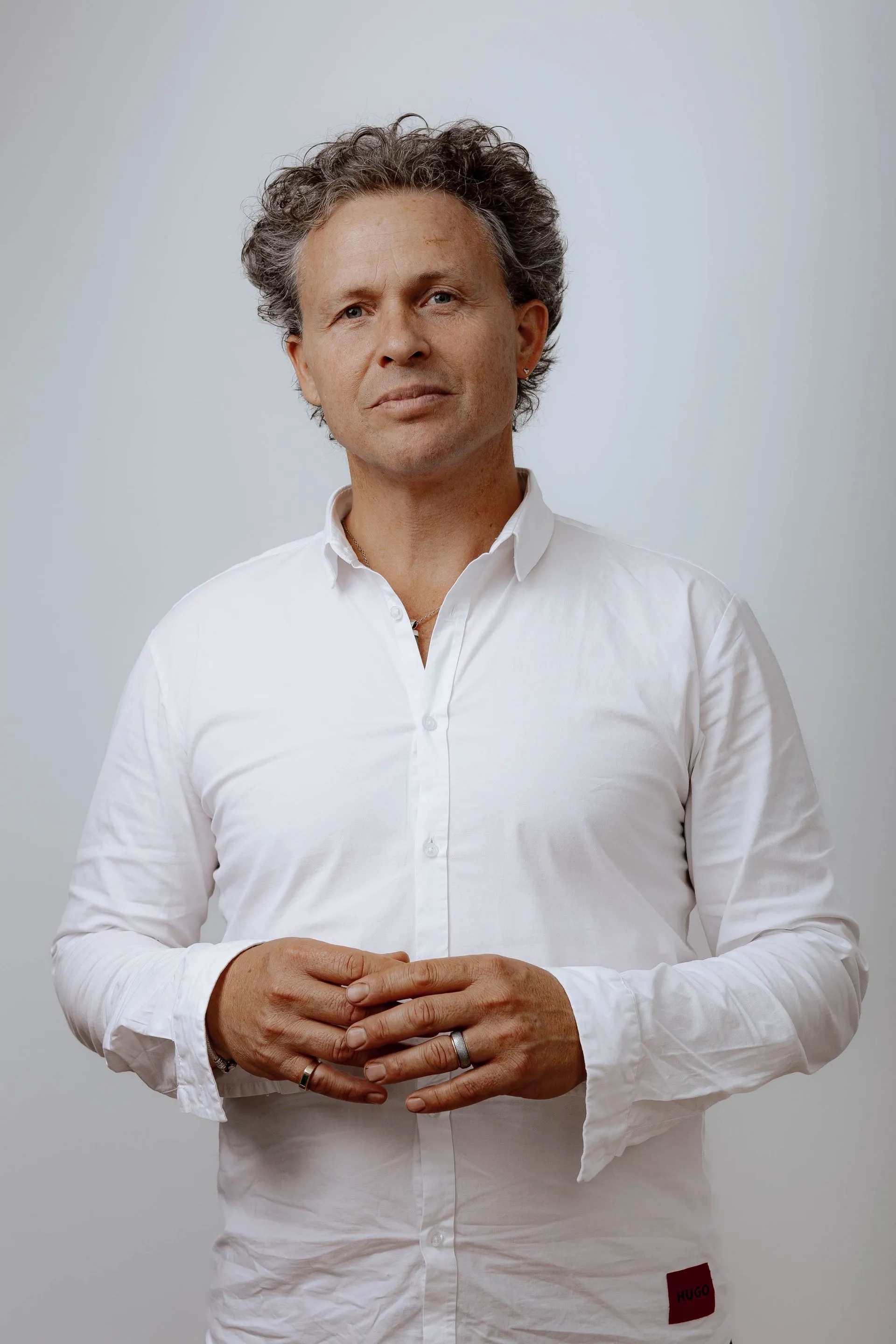
I come from a family where therapeutic work has always been part of everyday life. Patients regularly came to our home, and my grandfather, who practiced as a healer in Colombia, inspired a tradition my mother continued.
After training as a registered nurse (HF), I increasingly moved toward hands-on therapeutic work. I later qualified in craniosacral therapy and earned a degree in Chinese medicine. Years of experience across hospitals, elder care, end-of-life care, and leadership roles in healthcare deepened my commitment to focus fully on therapy, work that I find deeply fulfilling.
I continue to train extensively, first in nutrition and for several years now in classical Chinese medicine. I am currently completing a program in functional medicine at IFM in the United States. A key focus of my practice is supporting people with autoimmune conditions, combining Chinese medicine approaches with advanced diagnostic testing and individualized lifestyle and nutrition strategies. Alongside my clinical work, I teach at the London College of Acupuncture and will soon also teach in Switzerland.


