
Keto for Perimenopause: What Nobody Is Telling You ft. Vanessa Gatelein


 RSS Feed
 Hot Flashes, Belly Fat & Brain Fog — Could Keto Be the Answer?
Two topics. One episode. Zero fluff. Vanessa Gatelein joins Danna and Megan to dig into the intersection of the ketogenic diet and perimenopause. Vanessa came to keto the hard way: through carnivore, hair loss scares, Hashimoto's, and a broken ankle that made her realize she was, in fact, breakable. What she learned along the way is genuinely eye-opening — and probably not what you've heard before.
About Vanessa Gatelein: Vanessa is a certified health coach, IIN alumna, yoga teacher, and Dr. Mindy Pelz-certified "Fast Like a Girl" practitioner based in Switzerland. She works with women navigating the hormonal chaos of perimenopause and menopause through a whole-food, low-carb approach that weaves in nervous system resets, breathwork, and mindset. Her new group program, Back to Her, brings together keto exploration, blood sugar management, hormone support, and community accountability.
What You'll Learn:
- How Vanessa went from carnivore to keto — and what that shift revealed about hormones, mood, and brain clarity
- Why strict keto might not be the right move for perimenopausal women 24/7, and what cycling in and out actually means
- The hair loss risk nobody warns you about — and the mineral deficiencies behind it
- The fat-before-bed trick that may ease hot flashes (yes, really — butter is involved)
- Why your belly fat isn't betraying you — it's your body desperately trying to make estrogen
- The adrenal gland-stress-estrogen connection that explains everything about midlife weight gain
- How to actually get into ketosis without making yourself miserable on day one
- Why keto has a brain health angle that goes way beyond weight loss
- Who needs to be careful with keto — and why "just Google it" is a terrible idea
Real Talk Moments: Danna arrives to the recording fresh out of the shower, developing what she describes as a Cruella DeVil mane in real time. Megan hasn't washed her hair in four days and is deep in dry shampoo powder. Vanessa brings the poise. There's a moment mid-episode where all three women land on a truth that hits hard: when we were teenagers going through hormonal chaos, everyone told us to rest. When we were pregnant, people made us sit down. In perimenopause — the same magnitude of hormonal transition — nobody is cutting us a break. Dishes still need doing. Kids still need feeding. And the economy is kicking everyone's ass.
Vanessa's Parting Wisdom: "Your body's doing that to protect you. The key is to give your adrenal glands the time and space to do their job — and that means managing your stress, not just your macros."
Connect with Vanessa Gatelein: Find her on Instagram for food videos and updates, and keep an eye out for Back to Her — her upcoming group program on keto, hormone health, blood sugar, and nervous system reset.
CHAPTERS:
00:00 Keto Meets Menopause
02:46 Defining Keto and Early Wins
07:28 Risks Cycling and Women’s Hormones
23:58 Tracking Ketosis Data
27:41 Who Should Go Keto
Get in touch!
Check out the So Frickin' Healthy Website
Join the So Frickin' Healthy Community
K, love you, byeeeee
Mentioned in this episode:
Come See Our Faces - Live Every Wednesday
That's right! Danna and Megan are LIVE and unfiltered every Wednesday morning, 10:00 CET. Come join us on YouTube or Substack - we want to connect with you, beautiful listener! Can't watch us live - the videos will be available about an hour after the live ends. Drop us a comment, leave your thoughts, tell us who you want us to interview next.
Ready to hit reset without the boring juice-only drama?
The Urban Cleanse is calling your name — come see what it's all about!
Organilicious - Danna, Functional Medicine Health Coach
So Frickin' Healthy is a proud member of and produced by the SwissCast Network
Discover more great podcasts for English-speaking Switzerland
00:00 - Untitled
00:16 - Keto Meets Menopause
03:02 - Defining Keto and Early Wins
07:44 - Risks Cycling and Women’s Hormones
24:59 - Tracking Ketosis Data
28:42 - Who Should Go Keto
37:44 - Stress Hormones Midlife
Megan J. McCrory
Hey, Donna. Good morning.
Danna Levy Hoffmann
How's it going, Megan? It's good.
Megan J. McCrory
How are you doing today?
Danna Levy Hoffmann
I'm okay. I'm okay. I just came out of the shower, so. Yeah, yeah.
Megan J. McCrory
You look like a wet rat.
Danna Levy Hoffmann
I am a wet rat. And you'll see my hair develop throughout the recording. It'll become this like Cruella de Vil type of like mane. Yeah.
Megan J. McCrory
And me on the other side, I haven't washed my hair in probably four days. So I was like, they're putting my dry shampoo powder so I don't look like a oil greased salesman.Anyway, today we are talking about two topics that we've talked about but not together in the same episode. So I'm super, I'm super excited about this. As you can tell, we are talking about both keto ketogenic diet and menopause.And in the past we've talked about the ketogenic diet which was amazing.
Danna Levy Hoffmann
Cool.
Megan J. McCrory
I'm always down to talk about that. And we've talked a lot about menopause. So today we're going to slam these two things together because that is hot, hot, hot right now.And we have a very hot lady to talk with us about it.
Danna Levy Hoffmann
We do.
Megan J. McCrory
Vanessa Gaitlin. She is also a former IIN alumni. For those of you who know our background with health coaching and Vanessa's a health coach.And I met Vanessa back when I was doing my health coaching in 2018. She was the first person I was like, who out there? Who? Where are all the health coaches? And Vanessa just happened to be in Basel.And I remember meeting with her and being like, please tell me all your wisdom, oh wise woman. And she's just like lays it on me. She's like, it's not all glamour. Exactly.
Vanessa Gatelein
True, true.
Megan J. McCrory
And I was just like, thank you very much. And I was super excited for having somebody who is just not going to feed me a line of bullshit coming out with my rose colored glasses on.But since then, Vanessa and I have had lots of time in the spa and talking. And so without further delay, welcome Vanessa to the show.
Vanessa Gatelein
Hey. Thank you, Dana and Megan. I am super excited to be here. I felt like I was meeting my cool girlfriends today and accurate.It's just because we learn so much about everything with the body and what's happening to ourselves and in life.And it's just so nice to sit and really get real about the shit that's happening and not hold anything back and feel safe to be able to express, hey, this is actually what's going on for me.
Megan J. McCrory
Yeah.
Vanessa Gatelein
And so thank you for creating that space for us today.
Megan J. McCrory
Yeah, definitely.Okay, let's start up with a little bit of warm up and some context, because maybe for some people, this is the first time that they've put these two topics together. So maybe to start off with, when we talk about keto, there are a lot of different things about keto. And I grew up in, in the diabetes care industry.And for us, keto was a bad thing, because for diabetics, it's a bad thing. For non diabetics, it's not. Not a bad thing. So could you maybe start with, like, kind of what's the definition?What's your definition of when we're talking about keto today?
Danna Levy Hoffmann
Where.
Megan J. McCrory
Where are you talking about that?
Vanessa Gatelein
Yeah. So I came across keto.I had learned about it during my health coaching program, and at the time, it sounded so bizarre that I couldn't really wrap my head around it. This idea that, you know, you're not burning sugar, you're burning fats instead, and you eat really low carb.And I just really couldn't get my head around it. And so fast forward 15, 20 years later as I am in perimenopause and realized that my old health coaching tricks don't work for my body anymore.Things have really changed. And I kept gaining more and more weight. I said, hey, I really need to make a shift here. So I didn't try keto. I actually tried Carnivore.And so Carnivore is eating just animal products, basically meat and eggs. Some people eat fruit, but really it's a super low carb diet. And the intention of that was a healing one, but it also gets you into ketosis.So through that I learned, okay, what I'm doing is actually a ketogenic diet, eating super low carb, a bit more fat, so that I switch into fat burning instead of sugar burning. So that's how I came to it.And then as I started losing weight, the side effect for me was that I had incredible clarity in my mind, like, absolute clarity. And my mood swings started to go away, and I was like, whoa, wait a minute. This just isn't about shifting my body composition.This is also having an impact how I feel every day. And that's where I started to research, hey, what is this doing for my brain? How is this impacting my hormones? Is this even the right thing?Because it. It also feels quite extreme.So that's where I am with it right now, is how is this a tool that women can use during the perimenopause menopause transition, to really get that clarity, shift the body weight and do a bit of healing in the body at the same time.
Danna Levy Hoffmann
That's super interesting because we went through quite a similar path, you and I, Vanessa.Because I remember when keto became this hot topic, I'm usually the one going, I am not listening to all the fuff about like, whatever, the new hot thing. And I take years to research that shit before I actually even try it on myself, let alone suggest it to. To a client.So I remember being like, guys, don't, don't, don't fall down that trap. Like, keto is just. No, let's. Let's research it first. Let's figure this out first. So I was very much against it.And I then kind of started to introduce myself to people who are experts in the field. And I did the proper kind of due diligence on that.And then I also went into Carnivore diet because from gut health related and just kind of a reset because I was like, I've been troubled with all these issues from pretty much birth, like, what can I do? And that was the last kind of way for me to go. Like, all right, I'm gonna try this one last thing.
Megan J. McCrory
And just like you.
Danna Levy Hoffmann
And again, we're not saying everyone needs to go on a carnivore diet now, but, you know, it did a lot.And I shifted then from carnivore kind of shifted towards keto, which was a very kind of smooth transition because you start just, you know, hitting the ground running and then you're kind of like, all right, now let's ease up on this. And then it's. And then keto is easy.
Vanessa Gatelein
Exactly.
Danna Levy Hoffmann
But yeah, I, I totally agree with you. I think that is. There's a lot to say about both. Maybe we will do another episode on Carnivore. Megan's already cringing. But let's stick to.Let's stick to keto for today. Ease our listeners in. So you say that you went through that process and you really realized everything good that came out of it.Can you first, let's ask the, you know, put all the cards on the table. Was there anything negative that you noticed when doing keto carnivore?When you were in ketosis, did you actually notice anything that you would say, like, oh, everyone should know about this, or.
Vanessa Gatelein
Yeah, so the big one was for me, so my hair started falling out at one point. And that really made me panic because if I step back for a second, I also have hashimoto's thyroiditis.And a part of that is hair falling out when I'm out of balance. And my mom actually had lost a lot of her hair, so she's partially bald from it.And even though you can see I have a lot of hair, I know when my hair is falling out and it scares the crap out of me. So during the carnivore, I would say I was in my fourth or fifth month, and I was, like, cruising, so happy I found my food. My digestion was awesome.Energy, like, top. And then my hair started falling out, and I was like, no, this can't be. I thought I really found my dam. And so that could happen.And there's a few reasons why one can be from mineral deficiencies. So if you're not in balance with all of your minerals. And so what's common for me is to have a B12B deficiencies.And so that's something I need to be mindful of. But for other people, it could be zinc, magnesium.And so when you are doing something quite extreme, it's really important to make sure, I think in general, it makes sure all of your vitamins and minerals are in check. But also stress. Stress is a big factor as well.And as I am, as they say in the sandwich generation, I'm looking after older parents as well as my teenage son, trying to balance my own business and all of that. There is a lot of stress going on. So what I did is I said, hey, maybe this isn't. This is working on some points, but maybe not in others.And so I trained in Dr. Mindy Peltz's fast Like a Girl. And so I got certified with her.And what she says is that as we're going through these hormonal shifts, if we're not sucking, cycling in and out of keto, so adding in carbs, sometimes we're not really allowing space for the hormones to be created.
Megan J. McCrory
Right.
Vanessa Gatelein
And so that's where I went from the strict carnivore, which was working for me in so many different ways, to start cycling in and out, adding end carbs at certain times to support my progesterone being creative, for example. And then my hair really started to come back again. And so I would say that was the scariest thing, but the only thing.But I will say some of my clients, if they are doing too hard with the keto, it could start messing up their sleep as well. And sleep is paramount.And as soon as I started adding in more carbs, more fat, making sure that they were actually Eating enough during the day and not sleep, skipping meals. Then their sleep came back into balance. And so I would say for me, those are the two big things.The hair, which is a sign of overall health, and then really sleep.
Danna Levy Hoffmann
I think you touched on something really important that we need to highlight, which is men and women are different 100%. I mean, I know, right?
Megan J. McCrory
It's insane.
Danna Levy Hoffmann
But I think a lot of people, a lot of women don't still don't understand that, that the research is all based on men and that the, you know, the. When you're watching a cute like 30 year old buff guy on YouTube telling you how to eat and what to do.
Megan J. McCrory
Oh, I know who you're talking about. Oh my God, he's gorgeous.
Danna Levy Hoffmann
I don't even know his name.
Megan J. McCrory
Thomas Lauer.
Vanessa Gatelein
I think you're talking about Thomas.
Danna Levy Hoffmann
I love him to pieces. And he does bring a good, you know, I have to give him credit, he does bring good research.He's all based on research, but also like a lot of women research and stuff like that. So I'm just tagging him because I just drool over him every single time.But, but it is really important to understand that because we hear from all the, you know, men out there, usually white men, and they tell us what to do and we're like, oh, okay, okay, okay, yeah, let's do that. And we keep forgetting that our whole construction is completely different. So I'm glad that that came up.
Megan J. McCrory
First and foremost, I think as well, Vanessa already mentioned that you were certified, you know, fasting like a woman. And then there's also Dr. Fung, who does a lot on fasting and metabolism.And he also calls out women specifically and how to make sure that you're doing something that is supporting your hormone function. And there's more content coming out now specifically around women, women with intermittent fasting and when to exercise.So all of the intermittent fasting and fast and exercising while you're fasting is not necessarily so great for women or maybe not all women.So again, I think it also depends on your hormone levels because even within women, it's a such a delicate chemical balance going on within our bodies. And what, everything you do every day affects that chemical balance?
Danna Levy Hoffmann
Exactly.
Megan J. McCrory
And when you get it out of whack, sometimes it is really, really, really difficult to get it back in.So it's important that you understand that, you know, the water you drink now, the coffee you drink later, when you sleep, when you eat, when you exercise is all playing around with those chemicals in your body. It's called hormones.
Danna Levy Hoffmann
And, and that it's not going to work. It's not. If it works now, it's not necessarily going to work for you in four months time as Vanessa or when you.
Megan J. McCrory
Go into perimenopause or menopause.
Danna Levy Hoffmann
Exactly. Stages of life. I mean, there's so much. So we're, we're delicate flowers and we should really just understand that.And when we do, I think we're then ready to, to go through the motion and, and, and really be able to be more flexible in the way that we go through things and say, okay, great, now I need to stop this and now I need to do that. And not just like, this is the formula, this is how I'm going to be, you know, young and beautiful and skinny for the rest of my life.Just doesn't fucking work. Not realistic.
Vanessa Gatelein
No. And I think that's frustrating for a lot of people. I gave a workshop in Germany last month and one lady was super pissed off. She was really angry.She was like, vanessa, just tell me what to do. Why can't you give me a straight answer? And I was like, yeah, because my body's really different than yours.And even my co workshop host, she comes from an Asian background, had a completely different upbringing than doesn't have an autoimmune condition, has been exercising her whole life, and just had a baby, you know what I mean? So she was coming out of breastfeeding and headed into perimenopause, which is also interesting hormonally. So I can't really say.I can teach you how to listen to your body and start to notice when the symptoms are coming up. So if you're starting not to sleep, maybe it's a progesterone thing. How are you easing in and out of your day? And do you have breast tenderness?Are you starting to feel anxious? We tend to blame ourselves for these kind of things. There must be something wrong with me.But actually it could just be that your hormones are shifting in and out and you maybe just need to pay attention to one or two things.
Danna Levy Hoffmann
Yeah.
Vanessa Gatelein
And so I find that the most challenging is that the woman wants to give me that responsibility.And then I push it back and say, hey, no, I'm going to give you different ideas and you need to test them out because, yeah, what works for me may not work for you.
Megan J. McCrory
Yeah. So you mentioned earlier about one of the big side effects that you saw of being in a ketogenic state was the brain clarity.And that is often a symptom of that. People say during perimenopause and menopause is that they have brain fog. Sentences don't form, completely forgetting things.I'm also interested and I asked my AI agent, Alice, for some frequently asked questions around this topic. And one of the questions was, does keto or can keto actually reduce like other symptoms like hot flashes or night sweats?Is that something that directly comes from keto or is that more of a side effect of potentially losing weight because of keto or having that stable blood sugar going on?
Vanessa Gatelein
Yeah, so I, I don't have the research behind it, but what I've been taught through my education is that first it's with the managing your blood sugar levels, it gives you instant emotional stability and just a bit more clarity in your mind.Then in terms of, I wouldn't say that it's linked to the weight loss at all because I think if you're in, if you're in ketosis and at that moment not losing weight, because that also could happen, you're still going to get that clarity in mind and emotional balance. And.Yeah, so I think, because I look at it in a different way, so when the women are having the hot flashes, what I ask them is, are you having enough fat in your diet?And so it's loosely linked to the keto, but in the sense that if you don't have enough fat in your diet, you're not going to be able to make your hormones. And if you're going to bed and you don't have that fat to create them while you're sleeping, it's just not going to happen.And so that's one thing I tell them is have a pat of butter with a bit of salt on it before you go to bed, or something called a fat bomb, which is like coconut stuff with turmeric or coconut stuff with a bit of peppermint on it. And that seems to really ease the hot flashes, especially in the evening.What's not clear for me and I keep researching is the reason why hot flashes exist. And some of them, some of the doctors say it's coming from the brain, that it's a brain and body thermostat malfunction.There's some confusion happening there.So my own belief is that if you are looking after your, your brain, so whatever it is, if it's doing the ketogenic diet to keep the blood sugar levels balanced and have that clarity and to be burning ketones instead of sugar, that it could ease the hot flash symptoms.
Megan J. McCrory
Okay, cool. Yeah. I mean, all of that Jives with what I've also researched about keto.And in general, you know, linking this back to diabetes, the type 2 diabetes, have said like Alzheimer's is kind of now starting to be linked Alzheimer's and dementia in terms of the blood sugar and hormone and insulin production. And it's interesting because that's also like a lot of people want to protect their brain from that.And more and more research is, is being done now on stabilizing that. How is it being in a long term ketogenic diet and how does that impact people's brain health later on? So it's all linked, the whole thing is all.
Vanessa Gatelein
Yeah. I think the history of keto comes from doctors trying to treat epilepsy. And so that's also something that's happening electrically in the brain.And so when you think about that, I just find it so interesting. And I think where we're going wrong and the reason why we're having such trouble with our menopause in these years. Right.Like my menopause was different than my mom's, different than my grandmoms, is because we're eating all the time these days. Right. The thing about the ketogenic diet that we haven't talked about is that being in ketosis and burning fat is 100% normal.We would normally do this if we weren't eating all day long.
Megan J. McCrory
Yeah.
Vanessa Gatelein
And I don't think we're allowing ourselves enough time to be in ketosis in order to clean up everything that's happening in the body. Because when you are in ketosis and you have these fasting moments, you have the opportunity to fix and repair cells, you repair your gut lining.We've been talking a lot about brain, but there's like a cleaning up that happens in that moment that doesn't happen when you're digesting food.
Danna Levy Hoffmann
Yeah.
Vanessa Gatelein
And yeah, I just find that incredible. And so the more and more I think about that, because I grew up eating just three meals a day, no snacks, and going to bed on a sort of empty stomach.But then as life evolved and I had my own money, then I was buying coffees and lattes and mocha lattes. And so it was like breakfast snack, lunch snack, dinner snack, drinking in the evening, eating crap on the way home.And then there you go, I'm eating the entire day and probably never coming into ketosis. So then what is happening?
Megan J. McCrory
Yeah. I think part of that is, you know, we are.When you're growing up, when you are actually physically still becoming from a child to an adult, it is Important to eat a lot because you're growing so much, the body is changing and it needs all those calories. But unfortunately, at the same time, that is when we learn our eating habits. Right?And now everybody's been told, oh, you have to give your kid a snack and have a little cracker here and a little cracker there.
Vanessa Gatelein
And.
Megan J. McCrory
And then, you know, they grow up doing that. And then that's what's normal. And I feel like that's.That's part of the difficulty is this behavior management of this is what you need when you're growing and when you're not growing anymore or when you're, you know, you're finished as an adult. You do not need to have those calories input into your mouth all the time.But then it's difficult to change the behavior that we've adopted since we were children.
Danna Levy Hoffmann
I agree, but I think it's also. It's tenfold that because it's also when, as Vanessa just mentioned, like when she was growing up, she had three meals.Most likely, they were mainly cooked meals.
Vanessa Gatelein
Yes.
Danna Levy Hoffmann
Right. It wasn't the snack thing. Maybe the. Maybe breakfast was as crappy cereal, fine. But, like, it was mainly cooked food.And what we're relying on nowadays is just this, quick, grab this at the store. Grab that at the. I was gonna say tangster at the gas station. At the gas station. Do me languages at the gas station. You know, so it's.It's the convenience food and it's the. The effects of that food as well. Because when you're eating a balanced meal, you probably don't even need.You don't have the fluctuations that make you need the food, the snack.Whereas when we're eating like, you know, a bag of potato chips and we're eating this and we need that, it's constantly going to feed that need of more and more. That specific food is actually made for us to want to eat more of it and not necessarily stop when we're full.So I think it's just this, like, whole combination of things that, honestly, I also think there's a lot to say about generations before us that came mostly from war and famine. And so, you know, some go on the route of like, okay, then we need to learn how to live with just bread and butter.And others are like, we need to give our offsprings as much food as possible, feed them as much as they can, you know, and that's how I grew up. I was like, never allowed not to chew on something. So. So, you know, there's so Many things. There's so many factors going into this.And that's, I think, why it's so difficult for us as humans nowadays to even go into the ketogenic diet or to even think of not having a carb where it's such a big part of our lives.
Megan J. McCrory
So, Vanessa, I was wondering. So I've been recently doing some experiments with CGMs and keto meters, both breathalyzer and blood type of keto meter.Do you measure your ketones or how do you know when you're in ketosis?
Vanessa Gatelein
Yeah.So when I was on the carnivore diet, I was measuring my ketones every morning, trying to get into ketosis and then playing around with fasting or intimates and fasting to get them there, or like power eating sardines to also try to get me into there, which made my skin look amazing. But then I started burping sardines and I was like, okay, that's enough. So I do track. I don't often get into the perfect ketosis. I come close.I can get in only when I intermittent fast.For example, if I'm eating a breakfast and lunch and getting all of my macros in during that time and then fasting from lunch on, I can definitely get in. And if I'm doing it a few days in a row, then my body's like, okay, I'm in.
Megan J. McCrory
Yeah, yeah, because, yeah, I'm finding it struggling because I was starting to find these other value. So comparing also the ketones with your blood glucose.
Danna Levy Hoffmann
Right.
Megan J. McCrory
And that's where I found that before I was measuring using fasting apps or whatever, they're like, oh, it's. You fasted for 24 hours, so you're probably in early stages of ketosis. But when I'm actually measuring this, I'm not.Because my body is so efficient at using carbs that, you know, my blood sugar doesn't go low enough because even when I'm fasting, my blood sugar is not low enough to trigger my body.And then I was like, probably watching the same videos you are about helping your body remember to use fat by, like you said, eating a bit of butter, taking a spoonful of coconut oil or something, where you, you, you're fasting from carbs, but you're feeding your body fat so that you, you get into it. And I think this is the struggle for me and probably for a lot of other people.If you're not measuring it, you may think you've been in ketosis, but you're not yet in ketosis. And then you're. Then that also might be one of those things of like, well, I'm doing it, I'm doing it right.
Vanessa Gatelein
So there's two things I want to say to that. So one is I think data is amazing, but to also not really hang on the numbers. Right.So the thing that I learned is that if you're practicing getting into ketosis and you've been getting in, or maybe you haven't reached it yet, and your blood sugar is starting to come up, it could be that your body's releasing energy and it's showing up as blood sugar.And so you are getting in the right direction, but you're letting go of the fat, like the fat that's on your body, and it's showing up as blood sugar. So it's not a bad thing. It's actually you're releasing blood sugar and you're shifting from that fat and letting it go.So I don't see it as a bad thing.I think what's interesting, measuring the blood sugar is knowing when it's going up and then also when it's dropping, because you want to keep things in a kind of stable way, like not going too high, not going too low, which will also let you know when you need to stop fasting. And so I think measuring during that time is super key.You can check your symptoms, maybe you feel a little bit weak if your blood sugar is going low. But, yeah, I think measurement is super important.
Megan J. McCrory
Yeah.
Danna Levy Hoffmann
I wanted to ask something, I think, further earlier on, but maybe we can tackle this now. Who is it who should not try ketogenic diet? Because, you know, you'll hear different things out there.And I think some people want to try it and are scared because of certain issues, health issues that they have, or maybe their doctor is not informed enough and tells them, don't even try, where it could actually be helpful for them. What would you say to that?
Vanessa Gatelein
Yeah, that's a good question. Because, Megan, I was surprised to hear you say that people who are diabetic shouldn't try it.
Megan J. McCrory
No, no, that's not what I said.
Vanessa Gatelein
Okay, what did you say then? Because you come from the diabetes background. Yeah, yeah.
Megan J. McCrory
So if somebody is out of control with their diabetes and the problem for type 2 diabetics. I don't want to talk about type 1.Type 1 is a different, but the effect is the same, is that the person eats food, the body metabolizes it into blood sugar, but the insulin resistance does not allow for the insulin to move the sugar into the cells. To be used as energy.And therefore then the body starts to be in ketosis, but in a wrong way, in the bad way, because now the blood sugar is too high in the blood. So the problem is not that they're in ketosis.The problem is that the insulin resistance is so high that the blood sugar stays in the blood, and that's causing kidney failure, necropathy and other symptoms. So when I say ketosis for a diabetic is a bad thing, it's when it's in relationship to the fact that their therapy is not working for them.Okay, when you use ketosis as a therapy, then it is different.
Danna Levy Hoffmann
Right?
Megan J. McCrory
Because then the point is, is that they are actually not eating it carbs, they're eating something else, which then helps to reduce the insulin resistance so that the insulin becomes more sensitive. And that is a good thing. So I'm glad you asked that. Does that make more sense now?
Vanessa Gatelein
Yeah. No, that's good, because I misunderstood your point.So my feeling is nobody should jump into a ketogenic diet like on day one, and they have to get there step by step and see if it's the right thing for them.And what I mean by that is anyone suddenly dropping their carbs on day one is going to have a really negative experience with headaches, keto flu, cravings, maybe even they start binge eating because they've suddenly started the ketogenic diet.And so I really recommend just going step by step with just starting out with breakfast, lunch and dinner and no snacks and getting used to that for a while and then moving into what does it look like when I do reduce my sugar or carbohydrate load?Maybe it's dialing in breakfast, switching from the cereal to eggs or something else that's more substantial and less carb loading and really seeing what that feels like in the body. And then once you've mastered that, okay, what does it look like to reduce it even lower?Can I manage what happens with my blood sugar levels and my ketone levels? What's happening with my emotions? What's happening with my sleep? Am I suddenly starting to get anxious? Because that's going to happen too.And really taking it step by step, all the while measuring your ketones and seeing what's happening and then going into, okay, what is it like to really reduce the carbs, turn up the fats and do that for a couple of days and see how your body reacts?Because then you're going to have a great experience and you're also going to be teaching yourself that lifestyle aspect of what it is like to change my food and doing it gradually is so much better than shocking your whole entire system and then doing something and saying, oh, this shit doesn't work for me. This is just too hard. But you have to allow yourself that time to adapt, like to really get into it and, and even find the food.Some of my clients, they just start eating eggs all the time, and then they're like, oh, I can't eat eggs anymore. And it's like, well, there's other food, there's other proteins, there's other fats.But you got to find your way to find your food that you really love to eat. Because if you don't like eating, then you're just going to fall off anyway.
Megan J. McCrory
Yeah.
Danna Levy Hoffmann
Yeah. And I have to say that it's also.Well, we did talk about the carnivore diet, where it's so difficult to hit the mark of how much protein you can actually get in and you don't feel the same hunger levels. And it's. It's similar with ketogenic diet.I feel that the feeling of hunger that we know we're eating carbs is completely different to when we're in ketosis. It's not actually a this, like, grumbling hunger kind of like drop of a sugar level kind of feeling. It's more like, oh, I need energy now.It's just this weird kind of like clarity of, oh, I need to eat now. And then you eat, and then all of a sudden you're like, I need to stop eating now.So it's just a very, very fine line and just understanding your body and. Yeah, but I want to go back to perimenopause because I know that we promised the connection and, and how that's gonna help.So I wanted to kind of tie back into that. We know, for example, that osteoporosis is a huge risk with perimenopause and menopause. How do we feel about keto in helping with that?
Vanessa Gatelein
Yeah, so when I hear osteoporosis, I also think about, so bones and muscle and how do we really build and preserve that? And one of the best ways is with protein. And of course, carnivore is like mega protein.And for me, in 2024, I broke my ankle and I really became quite aware, like, hey, I. I am breakable, actually. And that was a shock to me and I deep dove into, okay, what helps your bones stay? And.And so I feel like being on the ketogenic diet helps me to prioritize that protein which is going to naturally support my muscle and bone. It's also like the fats, too.
Megan J. McCrory
Yeah.
Vanessa Gatelein
And yeah, I don't want to be a conspiracy theorist or anything, but I've also read a lot about grains not being great for bones because they have anti nutrients. And I don't know if that's 100% true, but I've definitely read at least three books that talk about grains not being a great thing.But I know in the United States, we grow up in the. You can grow up in the grain bread basket, how they call it.And also Europe is also very grain and bread based, so I don't want to poo poo all over that.But I do find that an interesting theory because also when you see how Danny spoke about the war, like how we've shifted from eating mostly meat and veg to more grains, because that was what was available during that time. And for example, when I go into the train station these days, it's just bread and bakeries and empanadas and another bread thing, a pretzel.
Danna Levy Hoffmann
So.
Vanessa Gatelein
And I just look around, I'm like, wow, I'm not sure that's food. It fills me up, it makes my mouth happy, but I don't feel truly nourished by it. And so if it's ketogenic or I wouldn't say carnivore.But when I focus myself on eating whole foods, the meat and vegetables, fruits, then I feel like I'm really nourishing myself. And that, by the way, happens to bring me into ketosis in the evening. So I don't know if that makes sense.No, it does, because I feel like you can be on a ketogenic diet and eat absolute crap.
Danna Levy Hoffmann
Yeah.
Megan J. McCrory
All right. So as you both know, I am into all my gadgets. I have the oura ring, I have my watch. Sometimes I'm wearing a cgm.And one of the things that I noticed with the oura ring manages stress, or it tells you, like, if you're in a stressed state or in a relaxed state state, which I think is extremely insightful, because there are times when I feel like I've been stressed out, like, where I'm having an interaction with someone that I'm not stressed. And then other times where I specifically, this is what I wanted to bring up. I've eaten something and it says, your body is under stress right now.Like, it just shoots up when I eat, but not all the time. Depends on what I'm eating.I think this is a remarkable thing because we Talk about stress all the time on this channel and about how stress impacts us even. And last. The last episode we had with another guest was on tcm and he's like, it's stress. Everything is stress.
Danna Levy Hoffmann
Stress.
Vanessa Gatelein
Yeah, absolutely.
Megan J. McCrory
If you can just manage it. But I never connected what I'm eating with that being stressful for my body. Because when you eat, your body has to do something.Your body starts all of these processes going and it's. But it's amazing with different meals, my body has higher stress or no stress.And I'm curious where we stand on that with both the keto, but in general stress and how it all, like, kind of ties back into the symptoms that we see for perimenopause and menopause.
Vanessa Gatelein
Yeah. I think the fascinating thing that I learned actually through menopause yoga is thinking about the hormones and where we make them, right?So usually, like, when we're having our periods and we're fertile, we're making our estrogen in our ovaries, right? And so then it's making less and less. When we're over 40, getting into the 50s, it's just less and less and less.But our bodies need estrogen as women. It's in every single cell. It helps our bones to be strong, it helps to create muscle, it's helping our joints to stay supple.So it's not just about fertility. So less estrogen is being made in the ovaries. But our body says, hey, we still need some form of estrogen.And so it's so smart that it goes behind into the adrenal glands. And so our adrenal glands, which are on top of the kidneys, start to produce also a form of estrogen.
Megan J. McCrory
And.
Vanessa Gatelein
But hey, what are adrenal glands also responsible for? For stress. Right?But see, the thing is, is that the body will always prioritize making stress hormones and not making your sexual hormones because it thinks it needs to save you from running away from a bear, protecting yourself from danger. And it doesn't know that being in a meeting with your boss is necessarily a true danger.But it's going to say, hey, I'm going to prioritize those stress hormones and not make any estrogen at all. So then the body says, I still need a bit more estrogen.So then it comes down to this lovely space, which is your belly, and it starts to make fat there. And it's not a great type of fat. It's the fat that's living within your organs called visceral fat. And it's also producing a form of estrogen.Not a great quality one, but it is creating it. And that's why during midlife, we start to put on weight in our bellies.Because if you're not managing your stress, your adrenal glands can't make any estrogen. It's going to start making it through your belly. It's searching always. I mean, we say, like, hey, it's so stupid. I'm getting this lower belly fat.I can't believe it. Your body's doing that in order to protect you. So the key for me is to think about less estrogen in the ovaries.Allow your adrenal glands really, the time and space to create the estrogen. And you do that by being calm, by managing your stress, by letting that stuff go. Easier said than done.And I think that's also a point in my workshops that women get super frustrated with because they say they don't have time to relax, they don't have time to manage the stress. And it's like, you will stay in this loop.And it's also frustrating for me because we see when we transitioned from being a child into a woman during the teenage years, we slept a lot, we were tired. We allowed that time, that transition to happen. When I was pregnant with my son, I mean, people came to me, vanessa, sit down, put your feet up.Allow yourself time to rest, because your body's going through this incredible hormonal translation. But now in perimenopause, nobody tells me to sit down and take a rest. Nobody likes says, hey, put your feet up.But the same transition is happening in my body from being fully hormonal to switching to different hormones. And nobody's cutting me a break.
Danna Levy Hoffmann
When we were teens, we had, like, zero responsibility.
Vanessa Gatelein
Yeah.
Danna Levy Hoffmann
When we were pregnant, it was before having kids mostly. Right. So you don't really. You don't understand how beautiful your life is. And now we're dealing with aging parents. Parents.We're dealing with shitty teenagers. We're dealing with a job. We're dealing with the economy that is just kicking our ass now.So it is very difficult, and it's understandable why everyone is frustrated about it. And you had this visceral, like, reaction just talking about it. And it makes complete sense. It is very difficult.But we also have to understand that if we don't find that time now, we're shooting ourselves in the leg when we don't take that moment now. And it is very difficult.
Megan J. McCrory
Yeah, we talked about this in Donna's burnout episode. I think we opened the episode with, if you come into the office with a broken foot, everybody's like, oh, you have a broken foot.We understand why you need to have.
Danna Levy Hoffmann
Why we need to change things.
Megan J. McCrory
But if you come with, I'm stressed out, I'm burnt out, or whatever, that's not visible for the most part.
Danna Levy Hoffmann
You just have to deal with it.
Megan J. McCrory
Also, people are like, yeah, just deal with it. Especially in the US Work frame. You know, it's just like, well, just get on with it. Just do it. Or take a. Take a day off.But on your day off, you're doing laundry and housework. That's not relaxing.
Vanessa Gatelein
That drives me crazy. I read an article about that if a man takes a break, he literally sits down and takes a break while the woman starts, like, catching up.
Danna Levy Hoffmann
Exactly. It's like. It's like the comparison of, like, a man says, I'm going to go to bed now. And he just gets up and goes to bed.And when we say, we're going to bed now, we're going to stop and do the dishes quickly, and we're going to put another load in the machine and we're going to make sure that the kids have lunch tomorrow. And we're like, oh, and the animal needs to be fed. And so of course we're not sleeping well. Of course there's night sweats.Of course there's everything. Like, we understand and it all makes complete sense. It's just finding.Finding the small steps that can help you feel better right at the end of the day.
Megan J. McCrory
Okay, so I think we've covered a lot of topics. We need to wrap it up soon. But, Vanessa, we have a quite global audience. Even though we're all sitting in Switzerland.Is there anything people can do that are not in Switzerland to, like, get in touch with you? Do you have, like, some online programs or anything? Or what's the best way to kind of get into your sphere of knowledge?I know you're on Instagram and you're beautiful. You guys should just, like, log on to Vanessa's Instagram just to see her hair every day. That's. That's, like, reason enough to log on.
Vanessa Gatelein
Imagine.
Danna Levy Hoffmann
You're so sweet.
Vanessa Gatelein
Yes, you can follow me on Instagram. I'm starting to post more videos about food that you can eat.But I am starting a new online program called Back to Her, and that's all about teaching you how to re eat again, headed towards the ketogenic diet, if that's something you'd really like to do. But it's very focused on managing hormones, strong muscle and bone and balancing stress.So I'm also a yoga teacher as well as a health coach and I know all about breathing exercise, nervous system resets and just really looking into the mindset because also how we think it can either bring us forward or hold us back.And I do this in a group program setting because I find it so much more motivating when we're there as a group and that people actually learn from each other because in my one to ones, people feel like they're really going at it alone and they don't see when is this really going to get better.But when you're in a group and you start to see someone else see results, you get re motivated again, get back on board and everyone starts to hold each other accountable. So yeah, so that's what's coming up for me. And I have my regular yoga classes which you can look at on my website.But yeah, my back to her is my newest thing and I'm super excited about it because it's the first time I really bring in the ketogenic exploration into Carnivore a bit and how you measure your and manage your blood sugar.
Megan J. McCrory
Excellent.So we will obviously have links to all of Vanessa's details in the show notes and as always, we are calling out to you listener if you have any questions. Vanessa's local, which means she's in our time zone, which means we can interview her in the morning when Donna and I have our brains working.So this was just a teaser, a taster. If you have questions for Vanessa, please feel free to, you know, send us an email, drop them on the website, leave a comment somewhere.I mean, we're everywhere so just try to find us. And we'd love to have your questions or thoughts about what you learned today. And if you enjoyed this, share it with a friend. And thank you, Vanessa.Thank you, Donna and we'll see you next time.
Danna Levy Hoffmann
Bye bye everyone.
Vanessa Gatelein
Bye.
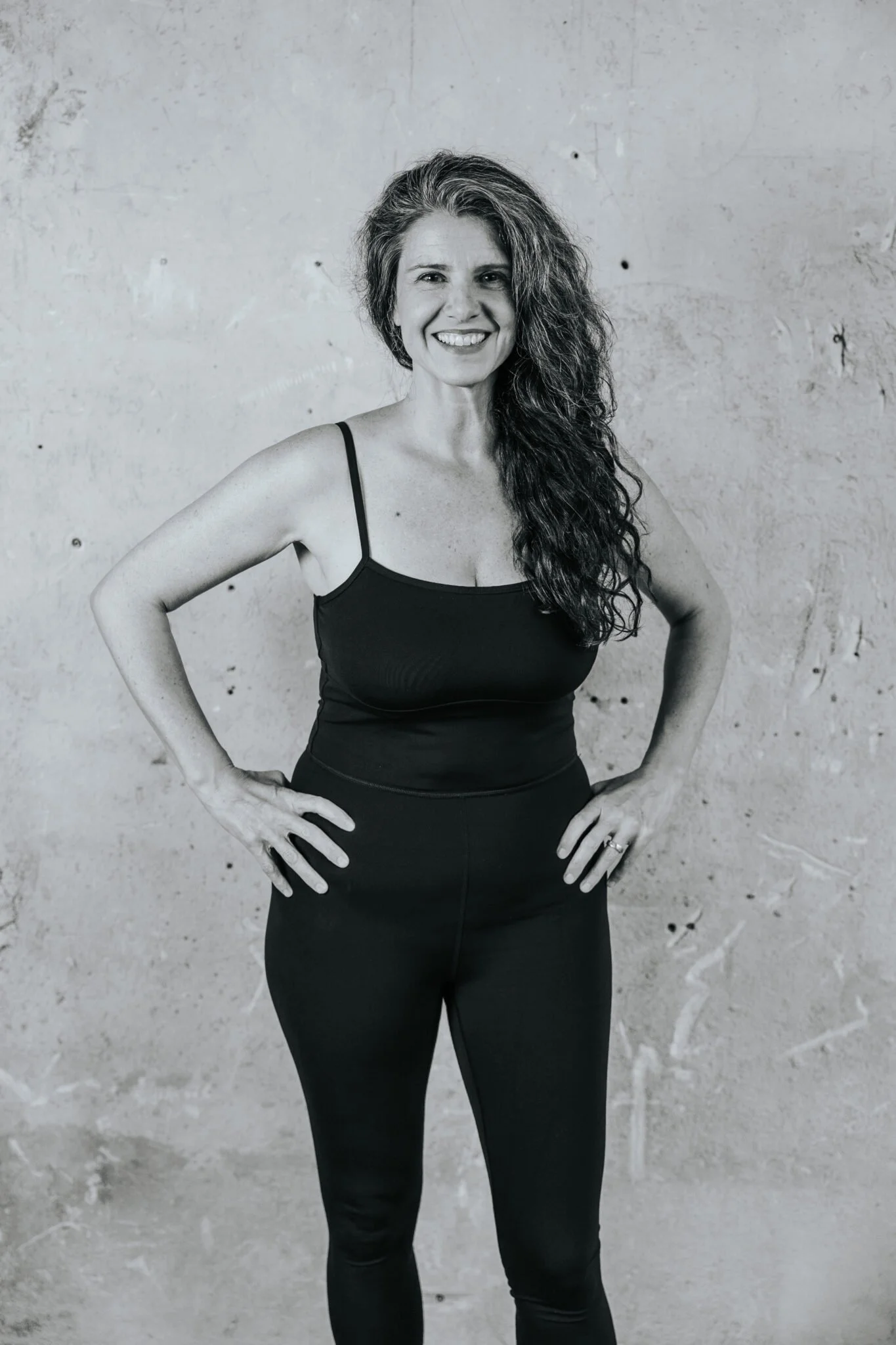
Health Coach & Founder of Back to Her
Helping women find their rhythm again, so energy, clarity, and weight start to shift.
Vanessa is a health coach, yoga teacher, and Fast Like a Girl coach.
She helps women 40+ regain their energy, clarity, and confidence in their bodies — often finding that their weight begins to shift along the way.
Her program Back to Her supports women with hormones, fasting, digestion, and the nervous system.
Her work is shaped by her own journey through Hashimoto’s, burnout, emotional eating, perimenopause, and single motherhood.
After more than 20 years in advertising and marketing, she knows what it’s like to push through, run on empty, and still keep going.
She keeps things real, practical, and grounded in what actually works day to day.
Originally from New York, she now lives in Basel, Switzerland.


