
Kombucha! What's all the fuss? ft. Gina Steinhauser, Swiss Kombucha Company


 RSS Feed
 Got Booch?
Ever grabbed a kombucha off the shelf thinking you're doing your gut a favor? Yeah… about that. In this episode, we sit down with Gina, founder of the Swiss Kombucha Company, to blow the lid off what's actually in most store-bought kombucha—and spoiler alert, a lot of it isn't even kombucha. Gina takes us behind the scenes of her journey from brewing 200 liters a month in her sticky kitchen to visiting 30+ breweries across North America and Europe (pretending to write a blog that never happened) to launching her own company. What started as a personal quest to manage food allergies turned into a full-blown mission to make the real deal—no concentrates, no pasteurization, no BS.
But this conversation goes way beyond the bottle. We get into the gut-brain connection, why your "healthy" yogurt probably isn't doing what you think it is, and the infuriating reality of being a woman whose doctor Googles your symptoms on Wikipedia and tells you you're too fat to have Celiac disease.
What You'll Learn:
- What kombucha actually is—and the three ways producers fake it
- Why shelf-stable kombucha is never real kombucha
- The cheap tool that reveals how much sugar is really in your bottle vs. what the label claims
- Green and white tea over black—and why heavy metals matter
- Food allergies vs. food sensitivities: why doctors miss the slow ones
- Why kombucha is gut-friendly but NOT a probiotic supplement
- Danna's PSA: if you have histamine intolerance, fermented foods might be making things worse
Real Talk Moments:
Gina shares the jaw-dropping story of being dismissed by a doctor who pulled up Wikipedia to prove she couldn't have Celiac disease—because she wasn't thin enough. Danna opens up about being told her 25-symptom list was "all in her head" and getting put on antidepressants instead of being properly tested. And the whole crew gets fired up about the quick-fix culture that taught us to reach for a pill instead of questioning what's on our plate—while we spend hours scrolling Facebook saying we "don't have time" to cook.
Gina's Pro Tips for Finding Real Kombucha:
- If it's not refrigerated, it's not real kombucha
- Contact the producer—ask if they filter, pasteurize, or use a concentrate (if they don't respond, that's your answer)
- Check the sugar content yourself with a BRIX meter—if the label is lying about sugar, what else are they lying about?
Connect with Gina & Swiss Kombucha Company: https://swisskombuchacompany.ch/
Get in touch!
Check out the So Frickin' Healthy Website
Join the So Frickin' Healthy Community
K, love you, byeeeee
Chapters:
00:00 Introduction and Kombucha Basics
02:58 Personal Experiences and Brewing Kombucha
08:43 Market Realities and Brewing Tips
21:56 Exploring Unique Kombucha Flavors
22:37 Understanding Fermented Foods and Health
26:41 Personal Health Journeys and Holistic Approaches
Mentioned in this episode:
So Frickin' Healthy is a proud member of and produced by the SwissCast Network
Discover more great podcasts for English-speaking Switzerland
Ready to hit reset without the boring juice-only drama?
The Urban Cleanse is calling your name — come see what it's all about!
00:00 - Untitled
00:01 - Introduction and Kombucha Basics
03:14 - Personal Experiences and Brewing Kombucha
08:59 - Market Realities and Brewing Tips
22:35 - Exploring Unique Kombucha Flavors
23:16 - Understanding Fermented Foods and Health
27:20 - Personal Health Journeys and Holistic Approaches
Speaker A
So kombucha is fermented tea.
Speaker A
You steep a tea, you add sugar or some sort of a carbohydrate to feed a culture.
Speaker A
Then you add the culture to it, and you let it brew from anywhere two to four even.
Speaker A
Some people do six weeks and have it be this wonderful product that has a lot of natural benefits if you're making it in the way that I just said, with those steps involved.
Speaker A
Unfortunately, it's also a product that a lot of people don't understand, and there's not a lot of clarity on it, and it's not a protected word anyway.
Speaker A
So what people have come to find on grocery store shelves that's labeled as kombucha isn't always what I've just told you kombucha is.
Speaker A
Hi, I'm Gina, the founder of the Swiss kombucha company and a guest on today's episode of so freaking Healthy.
Speaker A
We're going to talk about what kombucha is, what to look for when you're buying kombucha and our other thoughts on a lot of different random things.
Speaker A
I hope you enjoy it.
Speaker B
I cannot lift my arms today.
Speaker B
I can lift them to about here.
Speaker B
What'd you do?
Speaker B
I feel like a T. Rex with my arms.
Speaker B
I've been doing some weightlifting.
Speaker B
Not like on the machines, but like, I use Apple Fitness plus, and my goodness, it doesn't look like you're doing a whole lot, but when you don't use your arms in those ways on a normal basis, you know, have you ever done, like, a whole bunch of squats and not be able to go to the toilet the next day because you're like, oh, my God.
Speaker C
I gotta say, it is my favorite part of working out.
Speaker C
I'm weird.
Speaker A
Like, the soreness.
Speaker A
Yeah.
Speaker C
But, like, the good soreness.
Speaker C
Right.
Speaker C
Like, right now I haven't moved enough, and I have a soreness from, like, a muscle that's just.
Speaker C
It's so terrible.
Speaker C
My hand is falling asleep.
Speaker C
I'm like, I hate it.
Speaker C
That pain.
Speaker B
No go.
Speaker C
But when I'm feeling like I did something and I moved and I'm like, oh, my God.
Speaker C
And I'm one of those, like, psychopaths who will.
Speaker C
I'll make extra movements to actually feel that pain.
Speaker B
Yeah, it's kind of like a loose tooth or like a popcorn kernel stuck in your teeth.
Speaker B
You just can't stop.
Speaker B
You have to keep touching it.
Speaker C
Exactly.
Speaker C
It's so much fun.
Speaker C
It makes me feel like I did something, you know?
Speaker C
I'm like, I'm proud of Myself, I feel like my body, like in a good way.
Speaker C
So I love that stuff.
Speaker C
Hey, Gina.
Speaker C
Welcome to so frickin Healthy.
Speaker C
How's it going?
Speaker A
Thank you so much for having me.
Speaker A
I am feeling great.
Speaker A
It's going to be a good one.
Speaker C
It definitely will be.
Speaker C
We're super excited to have you on board.
Speaker C
I know that Megan wrote a bunch of questions for you.
Speaker C
She's just giddy.
Speaker C
She's back there going like, so many questions.
Speaker C
And I'm just happy to have you and see you because we've been talking for years now and we haven't actually seen each other.
Speaker A
Yeah, but.
Speaker A
Right.
Speaker A
It's like we've practically known each other about three months because they're Corona years.
Speaker C
That's.
Speaker C
That's a fair.
Speaker C
That's a fair calculation, I would say.
Speaker B
Yeah.
Speaker A
We also didn't age, so that's good too.
Speaker C
It's all the kombucha.
Speaker B
Yeah.
Speaker B
Well, I think.
Speaker B
I think the best place to start is the obvious of what is kombucha?
Speaker B
Because, like, it's everywhere.
Speaker B
You know, people have heard about it and I know because I brewed at home.
Speaker B
But maybe just to start us off, what is kombucha?
Speaker B
Why should we care about kombucha and.
Speaker C
How it ties into health?
Speaker B
I know that's a big.
Speaker B
That's a big ask.
Speaker A
Yeah.
Speaker A
No, it's fantastic to hear that you've actually brewed it yourself.
Speaker A
I think that people who have actually gone through that process of brewing it themselves and understanding what's on the shelves in the store versus what you're making at home have a very different way of looking at kombucha.
Speaker A
So I'm excited to hear that.
Speaker A
So kombucha is fermented tea.
Speaker A
And sometimes when I say that, people think that it's the leaves themselves are being fermented, and then you steep a tea with it.
Speaker A
But what actually happens is you steep a tea, you add sugar or some sort of a carbohydrate to feed a culture.
Speaker A
Then you add the culture to it and you let it brew from anywhere, two to four even.
Speaker A
Some people do six weeks till you get this super funky tasting brew that doesn't really taste anything like tea anymore.
Speaker A
It's just kombucha.
Speaker A
And then you go about flavoring it.
Speaker A
There are lots of different methods for flavoring it.
Speaker A
Bottle it, make it carbonated, and get it out to people and have it be this wonderful product that has a lot of natural benefits.
Speaker A
If you're making it in the way that I just said with those Steps involved.
Speaker A
Unfortunately, it's also a product that a lot of people don't understand, and there's not a lot of clarity on it, and it's not a protected word anyway.
Speaker A
So what people have come to find on grocery store shelves that's labeled as kombucha isn't always what I've just told you kombucha is.
Speaker B
And that leads me into it, because.
Speaker C
I see it creeping on.
Speaker B
Well, it's been on the.
Speaker B
The US Stores for a long time now.
Speaker B
Every time I go home, I just see a whole section on kombucha, and it's nice.
Speaker B
I drink it.
Speaker B
But even now in Switzerland, which is, you know, usually like five years later with all new foods that the U.S.
Speaker C
Have you made 20?
Speaker B
Yeah, I was gonna still pass, you know, kombucha.
Speaker C
You're very kind to Switzerland, Megan.
Speaker B
Yeah.
Speaker B
So maybe what is the difference?
Speaker B
Like, what the stuff on the stores.
Speaker A
Is it really still as good for.
Speaker B
My gut health as the stuff that you make in small batches or that I would make from home?
Speaker A
There's such a huge variety that's actually out there, and it's.
Speaker A
It's a really interesting question to dig into.
Speaker A
From the raw ingredients that some producers are using to the processes they put into place to what the nutrition labels say versus what's actually in the bottle is actually something that's heavily in dispute, and a lot of lawsuits have.
Speaker A
Have come out over that particular topic.
Speaker A
So, yeah, there.
Speaker A
There's good and bad, and unfortunately, right now, there isn't much of a way for consumers to know what they're consuming rather than just going by their taste buds and listening to their gut and understanding.
Speaker A
Is this having a positive effect on me?
Speaker A
Does this taste very sweet versus what I'm being told is inside?
Speaker A
So there are certain things that you can definitely look for, and maybe I should back up a little bit.
Speaker A
So in my experience with kombucha, I had a lot of food allergies, which is how I first became introduced to kombucha and also the entire world of fermented foods.
Speaker A
When I was in college, I had this hippie girl who was living in the dorm room next to me, and she had all these weird things growing, and she would eat things like nutritional yeast.
Speaker A
And I was just like, this is just weird.
Speaker A
Just, like, be normal, like, you know, and had zero experience with it.
Speaker A
And then, you know, was drinking Diet Coke all the time and just generally having that kind of a lifestyle.
Speaker A
And then once you get in your 20s, your body stops being able to Deal with stress in the same way that it was before, especially if you have a stressful career or do high intensity sports.
Speaker A
It's a lot of stress on your body.
Speaker A
And these things kind of tend to accumulate.
Speaker A
And these problems that I was having before that I would just kind of ignore started getting worse.
Speaker A
So I actually realized, hey, this is a food allergy.
Speaker A
And I had to start testing it for myself and started reading up more and more about how people were dealing with the same issues that I had.
Speaker A
And that's where fermented foods came into play.
Speaker A
And I started realizing, oh, wait a second, I had this exposure before.
Speaker A
I just wasn't willing to listen.
Speaker A
Then maybe that girl wasn't so weird and I should have paid a little bit more attention.
Speaker A
So, yeah, I bought a set.
Speaker A
I didn't really know what kombucha was meant to taste like at that time, but I bought a set and I started brewing it and I smelled it and I was like, does this need to smell like hot garbage?
Speaker A
This is.
Speaker A
This can't be right.
Speaker A
So I tentatively took a little sip and I was like, oh, that's not actually what it tastes like.
Speaker A
This is really interesting.
Speaker A
So I started brewing it.
Speaker A
More and more people started hearing that I was making kombucha and I was making, at one point in time, about 200 liters a month at home, and everyone was buying it off of me.
Speaker A
I didn't have any myself.
Speaker A
Meanwhile, you know, the entire kitchen is sticky from the production process and I'm not getting any of the benefits myself, which was about the time that I just came really disenchanted with my job.
Speaker A
And I started to talk to my boss about potentially if there was going to be an exit package around or any sort of a list that I might be willing to just raise my hand and be on said list.
Speaker A
And I got my wish a little bit sooner than I had originally anticipated it.
Speaker A
But when you manifest these things, sometimes you don't get to pick the timeline.
Speaker A
And I was thrust into it.
Speaker A
And yeah, it was a really interesting process.
Speaker A
I needed to figure out first, is there really a market for this?
Speaker A
How do I scale up from doing 200 liters at home to making a high quality product that I can get onto store shelves?
Speaker A
And so I started doing a tour.
Speaker A
I went to about 30 different breweries in North America and across Europe, and I had calls with people in other countries that I couldn't get to just to understand how they were actually doing it.
Speaker A
And I pretended like I was writing a blog about all these Places that never materialized.
Speaker A
I guess I could have done it if I didn't want to do my own brewery, but that takes a lot of time.
Speaker A
So I learned in that process a lot of the things that kombucha brewers are doing.
Speaker A
And so one of the things we have in Switzerland is shelf stable kombucha.
Speaker A
So Kombucha is meant to be a product that has live active cultures, naturally existing cultures.
Speaker A
And if that's the case, it's not shelf stable.
Speaker A
Those, the two things, they just don't fit.
Speaker A
You cannot make it happen.
Speaker A
So those producers, they're doing one of many different things.
Speaker A
You can use a Kombucha concentrate that doesn't actually have any active cultures in it.
Speaker A
You can filter it using a filter that takes out all of those active cultures.
Speaker A
Sometimes they pretend that it only takes out the yeasts because the yeasts are larger than the healthy probiotics that are in it.
Speaker A
But it doesn't.
Speaker A
It's.
Speaker A
We've had it tested.
Speaker A
If you're filtering it, it's taking out both.
Speaker A
And the third thing is to pasteurize.
Speaker A
So our organic shops carry brands of fully pasteurized kombucha that openly say that it's pasteurized in the front.
Speaker A
It's just in very small font and no one actually bothers to look at it.
Speaker A
So, yeah, those are the three main things.
Speaker A
What's really a bit disastrous though is that some companies are then actually introducing active cultures that are actually lab grown and sometimes even GMO cultures into that product.
Speaker A
So that's a lot of what you're seeing in the U.S. so, you know, you've got really big brands like GT's Kombucha.
Speaker A
It's a great product.
Speaker A
I thought it was really wonderful.
Speaker A
Whenever I would go to the U.S. i'm like, yeah, I'm getting a really good consistent taste.
Speaker A
I'm tasting something that tastes like kombucha.
Speaker A
But in fact, I found out recently that the cultures that they put into GTs are lab grown cultures.
Speaker A
So it's not something that is, you know, normally something that your digestive system really wants to be in contact with.
Speaker A
It's the same for lots of different products that we think are natural.
Speaker A
So you think like citric acid, for instance, is something that probably just comes from lemons, when in fact it's often derived from mold.
Speaker A
So these little things about food that technically a label can look like you're drinking something that's good for you, but what the origin is of that supposed good for you thing can very much Vary.
Speaker A
So, you know, for consumers, it's really important to reach out.
Speaker A
If you're consuming a lot of a particular brand, reaching out to them and saying, hey, how is this actually produced?
Speaker A
What's really in this product that I am consuming?
Speaker A
If they don't get back to you, that's your answer, right?
Speaker A
If they do get back to you and they have an answer that you don't like, this is probably something that you should either have less of or cut out of your diet entirely, or they might get back to you and tell you, hey, no, we work really hard in order to make sure that you have a product that's the best possible thing for you.
Speaker A
Does that make sense?
Speaker C
100%.
Speaker C
And a couple of things that you mentioned here really resonated with me.
Speaker C
I, I have these conversations with my clients all the time about kombucha and about sauerkraut and about yogurt.
Speaker C
Even just the simplest thing, that in Switzerland, 99% of the fridge, the dairy fridge, is yogurt.
Speaker C
They're obsessed with their yogurt.
Speaker C
And when I tell people that literally 99% of it is just garbage, it's not actually cultured, it's not a living organism that you're actually eating and can, can benefit from, let alone the fact that I'm not a big supporter of dairy, but if you're having it, have it fermented, you know, have proper fermented stuff.
Speaker C
But a lot of people are walking around thinking, I'm so fricking healthy, I have yogurt first thing in the morning and da, da, da.
Speaker C
And I'm like, well, can you show me what yogurt you're having?
Speaker C
And it's not anything.
Speaker C
It's just not.
Speaker A
And so, Dana, you're a preacher to the choir here.
Speaker A
You know, my favorite is the people who think they're doing the extra good and they're getting the sugar free, fat free, cultured, probiotic added yogurt, right?
Speaker A
Like, you look at the back of that label and you're like, how is this something that you should actually be consuming?
Speaker C
How is that even being sold?
Speaker C
You know, that's.
Speaker C
But that's beside the point.
Speaker C
We can probably talk about this for hours, but it's one thing to not eat healthy and be aware of it.
Speaker C
I eat McDonald's three times a week and I'm proud of it is one thing, right?
Speaker C
It's another thing to say I eat pretty healthy, but not actually understand that most of the things that they're eating that they consider to be healthy are actually not.
Speaker C
Although the kombucha.
Speaker C
If you find kombucha in the shop and it's not in a refrigerator, it's not kombucha.
Speaker C
It cannot be kombucha.
Speaker C
Those little steps forward just to kind of see there is a reason why there are yogurts and then there are yogurts that say beefy dose, you know, those are the cultured ones.
Speaker C
There's literally one brand in migros that does that.
Speaker C
Everything else is just not going to be cultured also.
Speaker C
What's it called?
Speaker B
Kefir.
Speaker C
Kefir, yeah, exactly.
Speaker C
So you have all the kefir ones and stuff, and there's one brand in Negros, and there's a little hole on the top of the COVID And I'm like, that's.
Speaker C
That's a live culture.
Speaker C
There's a reason why they put a little prick in there.
Speaker C
That sounded dirty.
Speaker C
I'm sorry.
Speaker C
And then there's also the pasteurization part.
Speaker C
Where we.
Speaker C
If you grew up in the 80s, you know that pasteurizing back then meant, like, it's gonna be clean, it's pasteurized, it's the best for you.
Speaker C
But we now know, especially with fermented and cultured, the pasteurization just kills all of those good bacteria.
Speaker C
So it's not actually good for you to have all the good things that are actually fermented to have them.
Speaker C
Pasteurized apple cider vinegar.
Speaker C
Yeah, please read the label.
Speaker C
Please check everything, because you might not.
Speaker C
You might just be having some garbage that someone stuck a sticker on and decided that they're going to call it kombucha or yogurt or whatever it may be.
Speaker C
Yeah, it's actually not.
Speaker A
You know what?
Speaker A
If it's something that you like that makes you feel good, then fine, whatever.
Speaker A
I mean, even drinking one of those kombuchas, that's not really kombucha is probably better for you than having a Diet Coke.
Speaker A
Right.
Speaker A
But if it's not making you feel good or if you drink a lot of it, just dig a little bit deeper into it.
Speaker A
I know everyone has really busy lives, and you don't really have time to look at every single thing that you're consuming.
Speaker A
All the time.
Speaker C
Time.
Speaker A
But just, you know, the things that you're exposing yourself to regularly at least check in on those.
Speaker B
I grew up in a household where.
Speaker A
We did a lot of canning.
Speaker B
I grew up on a farm.
Speaker B
We had a huge garden.
Speaker B
My mom canned, like, in Minnesota, right?
Speaker B
Yeah, Indiana, not Minnesota.
Speaker B
And what I find now is that a lot of people who are interested in growing cultures.
Speaker B
Right.
Speaker B
First of all, it's a little scary because we think growing something that's like a.
Speaker B
A bacteria or yeast, we always just think kind of like moldy food, right?
Speaker B
Like, how is this good for us for eating moldy food?
Speaker A
But I also feel like a lot.
Speaker B
Of people are a bit scared to experiment at home because of botulism, in case of canned foods and things like that.
Speaker B
And I just feel like now with the Internet, there's just so much more information out there for people to actually do it at home and to do it safely.
Speaker B
Sourdough bread, sauerkraut, all these different fermented foods, I just find them super fascinating that we can grow these things at home.
Speaker B
You see it living, it's breathing.
Speaker B
You can feed it.
Speaker B
I have my scoby in the refrigerator right now, just kind of waiting for the next time that I'm going to brew a batch.
Speaker B
Can you talk a little bit about the scoby and what's really happening at a microbial level, that conversion into a fermented beverage?
Speaker A
You know what?
Speaker A
I'm not the person to ask about, like, the highly scientific stuff.
Speaker A
And actually, I mean, I understand it, obviously, I'm in this field, but as far as, like, actually remembering all the big scientific names, not your girl.
Speaker A
So don't expect to be bored by that now.
Speaker A
So what happens is you've got this culture and actually putting it into the fridge in between, not usually the best thing.
Speaker A
Just as an FYI, just be careful.
Speaker B
For mold, my kombucha is never tasting very good.
Speaker B
So we'll, we'll.
Speaker B
We'll touch that later.
Speaker A
I'll give you some pro tips here.
Speaker A
So you put the culture in with the tea.
Speaker A
And I said before that you have to put some sort of a carbohydrate in with it.
Speaker A
And lots of people experiment with different things.
Speaker A
Kefir is interesting because kefir likes to have a little bit of variety in its source of food.
Speaker A
But kombucha wants.
Speaker A
It's one thing, it wants sugar.
Speaker A
So if you want to experiment with different types of carbohydrates, make sure that you are keeping some on the side so you have something to go back to in case you kill off your scoby or a good friend who can give you a scoby on the side.
Speaker A
Or you can buy them from me, too.
Speaker A
Just a little plug there.
Speaker A
So what you want to be doing is you add the culture culture to your tea that has the carbohydrate sugar preferably and you let it sit.
Speaker A
And what happens during that sitting process is that you have yeast that are in the culture and there's actually a lot of different types of yeast.
Speaker A
And depending on the balance of the different types of yeast, you will get a different tasting kombucha.
Speaker A
So they start eating all the sugars and then they produce all sorts of things like acetic acid, which is called Essexfury in Swiss German, which is to say it actually does taste like essig, which is vinegar, as, as well as healthy enzymes and they also produce some alcohol.
Speaker A
Then there are bacteria that go after what's produced by the yeast and those bacteria multiply, they come probiotics and those are the gut healthy things as well as the enzymes and acids that those yeasts produce.
Speaker A
So I, I did mention that the yeasts produce alcohol.
Speaker A
So the bacteria are eating all of that alcohol as long as they have enough surface area and air to do that once they're cut off from air.
Speaker A
So the scoby that forms at the top each time, that's cutting it off from air.
Speaker A
So once it does that, then it's not eating the alcohol anymore.
Speaker A
And at that point in time, if you continued allowing it to ferment, you're going to get an alcoholic product.
Speaker A
So this takes me back to what I was saying before that.
Speaker A
I did a tour of all these different breweries and what they were doing.
Speaker A
And if you have a typical VAT that you're doing about 4,000 liters of kombucha in, you don't have very much surface area.
Speaker A
And so it gets sealed off of the top quite quickly because they, they're putting a large scoby inside to begin with and then it seals off its edges and you're having the yeast produce all sorts of things, including that alcohol.
Speaker A
Now we have a tolerance range of 0.5%.
Speaker A
And over that we have to pay a different tax amount.
Speaker A
And the consumers would only be available for adults and not kids.
Speaker A
And having too much alcohol, also not that great for your gut.
Speaker A
So we need to keep it below that.05%.
Speaker A
So what those producers who are producing in these really big 4000 liter vats do is they actually add tea, they add water, they add juice to the kombucha to bring down the alcohol percent.
Speaker A
We do ours a little bit differently.
Speaker A
So you probably have like an 8 or 5 liter brew vessel at home that has like a spigot in the front.
Speaker A
Is that what you use?
Speaker A
Okay, so that's kind of like the same thing of those 4,000 liter vats, but made smaller.
Speaker A
So what we actually do is we've designed a vat that's actually vat turned on its side.
Speaker A
So instead of having just a very small top area that has air exposure, we have a very long air exposure area.
Speaker A
And we make sure that the Scoby is not getting to the edge, so it's getting a lot more airflow.
Speaker A
So we don't actually need to add a whole bunch of other things to bring the alcohol percentage down.
Speaker A
That's how we've made a workaround for that.
Speaker A
So you can do the same thing at home by finding really awesome.
Speaker A
Yeah.
Speaker A
So you can do the same thing at home by finding a different vessel shape.
Speaker A
I haven't found anything on the market that's good at a reasonable price point for a home brewer.
Speaker A
You can go the route of just saying, hey, I don't care if it's a 1% alcohol, which, you know, that's not really that high, or.
Speaker A
Yeah, I'll just mix in some water if it's a little bit boozy.
Speaker A
Sometimes it's fun to have your own home brew that gets a little boozy sometimes.
Speaker A
You know, you feel it in your knees first and then you have a few more glasses.
Speaker A
It's a fun evening.
Speaker A
Um, but you also want to keep that alcohol percentage down.
Speaker A
A lot of the recipes that you find online for brewing your kombucha actually call for way too much sugar.
Speaker A
You don't have to start off with that much sugar in it, so you can really bring that down and experiment with what still works for your culture.
Speaker A
You'll get a lot less of the acetic acid, which is probably the funky taste that you don't like that much.
Speaker A
And you can have a.
Speaker A
A better home brew that way that still has all the probiotics in it, but just less of the acids.
Speaker B
So for your products, are you using black tea, green tea, white tea?
Speaker B
Because it has to be like real tea leaves.
Speaker B
You can't do it with an herbal tea.
Speaker B
It has to have, as far as I understand, the tea and the tea leaves, obviously the difference between white, green and black is just the amount of time the actual leaf has been fermented.
Speaker B
So what kind of leaves do you use for your.
Speaker A
And the growing time for the leaf?
Speaker B
Oh, okay.
Speaker C
Yes.
Speaker C
I did not know.
Speaker A
Yeah.
Speaker A
So I'm sure you guys hear a lot about heavy metals, right?
Speaker A
And it's probably an area of interest as well for you.
Speaker A
So tea leaves oftentimes have a lot of heavy metals in.
Speaker A
In them.
Speaker A
So we found that in this, all the studies we looked at that black tea had considerably more heavy metals than green tea and white tea.
Speaker A
So green tea has more than white tea.
Speaker A
So we actually do a blend of green and white tea.
Speaker A
It's also the particular percentage of each that we use works very well with our water type at our brewery.
Speaker A
We actually have access to well water at our brewery.
Speaker A
It's one of the reasons we picked that location, because we wanted to make sure that we have very high quality water.
Speaker A
I mean, obviously, the water is good regardless of where you are in Switzerland, but the source of it can vary in what amounts of things like antibiotics or leftover pharmaceuticals that you're finding inside of that water.
Speaker A
And it's just.
Speaker A
Yeah, with well water, you're.
Speaker A
You're getting a slightly more filtered product than you would be out of just normal municipal water.
Speaker B
So.
Speaker C
Yeah, naturally.
Speaker C
Naturally filtered, which is the best part.
Speaker A
Exactly.
Speaker C
Yeah.
Speaker C
Let nature do its part.
Speaker C
Yeah.
Speaker A
So if anyone's brewing kombucha at home, they're not really getting the taste out of it they want.
Speaker A
Just, like, experiment with the different tea types.
Speaker A
You can actually use herbal teas as well.
Speaker A
We actually even brewed a few batches of kombucha with rose.
Speaker A
So we just steeped rose and used that instead of tea.
Speaker A
It was a slower brewing process, but it gave a really fantastic taste.
Speaker A
Unfortunately, we didn't find enough buyers who were willing to buy rose kombucha.
Speaker A
We had like five people, but I.
Speaker C
Didn't know about it.
Speaker C
I would have bought the whole batch.
Speaker C
I love.
Speaker C
I'm obsessed with rosewater.
Speaker C
I'd like it.
Speaker C
I have an issue with rose.
Speaker C
Sorry.
Speaker A
Yeah, it's not very.
Speaker A
I find that in Swiss culture, you don't have a lot of floral tastes.
Speaker A
I mean, you have elderflower, and that's just like, kind of it.
Speaker A
They don't really explore much into lavender and rose as a food.
Speaker A
If we were in England, we'd probably be selling a ton of rose kombucha, but we're not.
Speaker A
So, you know.
Speaker C
Yeah, that's really awesome.
Speaker C
There's a couple of things that I want to touch from what you said, Gina, which are really, really important.
Speaker C
The first thing that I want to touch is something that we promised our listeners from the get go, which is basically that we will let them know when there's something that they need to know within this whole beauty of this topic of fermented foods and healthy bacteria and everything like that, that it does not necessarily fit everyone.
Speaker C
Right.
Speaker C
So we know.
Speaker C
We know why things that have beautiful Bacteria and it's beautifully fermented with just top of the line products and ingredients like yours is potentially amazing for our gut.
Speaker C
But listener, if you have a histamine intolerance, if you are suffering from frequent migraines, for example, if you're suffering from certain skin issues and you don't necessarily feel much better, but rather maybe even vice versa, when you're having fermented foods, real fermented foods, as we said before, then it might be because you're histamine intolerant.
Speaker C
And that's something that you want to test with your doctor.
Speaker C
I think even conventional doctors test this nowadays.
Speaker C
And if you are histamine intolerant, you want to avoid a and fermented food and drinks.
Speaker C
Okay, so that's just the one thing that I wanted to clear out of the way.
Speaker C
Continue listening to us because there is a way that you can kind of deal with it and we're not going to touch that necessarily today.
Speaker C
But you might want to listen again to this conversation when you've had that dealt with.
Speaker C
Another thing that you said.
Speaker C
Two more things, two words that you said in there and I wanted to touch was bacteria and probiotics, right?
Speaker C
So bacteria Talking about the 80s bacteria was like, oh my God, bacteria.
Speaker C
Like, ah, let's run away.
Speaker C
And not, you know, like, it was the worst thing ever.
Speaker C
Bleach came into play.
Speaker C
My mom is like those cowboys in the western movies with like the gun in both ends.
Speaker C
She has like bleach and bleach and if anything is going on, she's like, you know, like pulls out the bleach.
Speaker C
And so that's the time that we grew up.
Speaker C
And I know in Switzerland it's Gina Swiss.
Speaker C
So knowing that in Switzerland it's not Chevelle is not like a, a sold out product like in America.
Speaker C
But something to understand is that as humans, we're more bacteria than we are human cells.
Speaker C
So bacteria can't be bad.
Speaker C
We are bacteria.
Speaker C
Like literally we're made of bacteria inside and out.
Speaker C
And so bacteria is not a bad thing.
Speaker C
Yes, there are bad bacterias and good bacterias.
Speaker C
And when we're talking about our gut, you cannot consider kombucha or any fermented food as your probiotics.
Speaker C
Okay?
Speaker C
It is gut friendly, it is full of good bacteria.
Speaker C
But don't take it as a supplement.
Speaker C
Drink it, enjoy it, have it, because it's amazing and it's really good for you.
Speaker C
But don't consider it as a supplement because there's.
Speaker C
These are two different things and you'll react in different ways to both of them.
Speaker C
So that was my, my little chime in.
Speaker A
But yes, probiotics have a whole bunch of different variety there.
Speaker A
It's the best thing you can possibly do for yourself.
Speaker A
Um, so the, the good bacteria that are in your body are the aerobic ones and the bad ones are called the anaerobic ones.
Speaker A
So the ones that are bad for you die with exposure to air and the ones that are good for you actually thrive in that kind of environment.
Speaker A
And probiotic is, and, and kombucha and all those fermented things are, are one of the things that you can support the really good bacteria that's in your gut and help that flourish.
Speaker A
But there are so many ways to do that without taking a supplement, without drinking kombucha, just including laughing more, smiling more, surrounding yourself with people you really like, which is completely free.
Speaker A
And I encourage everyone to do more of that.
Speaker A
Your insides and your outsides will, will benefit greatly from just spending time around people you like.
Speaker A
Also taking a yoga class, dealing with your stress in better ways.
Speaker A
It's really good for your gut microbiome and it's.
Speaker A
Yeah, lots of things you can do in there that are totally free, very good for you, that support having a good lifestyle.
Speaker B
I was curious because your notes, you mentioned something about some wheat issues and you alluded to conventional medicine and in a way that made me feel like there was probably more of a story there that would be interesting for us to hear about.
Speaker B
So what happened with your own health journey?
Speaker A
Yeah, maybe you guys can also resonate with the fact that we women aren't often taken, we're not always taken perhaps as seriously as as we should be.
Speaker A
And that has happened to me on several occasions when I've gone to doctors to say, hey, I've got a problem.
Speaker A
Can we look into it?
Speaker A
And one of them was I had just started dating my now partner and all of a sudden I just got into Bikram yoga.
Speaker A
At the time, I had a really stressful job and a new boyfriend, so my body was just like, yeah, this stress thing, we're not doing this anymore.
Speaker A
We're going to start giving you some symptoms so you can deal with it.
Speaker A
And I didn't know then about the wheat allergy and my egg allergy.
Speaker A
So my, my stomach started like, just ballooning out and making me look like I was pregnant.
Speaker A
So I've got this boyfriend who's just like, what's going on over there?
Speaker A
Just, you know, I like you, but maybe is there something we need to be talking about.
Speaker A
So at the same time, I. I met someone who's now become one of my closest friends a decade later.
Speaker A
And she went to the Meijer Clinic, really amazing clinic that I've always wanted to go to, but it's a little bit on the expensive side.
Speaker A
Rihanna goes there to deal with all of her health issues, you know, all the famous people, plus my friend.
Speaker A
Anyway, she went and they tested her for a few different food allergies, and it turned out that she had a gluten issue.
Speaker A
And she came back and she told me about all the treatments and oh, yeah, I've got an issue with wheat slash gluten.
Speaker A
And I was like, what, what is that?
Speaker A
Like, certainly human beings, like, we all eat this all the time.
Speaker A
How can I possibly be allergic to this thing that historically your whole family has been eating for, you know, decades?
Speaker A
How would that actually come into play?
Speaker A
So I started doing a little bit more research and I realized I've got all those same symptoms.
Speaker A
So I went to the doctor and told her, hey, I think I've got this issue.
Speaker A
Can we do a test for it?
Speaker A
And she got onto her computer and she pulled up the Wikipedia page for Celiac's disease, turned the screen around to me and said, see this symptom?
Speaker A
Everyone who has Celiac's disease is actually very thin, so you don't have it.
Speaker A
And I was like, ouch.
Speaker A
On a lot of levels, won't be coming back.
Speaker A
But then I actually just started, I started cutting it out of my diet in the ways that I knew that I was cutting gluten out.
Speaker A
Like, I stopped eating bread or pizza or pasta.
Speaker A
But then I started noticing that, hey, it's in so many other things.
Speaker A
And just doing more research on food allergies, clearly I knew that I needed to find a new doctor.
Speaker A
It's kind of an uphill battle if you're in Switzerland.
Speaker A
Everyone's like, no, I'm not going to take new patients.
Speaker A
I found a new one like five years later.
Speaker A
But, yeah, then I just started testing everything on myself and seeing, hey, if I cut out this food, what happens?
Speaker A
And then it turned out that it was eggs as well.
Speaker A
That's just a one incident that was just like a huge alarm bell of like, hey, maybe western medicine doesn't always work for me.
Speaker A
And since then, I've.
Speaker A
I've found a more holistic alternatives that I think are fantastic from everything of just, you know, I think we use too many soaps on ourselves.
Speaker A
You can reduce that and start using natural products for all sorts of different things and.
Speaker A
And watch your skin get better and your hair get better and your teeth get better.
Speaker A
So, yeah, just something that I've done a lot of reading on, and that works for me.
Speaker A
I don't think it works for everyone, obviously, that, you know, if you want to keep up with traditional or not really traditional, I guess you should call them more chemical and new things rather than traditional is actually an older way that we were doing things before all these soaps and chemicals got introduced.
Speaker A
But, yeah, works for me.
Speaker C
The funny thing is that before medicine got introduced to the picture, which was not that long ago, the doctor was the guy giving you herbs and essential oils and spices and all the good stuff.
Speaker C
So that's something that I could very much resonate with.
Speaker C
I used to go to doctors and they would tell me it's all in my head.
Speaker C
And I was like, listen, guys, it can't be that.
Speaker C
The list of 25 things that I'm coming to you with, including, like, look, look, 7,000 pieces of hair just came out of my head by just stroking it.
Speaker C
You know, like, this is not all in my head.
Speaker C
And because they didn't have an answer, they would just tell me that it's all in my head, and they put me on antidepressants, and that just didn't go the right way.
Speaker C
But there's a lot to say about allergies versus sensitivities.
Speaker C
And unfortunately, conventional medicine is more aware of the allergies, which is something that your body will react to within 20 minutes of you having something that you're allergic to.
Speaker C
And it could be as simple as a skin rash or something like that, and it could be as bad as an entropy shock.
Speaker C
So it's like, you don't want to really mess around with allergies, but.
Speaker C
But a sensitivity could actually get triggered up to three days later.
Speaker C
And so that's something that is very, very hard as a person doing this alone to actually find out and figure out, because.
Speaker C
Do you remember what you ate three days ago?
Speaker C
Because I don't remember what I ate three days ago.
Speaker C
Right.
Speaker C
So it's something that is so much harder to do and so much harder to kind of figure out.
Speaker C
And if it's.
Speaker C
If it's a couple of things, it's easy.
Speaker C
A lot of people have a lot of gut issues nowadays, and we're stuck in this situation where, again, I'm going to blame the 80s, because it was really just the 80s that it all came in.
Speaker C
But the amounts of antibiotics that we were given and are still being Given the chemicals that we're putting on our body, our skin is our biggest organ.
Speaker C
We can't expect to use chemicals on our body but eat organic food and not have the eczema or not have like issues because it is being absorbed in our body.
Speaker C
So it is so important for people to understand that you.
Speaker C
There are ways about it.
Speaker C
But sometimes, unfortunately, and especially when we're talking about chronic issues, conventional medicine is not necessarily the way to go because of just a lack of education on their end.
Speaker C
They're getting one month of nutrition class in the eight years that they go to school.
Speaker C
And so you can't expect them to actually know enough about it.
Speaker C
And to connect the dots there, I.
Speaker A
Met a woman recently who was a psychiatrist and she actually left, became a nutritionist and started working really on gut health.
Speaker A
And the reason that she did so was because she realized I have so many patients that are coming in for depression and I'm giving them pills.
Speaker A
But if I, you know, she looked back and thought actually so much of this is related to what they're eating and their gut health.
Speaker A
And she found so many studies that supported the fact that you can treat depression far more effectively with so much, have a higher efficacy rate with the foods that you're eating and supplements supporting your microbiome than you ever can but than by, you know, prescribing pills.
Speaker B
Yeah, there's some recent studies, I don't remember.
Speaker B
I think it was somewhere in one of the Scandinavian countries, maybe Norway, it could be Sweden, I'm not sure.
Speaker B
But they did a study where they tested treating depression with traditional pharmaceutical methods and treating depression with a change of diet.
Speaker B
So it's what I love now.
Speaker B
And we're in this really beautiful time right now where medicine is changing like conventional doctors, Western medicine is waking up to the fact that this thing, that these connections exist between the mind and the body and they're not two separate things that should be treated separately.
Speaker B
If you're depressed you can have gut issues and if you have gut issues, you can be depressed or whatever, are hyperactive or.
Speaker B
I mean there's all kinds of connection between the gut and the brain.
Speaker B
Google gut brain connection.
Speaker B
You'll get like, I don't know, 35, 000 books right now about the gut brain connection.
Speaker B
But it's, but, but I think the reason why it is getting so popular is because people are going, shit.
Speaker B
That's it, that's why the connection is real.
Speaker B
Like people are going, yes, I get it.
Speaker B
Like, you know that that kind of stuff, when you read Something you're being.
Speaker B
And that's kind of hokey because you're like, I don't really, I don't really think that that works.
Speaker B
But I feel like I don't think people have more, more or less gut issues now than they did maybe 30 years ago.
Speaker B
I think people are just putting the dots together and the information available now for people to self diagnose.
Speaker B
Like what you were doing, Gina, Like I'll just google it, I'll figure it out myself and then I'll go to a doctor and tell them what I need.
Speaker A
Yeah.
Speaker A
Which is.
Speaker B
Should not be the way to do it.
Speaker C
Right.
Speaker A
It's interesting.
Speaker A
In the information age that we're in right now, we're inundated all the time with messaging from large corporations, pharmaceutical companies, and a lot of them are doing good too.
Speaker A
I don't want to say that all pills are bad.
Speaker A
It's not.
Speaker A
They're doing some really great stuff too.
Speaker A
But they have the power to release a lot of information on the market, make it look like it's not actually from them to put your attention into a particular direction and saying, oh, this is the solution when actually if you peel the onion a bit.
Speaker A
So for me, I was actually working in a pharmaceutical company before I started this company.
Speaker A
And during my orientation I found out that I actually had access to all these really fantastic medical journals.
Speaker A
And I thought, oh, this is cool.
Speaker A
So the company that I was working for makes products for patients with Ms.
Speaker A
Primarily.
Speaker A
So I thought, oh, I'll look something up about Ms.
Speaker A
So I typed it in.
Speaker A
The first article that I came up with was about a Danish island that experienced a huge jump in Ms. Cases after the they had to change the way that they were curing meat because of the changing winds.
Speaker A
And that was for about a decade.
Speaker A
And the cases of Ms.
Speaker A
Went up by an exponential rate.
Speaker A
Then afterwards the winds changed again and they went back to the traditional way of curing meat.
Speaker A
And the ms, the rates of new Ms. Cases went down.
Speaker A
And I thought to myself, that's weird, right?
Speaker A
Like, why are we not actually looking into why the way that you're curing meat can have an effect.
Speaker A
And so I started digging a little bit more into the similarities between different types of patients.
Speaker A
So who was actually having which groups of people were having higher rates of ms?
Speaker A
And I also found some interesting stuff there that I won't get into details, but there's actually a very interesting study that came out recently that showed that Ms. Is actually caused by a virus.
Speaker A
It only came out like two or Three months ago.
Speaker A
It's probably didn't make it onto your radar because you, I don't know if you have a background with ms, but for people who are probably researching this particular area, that's interesting because viral load is actually something that you can control through food by eating a lot of really green food.
Speaker A
And there's a particular doctor whose name is unfortunately slipping my mind right now.
Speaker A
She's incredibly well known, she's published a lot of books on this that essentially said, here are the foods that you need to, to to control Ms. And she has had so much success with her treating herself because she has Ms.
Speaker A
Herself and with patients who are treating it that way.
Speaker A
So you don't need all these strong pharmaceuticals.
Speaker A
But the truth is also that a lot of human beings aren't willing to spend as much effort on affecting their health and affecting their lifestyle in a way that they see as hard or maybe they don't like greens.
Speaker A
Right.
Speaker A
And adapting to what can really make them feel better.
Speaker A
My brother and my sister in law and one of my cousins are all doctors and they're very good at what they do.
Speaker A
And what I noticed in them was a shift from when they started medical school until now.
Speaker A
They're all practicing doctors and they had this very ideological perspective about how they were going to be treating patients.
Speaker A
Time that they would spend with patients, the way they would be treating things, maybe like giving them holistic options as well.
Speaker A
And that has changed so much since they've actually had to treat patients and realize that not everyone has the same mindset around health and the importance of, of their health.
Speaker A
My brother is actually a doctor in Texas and he treats a lot of patients who have diabetes.
Speaker A
And some of them are like, hey, while you're amputating that toe, just go ahead and take the rest of them off because I have diabetes and they're going to fall off anyway.
Speaker A
You're going to have to do the surgery later.
Speaker A
Rather than thinking, I can keep my toes if I make some really big lifestyle changes, you know, so it's.
Speaker A
I don't want to vilify that way of being like everyone has their life, they get to make a choice on how they actually spend that life.
Speaker A
But there are reasons that we're getting inundated with particular kinds of information and you just have to make a choice for yourself about what kind of a lifestyle you want to have and sort the information accordingly.
Speaker C
Yeah, definitely.
Speaker C
And, and we have to think about the fact I always tell people we can't blame ourselves because again, growing up at A time when everything all of a sudden became quick fix medication.
Speaker C
You have a headache, take Tylenol, your headache will go away.
Speaker C
It doesn't matter what type of headache, your headache will go away.
Speaker C
Need food.
Speaker C
There is a microwave for you, and here's some frozen food that you can pop in the microwave for two minutes.
Speaker C
So we got into this rhythm of life that is like, give me a quick fix, give it to me fast.
Speaker C
Like, I need something yesterday and I don't have time for anything else.
Speaker C
And now we're spending more time, like flickering through Facebook, but we keep saying we don't have time.
Speaker C
So that whole way that we were being groomed into looking for that quick fix and that quick medicine doesn't allow people to understand why McDonald's is cheaper than buying whole foods.
Speaker C
And instead of thinking like, why is this so expensive at the whole foods, at the good quality free range eggs, you know, whatever meat, whatever veggies, they're saying like, that's expensive.
Speaker C
But why is that garbage so cheap where you can leave it for years and years and nothing will happen to it?
Speaker C
Not even bacteria wants to touch it?
Speaker C
That's just alarming.
Speaker C
That's kind of scary.
Speaker C
And I think that for some people, yes, they do need that wake up call.
Speaker C
And for some people, it's just a lost cause.
Speaker C
It really is.
Speaker C
Because we're so used to that way of life and we're so used to saying, okay, I'll finally go to the doctor, they'll give me something, and even if it doesn't work and it doesn't help, we're going to continue taking that pill because the doctor told me to take it.
Speaker C
And again, I'm not downgrading doctors at all.
Speaker C
I think there's a space, a place and a space for everything.
Speaker C
And yes, if you need a freaking operation, you're broke, your arm or God knows what, you know, if there's a proper illness, yeah, you need the doctor, like, don't come to me.
Speaker C
But if there's something chronic and if there's something that you need to treat from the gut, then I don't know how much a doctor is going to be able to help you because that's not their expertise is all it is.
Speaker B
So, Gina, I'm assuming we're going to have some listeners that are not based in Switzerland.
Speaker B
Number one is how far do you ship?
Speaker B
Like, how can people get your product?
Speaker B
Because it is, you know, needs to be refrigerated and whatnot.
Speaker B
And if they can't get your product, what would you tell A person looking for someone who's doing like, what you're doing local.
Speaker B
Like, how can they suss out a good local kombucha provider?
Speaker A
Yes.
Speaker A
First question.
Speaker A
We are actually international because we ship to Liechtenstein.
Speaker A
So, you know, we've hit the big time now.
Speaker A
And I do actually have an order going out to Turkey next week of someone who's ordered a culture off of me.
Speaker A
But we're not actually shipping our kombucha that far because it does need to stay chilled.
Speaker A
If you are not in Switzerland or, hey, even if you're in Switzerland and you want to know if the kombucha that you are drinking is any good, we do have some tips.
Speaker A
First of all, we said it beforehand if it is shelf stable, which means it is not needing to always be chilled.
Speaker A
So if you know the bottle says it has to be chilled after it's opened, that counts as shelf stable.
Speaker A
If you like the taste of it, go ahead and drink it.
Speaker A
But I don't personally think that you're drinking what I define to be as kombucha.
Speaker A
The second thing that you can do is you can write the producer and ask, hey, do you filter or pasteurize or use a concentrate?
Speaker A
Now, there's a lot of different thoughts on using a concentrate.
Speaker A
So concentrate is essentially just a really concentrated kombucha.
Speaker A
They send it around in, you know, you can get it in 25 liters, you can get in 400 liter batches that they send to you and then you add tea to it, you can add water to it, juice, whatever, to make your particular concoction and you get it into bottles.
Speaker A
I don't think that that's real kombucha because I just don't.
Speaker A
I think that's something that you're actually brewing for a long time.
Speaker A
That's what kombucha is.
Speaker A
So you, you can ask them, do they meet those standards?
Speaker A
If they don't respond, you have your answer that they don't meet those standards.
Speaker A
If they do respond and say that it is one of those things, then you can make a decision for yourself if you want to consume that.
Speaker A
Something that we haven't touched on yet is actually the sugar content in kombucha.
Speaker A
Um, what I've really been shocked by recently is, you know, whenever I discover a new kombucha, I always try it and I've been really shocked at how much higher the amount of sugar is than what's on the nutrition label.
Speaker A
In some instances, it's actually been twice that of what's on the nutrition label.
Speaker A
And there's something super easy that you can buy.
Speaker A
I think the one I bought was 25 francs, so it's not that expensive.
Speaker A
So if sugar is something that you're looking to control, um, a lot of producers of.
Speaker A
Of other, other beverages as well don't give you an accurate picture of how much sugar is in your drink.
Speaker A
It's called a brix meter.
Speaker A
It's spelled B R I X.
Speaker A
It's super easy to use.
Speaker A
You just put a droplet on the front of it and look through it and it gives you an indication of how many grams of sugar is in your.
Speaker A
Your beverage per hundred milliliters.
Speaker A
And you'll see if it's wildly off.
Speaker A
Then you don't know what else they're lying about with that particular product, which I, I personally find alarming.
Speaker A
Recently I bought a few things from Migro just to see if those are accurate, because I thought, hey, maybe big companies are actually a little bit more concerned about getting sued.
Speaker A
And I found so many really large producers that were exporting their product into Switzerland did not have a sugar content that was anywhere close to what it said on the label.
Speaker A
So definitely something to look out for.
Speaker A
So we've got looking for non shelf staple, asking the producer what's actually in it, and then looking for the sugar Contents are the three main things that I would look into for finding yourself a kombucha that you like to drink, that you can drink often and use as a replacement for perhaps some of your other bad habits.
Speaker C
And honestly, as a huge fan of Gina's products, the Swiss kombucha company, I can tell you that I have tried different companies and I'm just.
Speaker C
I really am.
Speaker C
I'm a huge fan.
Speaker C
Like, it's so delicious.
Speaker C
And you could just feel like with every sip, you can feel the love that has been put into every single bottle.
Speaker C
And the quality blew my mind the first time I drank it.
Speaker C
It blows my mind every single time.
Speaker C
So it's not like a drug that you're looking for that high again.
Speaker C
It's literally every single time.
Speaker C
It will blow your mind and just give it a try.
Speaker C
It's just gonna be great.
Speaker A
Thank you, Gina.
Speaker B
This was absolutely fabulous.
Speaker B
Is there anything else you wanna leave our listeners with before we end our talk today?
Speaker A
Yeah, I think we've covered so many different areas.
Speaker A
I think everyone's got a lot to think about now.
Speaker C
So we're leaving you with your thoughts.
Speaker B
Excellent.
Speaker B
Thanks again, Gina.
Speaker B
It's lovely having you here.
Speaker B
We'll see you.
Speaker B
Thanks for having me see you again soon.
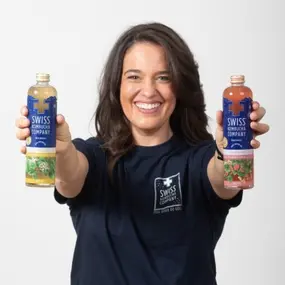
CEO/Founder Swiss Kombucha Company
Founder and CEO of Swiss Kombucha Company — a craft beverage brand on a mission to make gut health simple, delicious, and accessible.
After more than a decade in HR and leadership roles, I founded Swiss Kombucha Company in 2019 to bring authentic, unpasteurized kombucha to Switzerland. What began as small-batch home brewing, has grown into an award-winning national brand - recognized with a 2022 Gold Award and several international honors — now partnering with offices, retail, hotels, cafés, and wellness destinations, that care about offering better beverage choices.
I’m passionate about conscious consumption, community, and supporting workplaces that value wellbeing — whether through what they drink or how they thrive.
Let’s connect if you’re exploring authentic, local beverage options for your team, guests, or customers.


